
Research

Our Research Themes

Click on a Theme to discover our Research Projects.
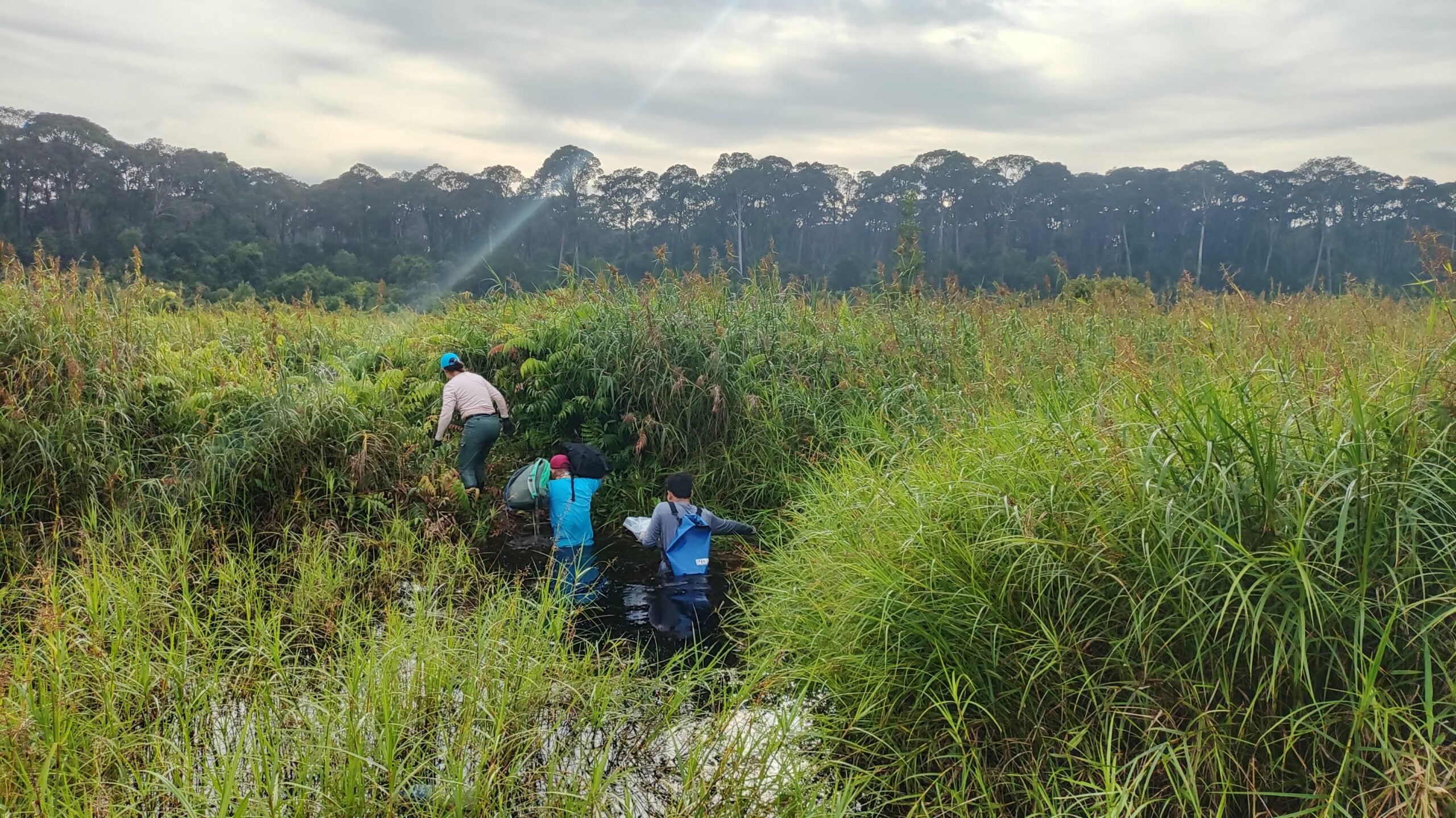
CISG_NeeSoonSwamp-3

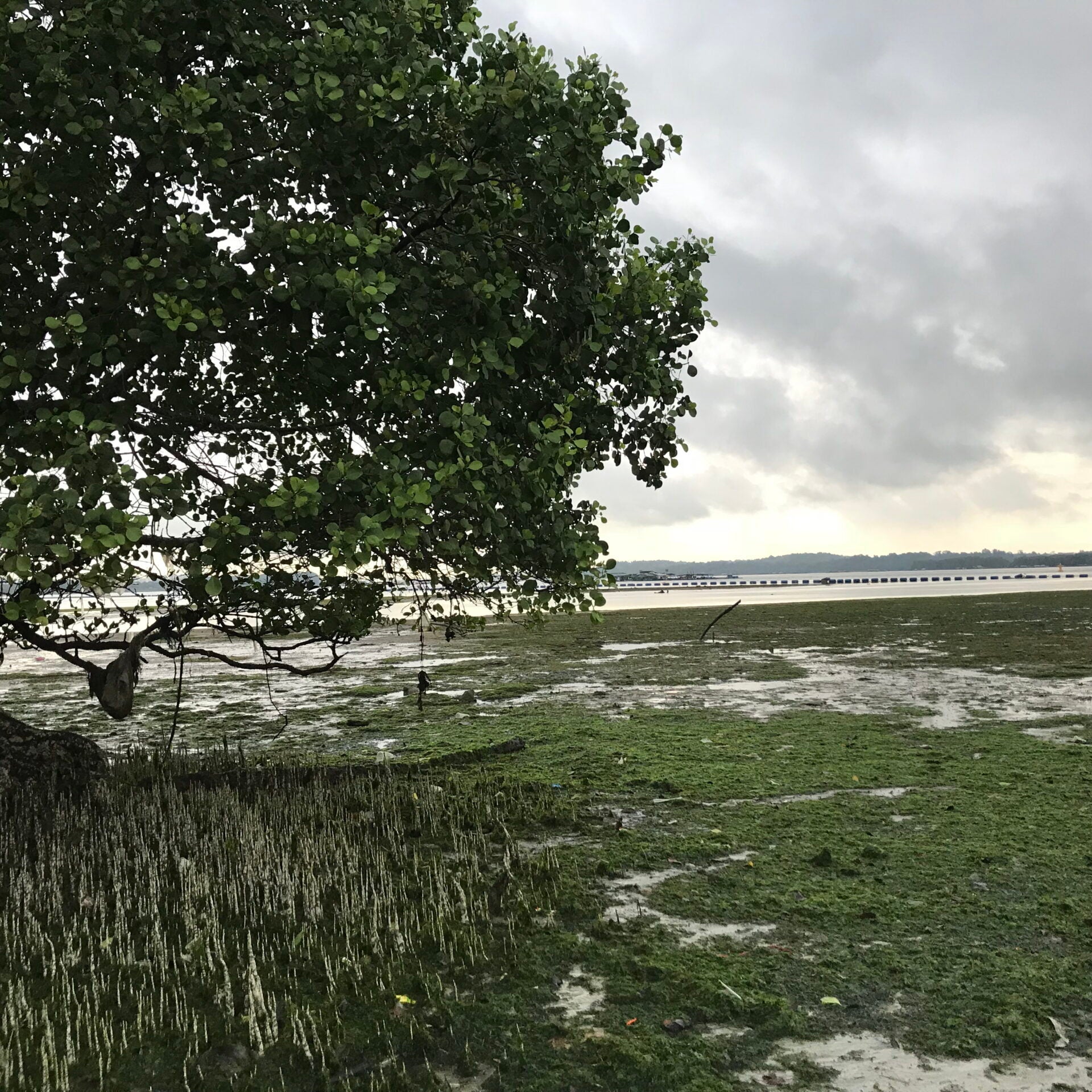
Climate Mitigation & Adaptation

Nature is integral to every pathway towards net-zero. Our natural ecosystems are vital for the reduction of greenhouse gases in the atmosphere and as carbon sinks. Nature-based solutions can also help us respond appropriately to the effects of climate change and reduce our vulnerability to its impacts.

Research Theme BC ~ NI_Soil C sampling_Cyrene Reef_Singapore

Biodiversity Conservation

Biodiversity loss and climate change are interconnected planetary crises. Slowing down the decline and disappearance of biodiversity will slow down climate change too. Southeast Asia is a biodiversity hotspot, and the region faces multiple challenges in preserving nature.

DecisionTheatre-7-2

Quantitative Sustainability

Data and mathematical models play a crucial role today in the assessment of society. They can be applied to the field of environmental preservation and management as well and generate evidence-based decisions which promote sustainable development and outcomes.

Kimberly Fornace a LSHTM research fellow under the MONKEYBAR project takes a photograph of the rainforest canopy for ground-truthing satellite and drone data at a rainforest in Ranau, Sabah, Malaysia, Saturday, March 18, 2017. (Joshua Paul for LSHTM)

Environmental Change and Public Health

The health and well-being of people are inseparable from the state of the climate and nature. Shifts in the environment affect the lives of communities worldwide and unraveling insights into this can uncover pathways to a healthier planet and resilient people.

GFT_LoggingAgriculture_Sabah

Geospatial Science

Remote sensing and geospatial technologies allow for environmental analysis of our natural ecosystems at the next level. Spaceborne, airborne and ground-based instruments assist in measurements that unlock a whole new level of understanding of our environment.

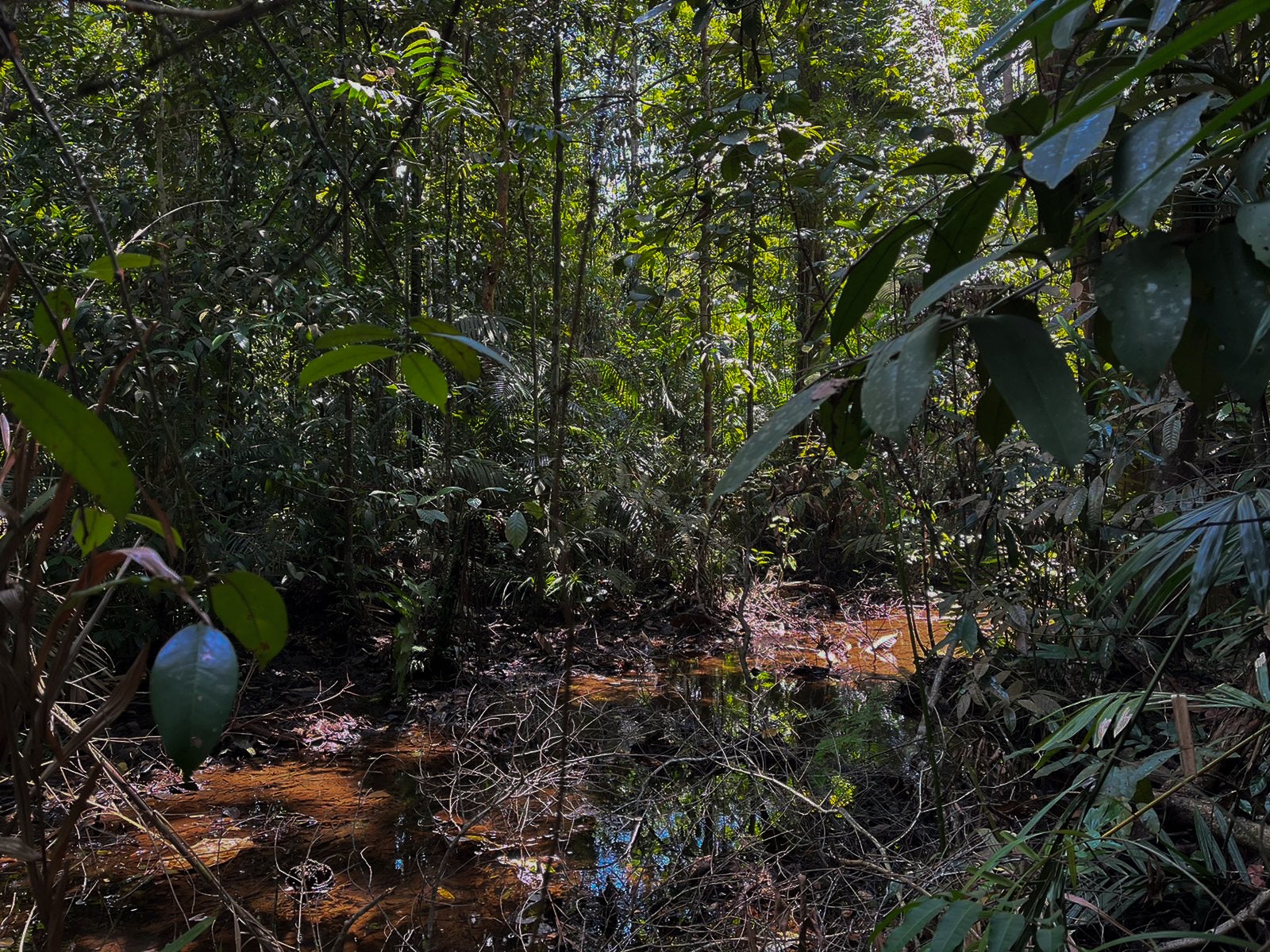
Getting to to forest plot

Applied Ecology and Biology

Ecological principles and biological concepts can be integrated with practical applications to address environmental issues such as climate change and biodiversity loss. Taking this science-based approach can lead to potential solutions that benefit both people and planet.

IMG_1863

Finance, Policy & Governance

Finance, policy and governance are significant considerations when dealing with environmental problems like climate change and biodiversity loss. They can be instruments for implementing change and ensuring the long-term viability of solutions, plans and strategies.

Our Labs

Click on a Lab to discover our Research Projects.
Prof. Koh Lian Pin leads the Applied Ecology & Conservation (AEC) Lab. Their research focuses on developing policy-relevant science and science-based decision support tools to help reconcile humanity’s needs with environmental protection, particularly in the developing tropics.

Asst. Prof. Lim Jun Ying leads the Plant Ecology, Evolution and Biogeography (PEEB) Lab. They study the ecological and evolutionary processes that shape plant biodiversity and ecosystem dynamics, to inform the conservation of tropical ecosystems and biodiversity.
Asst. Prof. Hao Tang leads the Spatial Environmental Analytics and Remote Sensing (SpEARS) Lab. They employ various remote sensing and geospatial techniques to map, analyse, and understand tropical environmental change.

Assoc. Prof. Adrian Loo leads the Lab for Advancing Protection of biodiversity with Innovative Solutions (LAPIS). Their research focuses on employing conservation technology to tackle biodiversity challenges in discovery and monitoring.

Assoc. Prof. Kimberly Fornace leads the Ecosystem, Climate and Health Observatory (ECHO). They utilize data and technology in their research to guide real-world solutions to the critical issue of zoonotic and vector-borne diseases, and to bolster the understanding of the interplay between health, nature and climate.
Prof. Koh Lian Pin leads the Applied Ecology & Conservation (AEC) Lab. Their research focuses on developing policy-relevant science and science-based decision support tools to help reconcile humanity’s needs with environmental protection, particularly in the developing tropics.
Asst. Prof. Hao Tang leads the Spatial Environmental Analytics and Remote Sensing (SpEARS) Lab. They employ various remote sensing and geospatial techniques to map, analyse, and understand tropical environmental change.
Assoc. Prof. Kimberly Fornace leads the Ecosystem, Climate and Health Observatory (ECHO). They utilize data and technology in their research to guide real-world solutions to the critical issue of zoonotic and vector-borne diseases, and to bolster the understanding of the interplay between health, nature and climate.
Asst. Prof. Lim Jun Ying leads the Plant Ecology, Evolution and Biogeography (PEEB) Lab. They study the ecological and evolutionary processes that shape plant biodiversity and ecosystem dynamics, to inform the conservation of tropical ecosystems and biodiversity.
Assoc. Prof. Adrian Loo leads the Lab for Advancing Protection of biodiversity with Innovative Solutions (LAPIS). Their research focuses on employing conservation technology to tackle biodiversity challenges in discovery and monitoring.

Explore Our Work

  • Reduction of deforestation by agroforestry in high carbon stock forests of Southeast Asia

    Hoong Chen Teo, Aakash Lamba, Sean J. W. Ng, Anh Tuan Nguyen, Adrian Dwiputra, Annabel Jia Yi Lim, Minh Nhat Nguyen, Pantana Tor-ngern, Yiwen Zeng, Sonya Dewi, Lian Pin Koh

    Nature Sustainability

    Agroforestry is widely practised for local social-economic and ecological co-benefits, however whether it is beneficial at landscape scale in terms of decreasing deforestation rates remains unclear. Using causal inference, we found local variability but an overall net reduction in deforestation attributed to agroforestry of 250,319 ha yr−1 or 58.8 ± 15.5 Mt CO2 equivalent per year across 38 subnational regions in Southeast Asia (P < 0.05), including high carbon stock forests and deforestation hotspots. These findings provide support and nuance for agroforestry as a natural climate solution especially in biodiverse Southeast Asian forests, which harbour high levels of carbon stocks.

    Published March 2025
    Read more
  • Accurate spaceborne waveform simulation in heterogeneous forests using small-footprint airborne LiDAR point clouds

    Yi Li, Guangjian Yan, Weihua Li, Donghui Xie, Hailan Jiang, Linyuan Li, Jianbo Qi, Ronghai Hu, Xihan Mu, Xiao Chen, Shanshan Wei, Hao Tang

    ISPRS Journal of Photogrammetry and Remote Sensing

    Spaceborne LiDAR waveform sensors need accurate simulations for calibration, validation, and land data product development. Simulating waveforms over heterogeneous forests is difficult because data-driven methods ignore complex pulse transport, while analytical models rely on simplifying assumptions. This study introduces a new framework combining a canopy voxel radiative transfer (CVRT) model with 3D forest scenes from airborne LiDAR data. The CVRT model accounts for within-voxel heterogeneity using fractional crown cover, reducing assumptions and input needs. Evaluated against existing models, simulated and measured data, the framework showed 2–5% better agreement (R²) and 0.5–3% lower error (RMSE). It is robust across various conditions and improves large-footprint LiDAR waveform simulations, aiding future spaceborne LiDAR missions.

    Published December 2024
    Read more
  • Charting the future of high forest low deforestation jurisdictions

    Hoong Chen Teo, Tasya Vadya Sarira, Audrey R. P. Tan, Yanyan Cheng, Lian Pin Koh

    PNAS

    This study highlights the importance of protecting high forest low deforestation jurisdictions (HFLDs) against future deforestation. Such deforestation could release substantial carbon into the atmosphere. Our findings have shown that it is insufficient to base market-based carbon financing on historical deforestation rates. Advances in baselining methods are necessary to achieve adequate market-based carbon financing. By using an empirical multifactorial model, we identify the HFLDs at the highest risk of future deforestation. This emphasizes the need for better baselines to protect these vital forests and mitigate the impact of deforestation on climate change.

    Published September 2024
    Read more
  • Technology-Driven Methods for Estimation of Nature-Based Carbon Stocks in Singapore

    Khairun Nisha Binte Mohamed Ramdzan, Zu Dienle Tan, Leah Mary Lilly Denoun, H. Manjari Jayathilake, Annabel Jia Yi Lim, Yiwen Zeng, Hao Tang, Lian Pin Koh

    Centre for Nature-based Climate Solutions, Faculty of Science, National University of Singapore

    Final Report

    Calculating forest carbon using forest inventory measurements can be laborious, mainly when conducted across an entire forest. As a result, reliance on traditional ground-based methods alone may not provide comprehensive forest information at a broad spatial scale. Instead, remote sensing technologies such as LiDAR (Light Detection and Ranging) and satellite imagery offer invaluable tools for gathering forest information, including tree heights and canopy structure, across vast landscapes. This project incorporated remote sensing technologies and field measurements to pave the way for a cost-effective means of surveying and monitoring nature-based carbon projects. It provides a preliminary estimate of carbon for different forest ecosystem types across Singapore and demonstrated the use of remote sensing technology for potential monitoring of forest aboveground carbon density (ACD). Further, the findings show that remote sensing technology can scale up field measurements and estimate spatially explicit carbon over a larger area. These carbon maps offer valuable insights into carbon sequestration potential, allowing stakeholders from diverse fields to make informed decisions on nature-based solution projects.

    Published March 2024
    Read more
  • Intercomparison of Multiple High-Resolution LAI Remote Sensing Products Over Neon Forest Sites

    Xiao Chen, Gaofei Yin, Shanshan Wei, Hoong Chen Teo, Guoxiang Liu, Hao Tang

    IEEE

    Leaf Area Index (LAI) is a key biophysical variable in ecosystem modeling. This study assessed the consistency and accuracy of high-resolution LAI products from NEON’s NIS, Sentinel-2 (S2), and GEDI lidar, comparing them to in-situ Digital Hemispheric Photos (DHPs) across 19 NEON forest sites in the U.S. At the plot level (~20m), agreements among remote sensing products were moderate (r² = 0.23–0.35), influenced by factors like geolocation errors and slope. However, site-level comparisons showed stronger correlations (r² = 0.59–0.76). GEDI aligned best with DHP estimates (r² = 0.53), outperforming NIS and S2 (r² = 0.33 and 0.30). Despite plot-level uncertainties, combining these products holds promise for improving regional LAI estimates.

    Published October 2023
    Read more
  • The neglected role of abandoned cropland in supporting both food security and climate change mitigation

    Qiming Zheng, Tim Ha, Alexander V. Prishchepov, Yiwen Zeng, He Yin, Lian Pin Koh

    Nature Communications

    Despite growing land scarcity, cropland abandonment is widespread. Reusing abandoned cropland could enhance food security and mitigate climate change. Using spatial modeling and scenario analysis, we identify 101 Mha of abandoned cropland (1992–2020), capable of supporting 29–363 Peta-calories/year in food and mitigating 290–1,066 MtCO₂/year. Spatial prioritization and strategic land allocation are key to maximizing these benefits. Our findings highlight the potential of abandoned cropland for sustainable land management aligned with food and climate goals.

    Published September 2023
    Read more
  • Increasing contribution of urban greenery to residential real estate valuation over time

    Hoong Chen Teo, Tze Kwan Fung, Xiao Ping Song, Richard N. Belcher, Kelly Siman, Ian Z.W. Chan, Lian Pin Koh

    Sustainable Cities and Society

    Urban development often reduces greenery, even as cities pursue greening efforts. Due to limited long-term data, the impact of land-use changes and policies on ecosystem services and greenery preferences remains unclear. Using high-resolution satellite imagery, we mapped land cover in Singapore from 1990 to 2020, revealing a decline in greenery within public housing towns but intensification in remaining green areas. Hedonic pricing analysis showed increasing real estate value linked to greenery: S$39,130 (9.2%) in the 1990s, S$46,049 (10.9%) in the 2000s, and S$50,048 (11.7%) in the 2010s. Preferences shifted toward tree cover over grass, highlighting how improved greenery quality can enhance urban ecosystem services even amid spatial decline.

    Published September 2023
    Read more
  • Climate co-benefits of tiger conservation

    Aakash Lamba, Hoong Chen Teo, Rachakonda Sreekar, Yiwen Zeng, Luis Roman Carrasco, Lian Pin Koh

    Nature Ecology & Evolution

    Biodiversity conservation is increasingly being recognized as an important co-benefit in climate change mitigation programmes that use nature-based climate solutions. However, the climate co-benefits of biodiversity conservation interventions, such as habitat protection and restoration, remain understudied. Here we estimate the forest carbon storage co-benefits of a national policy intervention for tiger (Panthera tigris) conservation in India. We used a synthetic control approach to model avoided forest loss and associated carbon emissions reductions in protected areas that underwent enhanced protection for tiger conservation. Over a third of the analysed reserves showed significant but mixed effects, where 24% of all reserves successfully reduced the rate of deforestation and the remaining 9% reported higher-than-expected forest loss. The policy had a net positive benefit with over 5,802 hectares of averted forest loss, corresponding to avoided emissions of 1.08 ± 0.51 MtCO2 equivalent between 2007 and 2020. This translated to US$92.55 ± 43.56 million in ecosystem services from the avoided social cost of emissions and potential revenue of US$6.24 ± 2.94 million in carbon offsets. Our findings offer an approach to quantitatively track the carbon sequestration co-benefits of a species conservation strategy and thus help align the objectives of climate action and biodiversity conservation.

    Published May 2023
    Read more
  • Carbon Prospecting

    Centre for Nature-based Climate Solutions & ST Engineering Geo-Insights

    A new mapping tool to identify where natural ecosystems, like tropical forests and mangroves, can be conserved to help policymakers and investors identify potential sources of high-quality carbon credits.

    Published September 2022
    Read more
  • Tropical and subtropical Asia's valued tree species under threat

    Hannes Gaisberger, Tobias Fremout, Lian Pin Koh, et al.

    Conservation Biology

    Tree diversity in Asia's tropical and subtropical forests is central to nature-based solutions. Species vulnerability to multiple threats, which affect provision of ecosystem services, is poorly understood. This paper conducted a region-wide, spatially explicit assessment of the vulnerability of 63 socioeconomically important tree species to overexploitation, fire, overgrazing, habitat conversion, and climate change.

    Published June 2022
    Read more
  • Co-benefits of forest carbon projects in Southeast Asia

    Tasya Vadya Sarira, Yiwen Zeng, Rachel Neugarten, Rebecca Chaplin-Kramer, Lian Pin Koh

    Nature Sustainability

    Forest carbon projects can deliver multiple benefits to society. Within Southeast Asia, 58% of forests threatened by loss could be protected as financially viable carbon projects, which would avoid 835 MtCO2e of emissions per year from deforestation, support dietary needs for an equivalent of 323,739 people annually from pollinator-dependent agriculture, retain 78% of the volume of nitrogen pollutants in watersheds yearly and safeguard 25 Mha of Key Biodiversity Areas.

    Published February 2022
    Read more
  • Carbon prospecting in tropical forests for climate change mitigation

    Lian Pin Koh, Yiwen Zeng, Tasya Vadya Sarira, Kelly Siman

    Nature Communications

    Carbon finance projects that protect tropical forests could support both nature conservation and climate change mitigation goals. Global demand for nature-based carbon credits is outpacing their supply, due partly to gaps in knowledge needed to inform and prioritize investment decisions. This paper shows that at current carbon market prices the protection of tropical forests can generate investible carbon amounting to 1.8 (±1.1) GtCO2e yr−1 globally, and financially viable carbon projects could generate return-on-investment amounting to $46.0b y−1 in net present value. However, ~80% (1.24 billion ha) of forest carbon sites would be financially unviable for failing to break even over the project lifetime. From a conservation perspective, unless carbon prices increase in the future, it is imperative to implement other conservation interventions, in addition to carbon finance, to safeguard carbon stocks and biodiversity in vulnerable forests.

    Published February 2021
    Read more
  • Economic and social constraints on reforestation for climate mitigation in Southeast Asia

    Yiwen Zeng, Tasya Vadya Sarira, L. Roman Carrasco, Kwek Yan Chong, Daniel A. Friess, Janice Ser Huay Lee, Pierre Taillardat, Thomas A. Worthington, Yuchen Zhang, Lian Pin Koh

    Nature Climate Change

    As climate change continues to threaten human and natural systems, the search for cost-effective and practical mitigation solutions is gaining momentum. Reforestation has recently been identified as a promising nature-based climate solution. Yet there are context-dependent biophysical, financial, land-use and operational constraints to reforestation that demand careful consideration. This paper shows that 121 million ha of presently degraded land in Southeast Asia, a region noted for its significant reforestation potential, are biophysically suitable for reforestation.

    Published August 2020
    Read more

Filter by

Research Themes