
Research

Our Research Themes

Click on a Theme to discover our Research Projects.
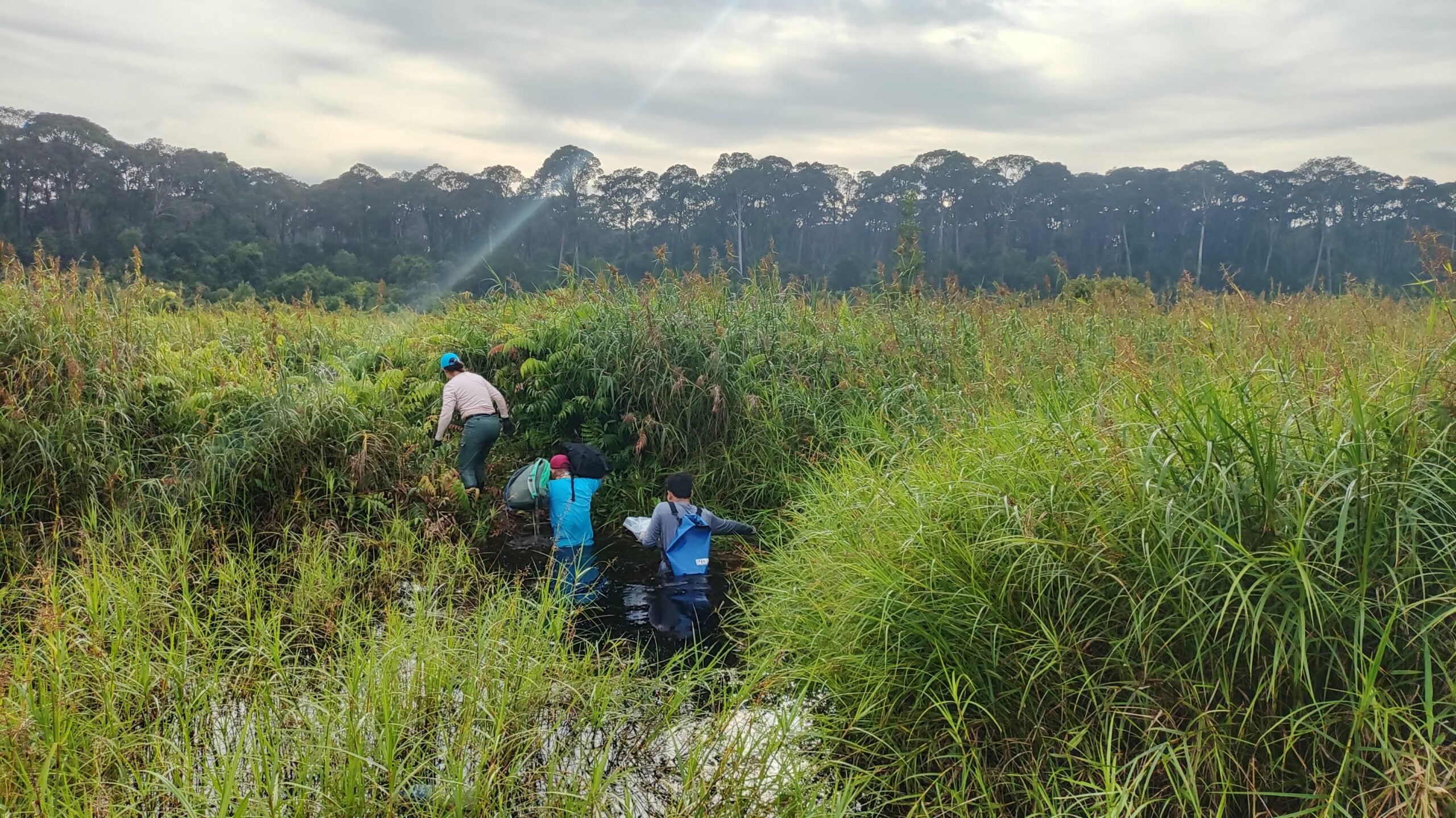
CISG_NeeSoonSwamp-3

Climate Mitigation & Adaptation

Nature is integral to every pathway towards net-zero. Our natural ecosystems are vital for the reduction of greenhouse gases in the atmosphere and as carbon sinks. Nature-based solutions can also help us respond appropriately to the effects of climate change and reduce our vulnerability to its impacts.

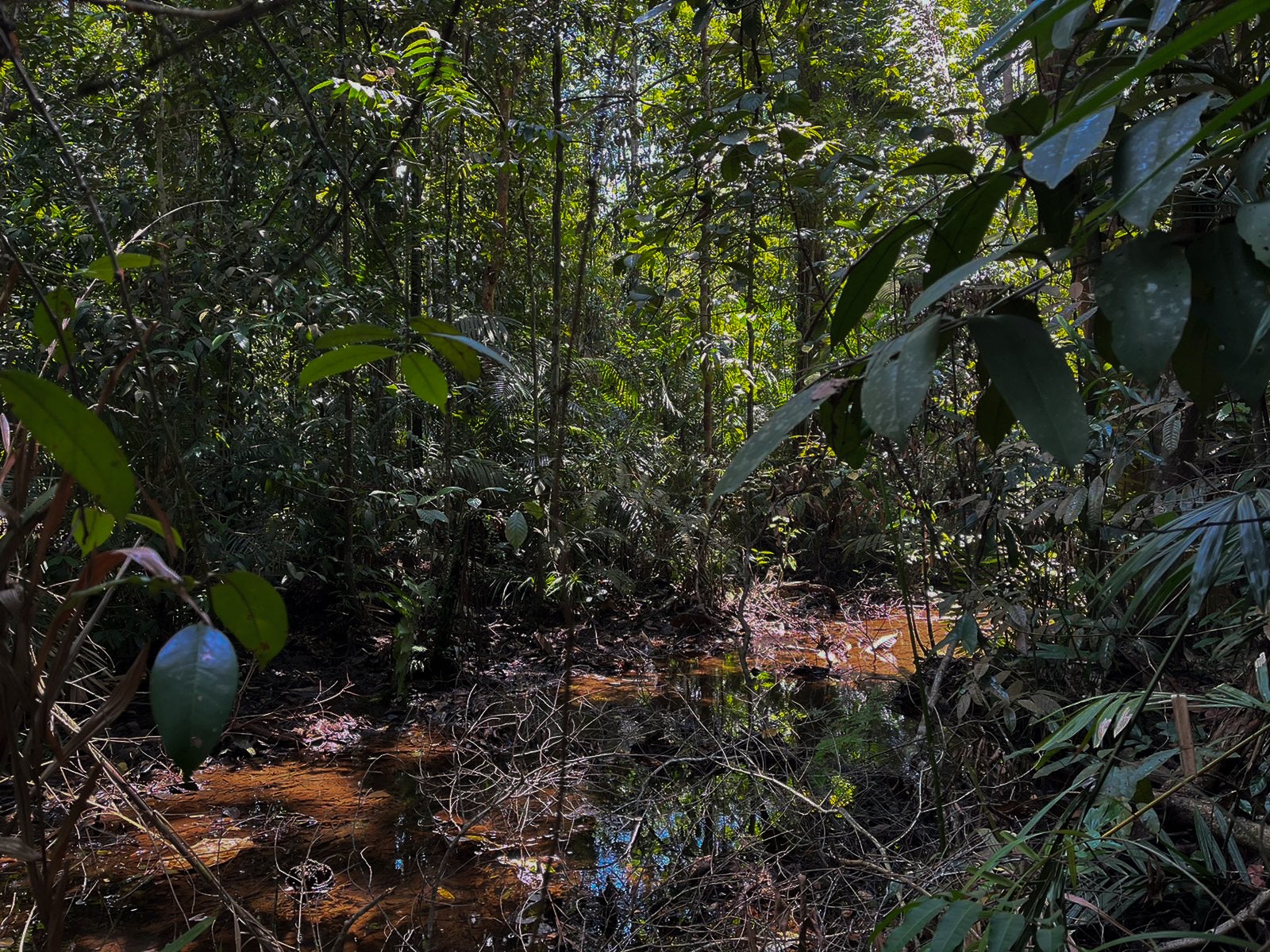
Research Theme BC ~ NI_Soil C sampling_Cyrene Reef_Singapore

Biodiversity Conservation

Biodiversity loss and climate change are interconnected planetary crises. Slowing down the decline and disappearance of biodiversity will slow down climate change too. Southeast Asia is a biodiversity hotspot, and the region faces multiple challenges in preserving nature.

DecisionTheatre-7-2

Quantitative Sustainability

Data and mathematical models play a crucial role today in the assessment of society. They can be applied to the field of environmental preservation and management as well and generate evidence-based decisions which promote sustainable development and outcomes.

Kimberly Fornace a LSHTM research fellow under the MONKEYBAR project takes a photograph of the rainforest canopy for ground-truthing satellite and drone data at a rainforest in Ranau, Sabah, Malaysia, Saturday, March 18, 2017. (Joshua Paul for LSHTM)

Environmental Change and Public Health

The health and well-being of people are inseparable from the state of the climate and nature. Shifts in the environment affect the lives of communities worldwide and unraveling insights into this can uncover pathways to a healthier planet and resilient people.

GFT_LoggingAgriculture_Sabah

Geospatial Science

Remote sensing and geospatial technologies allow for environmental analysis of our natural ecosystems at the next level. Spaceborne, airborne and ground-based instruments assist in measurements that unlock a whole new level of understanding of our environment.

Getting to to forest plot

Applied Ecology and Biology

Ecological principles and biological concepts can be integrated with practical applications to address environmental issues such as climate change and biodiversity loss. Taking this science-based approach can lead to potential solutions that benefit both people and planet.

IMG_1863

Finance, Policy & Governance

Finance, policy and governance are significant considerations when dealing with environmental problems like climate change and biodiversity loss. They can be instruments for implementing change and ensuring the long-term viability of solutions, plans and strategies.

Our Labs

Click on a Lab to discover our Research Projects.
Prof. Koh Lian Pin leads the Applied Ecology & Conservation (AEC) Lab. Their research focuses on developing policy-relevant science and science-based decision support tools to help reconcile humanity’s needs with environmental protection, particularly in the developing tropics.
Asst. Prof. Lim Jun Ying leads the Plant Ecology, Evolution and Biogeography (PEEB) Lab. They study the ecological and evolutionary processes that shape plant biodiversity and ecosystem dynamics, to inform the conservation of tropical ecosystems and biodiversity.
Asst. Prof. Hao Tang leads the Spatial Environmental Analytics and Remote Sensing (SpEARS) Lab. They employ various remote sensing and geospatial techniques to map, analyse, and understand tropical environmental change.

Assoc. Prof. Adrian Loo leads the Lab for Advancing Protection of biodiversity with Innovative Solutions (LAPIS). Their research focuses on employing conservation technology to tackle biodiversity challenges in discovery and monitoring.

Assoc. Prof. Kimberly Fornace leads the Ecosystem, Climate and Health Observatory (ECHO). They utilize data and technology in their research to guide real-world solutions to the critical issue of zoonotic and vector-borne diseases, and to bolster the understanding of the interplay between health, nature and climate.
Prof. Koh Lian Pin leads the Applied Ecology & Conservation (AEC) Lab. Their research focuses on developing policy-relevant science and science-based decision support tools to help reconcile humanity’s needs with environmental protection, particularly in the developing tropics.
Asst. Prof. Hao Tang leads the Spatial Environmental Analytics and Remote Sensing (SpEARS) Lab. They employ various remote sensing and geospatial techniques to map, analyse, and understand tropical environmental change.
Assoc. Prof. Kimberly Fornace leads the Ecosystem, Climate and Health Observatory (ECHO). They utilize data and technology in their research to guide real-world solutions to the critical issue of zoonotic and vector-borne diseases, and to bolster the understanding of the interplay between health, nature and climate.
Asst. Prof. Lim Jun Ying leads the Plant Ecology, Evolution and Biogeography (PEEB) Lab. They study the ecological and evolutionary processes that shape plant biodiversity and ecosystem dynamics, to inform the conservation of tropical ecosystems and biodiversity.
Assoc. Prof. Adrian Loo leads the Lab for Advancing Protection of biodiversity with Innovative Solutions (LAPIS). Their research focuses on employing conservation technology to tackle biodiversity challenges in discovery and monitoring.

Explore Our Work

  • From beak to fruit: An Asian hornbill database for frugivory and seed dispersal research

    Hanci Liang, Kim R. McConkey, Jun Ying Lim

    Global Ecology and Conservation

    Hornbills (Bucerotidae) are key frugivores and seed dispersers in Asian tropical forests. Despite local knowledge of their diets and seed dispersal roles, a comprehensive, standardized database was lacking. We compiled 2,365 records covering 26 of 32 Asian and New Guinea hornbill species, involving 471 plant species. However, data gaps remain, especially on seed fate post-consumption. About 58% of records indicate seed removal, but only 26% show seed deposition and 1% post-depositional viability. Our dataset highlights hornbills’ unique role in dispersing large seeds beyond other birds' capabilities, with a weak positive link between beak and seed size. More research is needed, and this database aims to support future studies.

    Published March 2024
    Read more
  • Climate co-benefits of tiger conservation

    Aakash Lamba, Hoong Chen Teo, Rachakonda Sreekar, Yiwen Zeng, Luis Roman Carrasco, Lian Pin Koh

    Nature Ecology & Evolution

    Biodiversity conservation is increasingly being recognized as an important co-benefit in climate change mitigation programmes that use nature-based climate solutions. However, the climate co-benefits of biodiversity conservation interventions, such as habitat protection and restoration, remain understudied. Here we estimate the forest carbon storage co-benefits of a national policy intervention for tiger (Panthera tigris) conservation in India. We used a synthetic control approach to model avoided forest loss and associated carbon emissions reductions in protected areas that underwent enhanced protection for tiger conservation. Over a third of the analysed reserves showed significant but mixed effects, where 24% of all reserves successfully reduced the rate of deforestation and the remaining 9% reported higher-than-expected forest loss. The policy had a net positive benefit with over 5,802 hectares of averted forest loss, corresponding to avoided emissions of 1.08 ± 0.51 MtCO2 equivalent between 2007 and 2020. This translated to US$92.55 ± 43.56 million in ecosystem services from the avoided social cost of emissions and potential revenue of US$6.24 ± 2.94 million in carbon offsets. Our findings offer an approach to quantitatively track the carbon sequestration co-benefits of a species conservation strategy and thus help align the objectives of climate action and biodiversity conservation.

    Published May 2023
    Read more
  • Gains in biodiversity conservation and ecosystem services from the expansion of the planet’s protected areas

    Yiwen Zeng, Lian Pin Koh, David S. Wilcove

    Science Advances

    Protected areas safeguard biodiversity, ensure ecosystem functioning, and deliver ecosystem services to communities. However, only ~16% of the world’s land area is under some form of protection, prompting international calls to protect at least 30% by 2030. This paper models the outcomes of achieving this 30 × 30 target for terrestrial biodiversity conservation, climate change mitigation, and nutrient regulation.

    Published June 2022
    Read more
  • Nature-based climate solutions for expanding the global protected area network

    Rachakonda Sreekar, Yiwen Zeng, Qiming Zheng, Aakash Lamba, Hoong Chen Teo, Tasya Vadya Sarira, Lian Pin Koh

    Biological Conservation

    Protected areas (including other effective area-based conservation measures) are a cornerstone of biodiversity conservation. Many countries are increasingly committed to expanding protected area coverage to 30%, which requires an increase in global annual spending from $24b to ~$140b (between $103b and $177b). Our results point to the largely untapped potential of nature-based climate solutions to accelerate protected area expansion, thereby conserving biodiversity and mitigating climate change.

    Published May 2022
    Read more
  • Co-benefits of forest carbon projects in Southeast Asia

    Tasya Vadya Sarira, Yiwen Zeng, Rachel Neugarten, Rebecca Chaplin-Kramer, Lian Pin Koh

    Nature Sustainability

    Forest carbon projects can deliver multiple benefits to society. Within Southeast Asia, 58% of forests threatened by loss could be protected as financially viable carbon projects, which would avoid 835 MtCO2e of emissions per year from deforestation, support dietary needs for an equivalent of 323,739 people annually from pollinator-dependent agriculture, retain 78% of the volume of nitrogen pollutants in watersheds yearly and safeguard 25 Mha of Key Biodiversity Areas.

    Published February 2022
    Read more
  • Blue carbon as a natural climate solution

    Peter I. Macreadie, Micheli D. P. Costa, Trisha B. Atwood, Daniel A. Friess, Jeffrey J. Kelleway, Hilary Kennedy, Catherine E. Lovelock, Oscar Serrano, Carlos M. Duarte

    Nature Reviews Earth Environment

    Blue carbon ecosystems (BCEs) store carbon and provide co-benefits such as coastal protection and fisheries enhancement. Blue carbon sequestration has therefore been suggested as a natural climate solution. This review examines the potential for BCEs to act as carbon sinks and the opportunities to protect or restore ecosystems for this function.

    Published November 2021
    Read more
  • Economic value of illegal wildlife trade entering the USA

    Jia Hao Tow, William S. Symes, Luis Roman Carrasco

    PLoS ONE

    Illegal wildlife trade is one of the greatest threats to biodiversity. Understanding its economic value is a first step to establishing the magnitude of the problem. This paper develops a dataset of illegal wildlife trade prices and combine it with seizure data to estimate the economic value of illegal wildlife trade entering the USA.

    Published October 2021
    Read more
  • A meta-analysis of the ecological and economic outcomes of mangrove restoration

    Jie Su, Daniel A. Friess, Alexandros Gasparatos

    Nature Communications

    Mangrove restoration has become a popular strategy to ensure the critical functions and economic benefits of this ecosystem. This study conducts a meta-analysis of the peer-reviewed literature on the outcomes of mangrove restoration.

    Published August 2021
    Read more
  • Large conservation opportunities exist in >90% of tropic-subtropic coastal habitats adjacent to cities

    Tessa Mazor, Daniel A.Friess, Peter A.Todd, Danwei Huang,  Nhung T.H.Nguyen, Megan I.Saunders, Rebecca K.Runting, Ryan J.Lowe, PaulaCartwright, James P.Gilmour, Catherine E.Lovelock

    One Earth

    Coastal areas are urbanizing rapidly, currently supporting >40% of the world's population. Yet, coastal cities are facing greater vulnerability to climate-change-related hazards, causing significant social and economic disruptions. Investing in the protection of existing coastal habitats is considered a low-cost nature-based solution with co-benefits for society and biodiversity. This study examines the global applicability of this solution across 5,096 coastal urban areas in tropical and subtropical regions.

    Published July 2021
    Read more
  • A metric for spatially explicit contributions to science-based species targets

    Louise Mair, Hugh P. Possingham, Lian Pin Koh, et al.

    Nature Ecology and Evolution

    The Convention on Biological Diversity’s post-2020 Global Biodiversity Framework will probably include a goal to stabilize and restore the status of species. Its delivery would be facilitated by making the actions required to halt and reverse species loss spatially explicit. This paper developed a species threat abatement and restoration (STAR) metric that is scalable across species, threats and geographies.

    Published June 2021
    Read more
  • Global potential and limits of mangrove blue carbon for climate change mitigation

    Yiwen Zeng, Daniel A.Friess, Tasya Vadya Sarira, Kelly Siman, Lian Pin Koh

    Current Biology

    Despite the outsized role of mangrove forests in sustaining biodiversity, ecosystem function, and local livelihoods, the protection of these vital habitats through blue carbon financing has been limited. This paper quantifies the extent of this missed conservation and financial opportunity, showing that the protection of ∼20% of the world’s mangrove forests (2.6 Mha) can be funded through carbon financing.

    Published April 2021
    Read more
  • Species awareness days: Do people care or are we preaching to the choir?

    Marcus A.H.Chua, AudreyTan, Luis Roman Carrasco

    Biological Conservation

    Biodiversity awareness days are awareness-raising interventions of increasing popularity, but what makes an awareness day campaign successful has been overlooked. This paper seeks to determine (1) if species or taxa awareness days led to awareness proxied by engagement for information, (2) if some awareness days were more effective than others, and the possible reasons for success, and (3) if awareness days led to positive conservation action.

    Published March 2021
    Read more
  • Southeast Asia as one of world’s primary sources of biotic recolonization following Anthropocene extinctions

    Şerban Proches, Syd Ramdhani, Alice C. Hughes, Lian Pin Koh

    Frontiers in Ecology and Evolution

    The plight of Southeast Asia’s animals, plants and ecosystems in the face of unsustainable exploitation and habitat destruction has been illustrated in several recent studies, despite often falling outside the global discourse on global conservation priorities. This paper collated biogeographic and phylogenetic information to argue that this beleaguered region is one of world’s primary macrorefugia, and possibly its best chance of regaining its natural biodiversity distribution patterns after the current Anthropocene upheaval.

    Published March 2021
    Read more
  • Carbon prospecting in tropical forests for climate change mitigation

    Lian Pin Koh, Yiwen Zeng, Tasya Vadya Sarira, Kelly Siman

    Nature Communications

    Carbon finance projects that protect tropical forests could support both nature conservation and climate change mitigation goals. Global demand for nature-based carbon credits is outpacing their supply, due partly to gaps in knowledge needed to inform and prioritize investment decisions. This paper shows that at current carbon market prices the protection of tropical forests can generate investible carbon amounting to 1.8 (±1.1) GtCO2e yr−1 globally, and financially viable carbon projects could generate return-on-investment amounting to $46.0b y−1 in net present value. However, ~80% (1.24 billion ha) of forest carbon sites would be financially unviable for failing to break even over the project lifetime. From a conservation perspective, unless carbon prices increase in the future, it is imperative to implement other conservation interventions, in addition to carbon finance, to safeguard carbon stocks and biodiversity in vulnerable forests.

    Published February 2021
    Read more
  • The value of China’s ban on wildlife trade and consumption

    Lian Pin Koh, Yuhan Li, Janice Ser Huay Lee

    Nature Sustainability

    China’s decision to ban the trade and consumption of terrestrial wild animals, while controversial, is a viable response to the COVID-19 pandemic. The ban has implications that extend beyond safeguarding human health to also help combat illegal wildlife trade and protect threatened species.

    Published January 2021
    Read more
  • Conservation cost-effectiveness: a review of the evidence base

    Thomas Pienkowski, Carly Cook, Megha Verma, Luis Roman Carrasco

    Conservation Science and Practice

    Prioritizing conservation interventions based on their cost-effectiveness may enhance global conservation impact. To do this prioritization, conservation decision-makers need evidence of what works where and how much it costs. Yet, the size, representativeness, and strength of the cost-effectiveness evidence base are unknown. This paper reviews conservation cost-effectiveness studies, exploring the representation of different types of conservation interventions, habitats and locations, and the methods used.

    Published January 2021
    Read more

Filter by

Research Themes