
-
Soil carbon as a blind spot in tropical rainforest restoration
Nadine Keller, Mark A. Anthony, Tessa S. van der Voort, Khairun Nisha Binte Mohamed Ramdzan, Maria B. Mills, Nanette C. Raczka, Lian Pin Koh
Current Biology
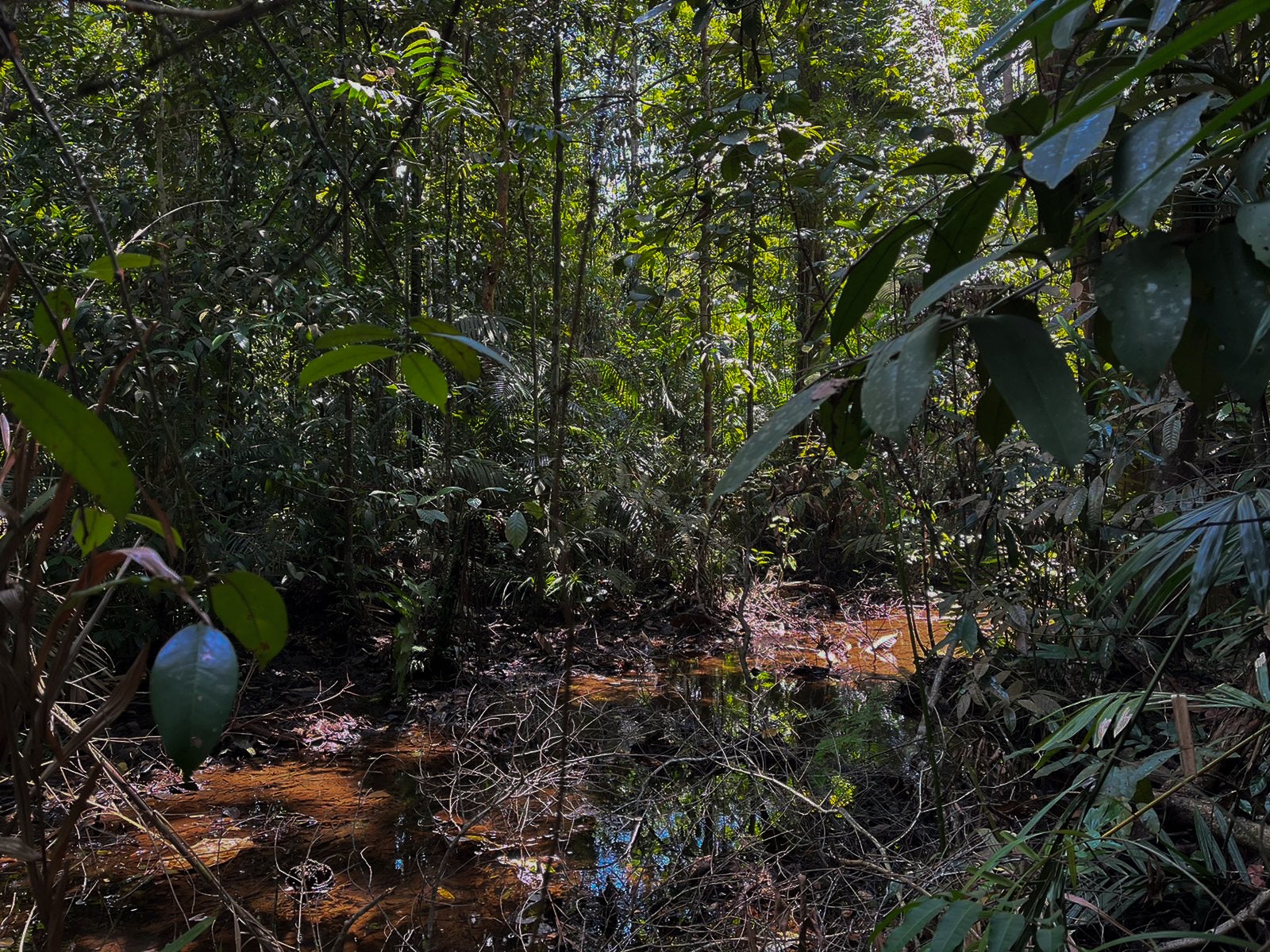
Tropical forests, long degraded, are now central to ecosystem restoration efforts like tree planting aimed at boosting aboveground biomass. However, the role of soil carbon storage—crucial to ecosystem carbon budgets—has been largely overlooked. This review explores how active restoration affects soil carbon across major tropical regions (Southeast Asia, Central Africa, and the Neotropics), highlighting pathways of carbon gain and loss. Findings suggest that increased biomass, biodiversity, and mycorrhizal associations can enhance soil carbon, while site preparation has minimal impact. Invasive species management may reduce soil carbon, though it's understudied. Despite often small changes, soil carbon shifts significantly influence carbon cycling and offsetting efforts. More targeted field research is needed in data-scarce tropical regions to inform restoration and carbon initiatives.
Published August 2025 -
Conservation opportunities through improved management of recently established protected areas in Southeast Asia
Rachakonda Sreekar, Lian Pin Koh, Aakash Lamba, Christos Mammides, Hoong Chen Teo, Adrian Dwiputra, Yiwen Zeng
Current Biology
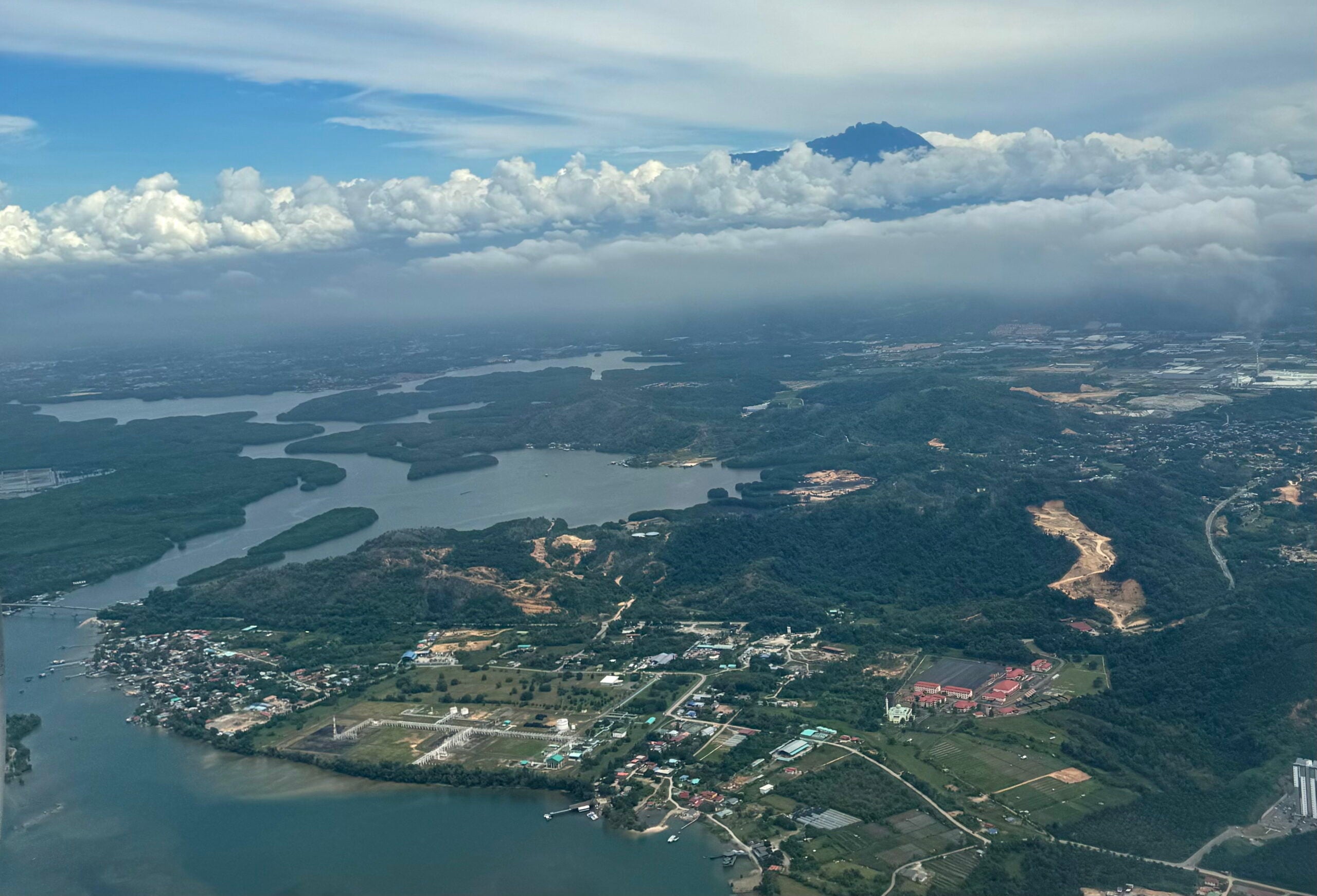
Protected areas (PAs) are vital for biodiversity and climate mitigation, but poor management can cause deforestation and carbon emissions. We analyzed 80 Southeast Asian PAs and found 36 prevented 78,910 ha of deforestation, while 44 lost 72,497 ha, threatening 226 species. Better managing these 44 PAs could avoid 2.07 MtCO2e yearly emissions, needing at least $17 million annually. Carbon markets could fund this. Improving PA management is key to biodiversity conservation and climate action.
Published August 2024 -
From beak to fruit: An Asian hornbill database for frugivory and seed dispersal research
Hanci Liang, Kim R. McConkey, Jun Ying Lim
Global Ecology and Conservation
Hornbills (Bucerotidae) are key frugivores and seed dispersers in Asian tropical forests. Despite local knowledge of their diets and seed dispersal roles, a comprehensive, standardized database was lacking. We compiled 2,365 records covering 26 of 32 Asian and New Guinea hornbill species, involving 471 plant species. However, data gaps remain, especially on seed fate post-consumption. About 58% of records indicate seed removal, but only 26% show seed deposition and 1% post-depositional viability. Our dataset highlights hornbills’ unique role in dispersing large seeds beyond other birds' capabilities, with a weak positive link between beak and seed size. More research is needed, and this database aims to support future studies.
Published March 2024 -
Climate co-benefits of tiger conservation
Aakash Lamba, Hoong Chen Teo, Rachakonda Sreekar, Yiwen Zeng, Luis Roman Carrasco, Lian Pin Koh
Nature Ecology & Evolution
Biodiversity conservation is increasingly being recognized as an important co-benefit in climate change mitigation programmes that use nature-based climate solutions. However, the climate co-benefits of biodiversity conservation interventions, such as habitat protection and restoration, remain understudied. Here we estimate the forest carbon storage co-benefits of a national policy intervention for tiger (Panthera tigris) conservation in India. We used a synthetic control approach to model avoided forest loss and associated carbon emissions reductions in protected areas that underwent enhanced protection for tiger conservation. Over a third of the analysed reserves showed significant but mixed effects, where 24% of all reserves successfully reduced the rate of deforestation and the remaining 9% reported higher-than-expected forest loss. The policy had a net positive benefit with over 5,802 hectares of averted forest loss, corresponding to avoided emissions of 1.08 ± 0.51 MtCO2 equivalent between 2007 and 2020. This translated to US$92.55 ± 43.56 million in ecosystem services from the avoided social cost of emissions and potential revenue of US$6.24 ± 2.94 million in carbon offsets. Our findings offer an approach to quantitatively track the carbon sequestration co-benefits of a species conservation strategy and thus help align the objectives of climate action and biodiversity conservation.
Published May 2023 -
Drivers of global mangrove loss and gain in social-ecological systems
Valerie Hagger, Thomas A. Worthington, Catherine E. Lovelock, Maria Fernanda Adame, Tatsuya Amano, Benjamin M. Brown, Daniel A. Friess, et al.
Nature Communications
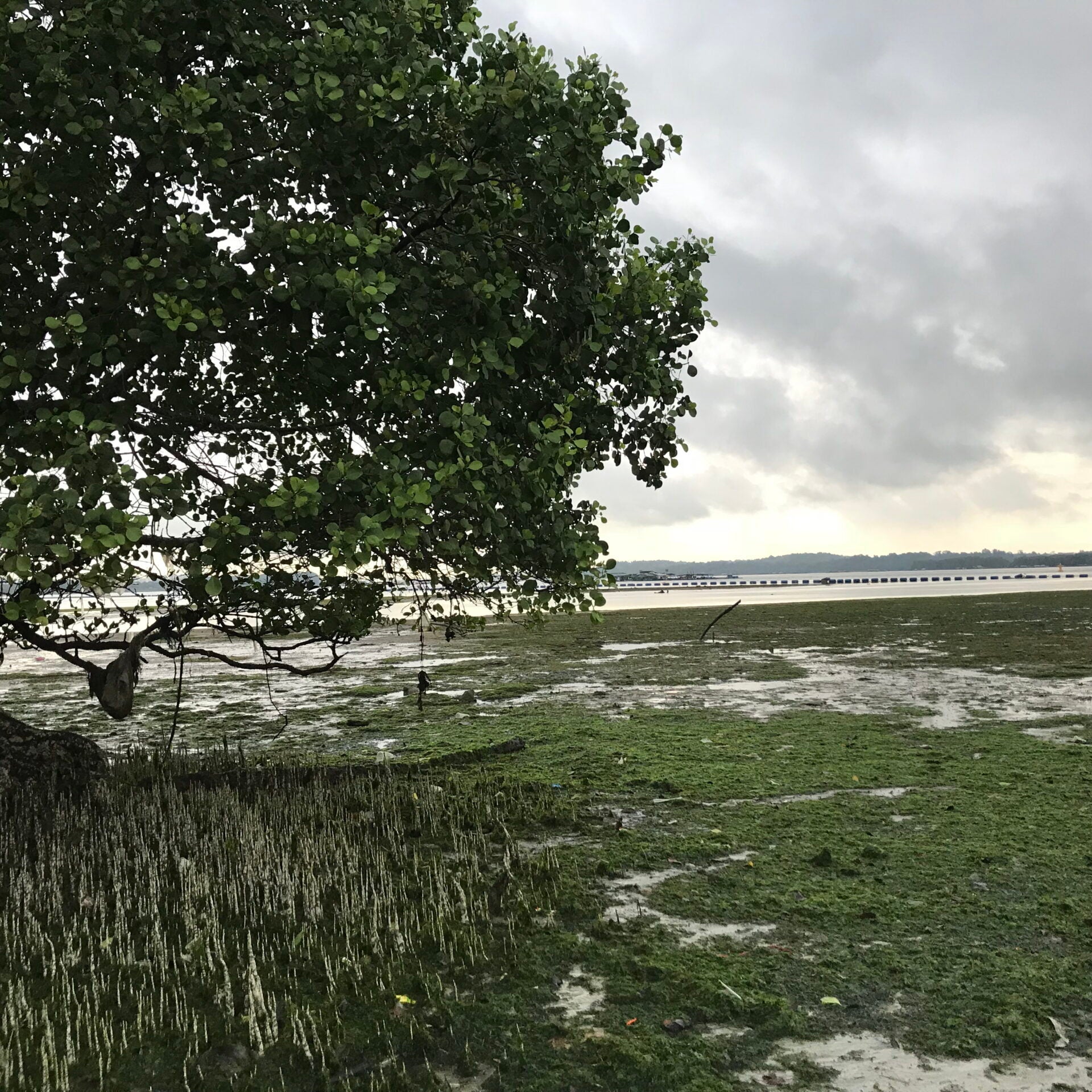
This paper assesses the relationship between socioeconomic and biophysical variables and mangrove change across coastal geomorphic units worldwide from 1996 to 2016. Globally, this paper finds that drivers of loss can also be drivers of gain, and that drivers have changed over 20 years.
Published October 2022 -
Achieving ambitious mangrove restoration targets will need a transdisciplinary and evidence-informed approach
Daniel A. Friess, Yasmine M. Gatt, Rio Ahmad, Benjamin M. Brown, Frida Sidik, Dominic Wodehouse
One Earth
There are ambitious plans to restore hundreds of thousands of hectares of mangrove forests over the next 5 years to restore habitats and mitigate climate change. However, if not properly planned, such actions have the potential to fail. This paper outlines a transdisciplinary plan for mangrove restoration based on strong scientific principles.
Published May 2022 -
Temporal and spatial dynamics of tropical macroalgal contributions to blue carbon
Valerie Kwan, Jenny Fong, Chin Soon Lionel Ng, Danwei Huang
Science of The Total Environment
Blue carbon ecosystems are a vital part of nature-based climate solutions due to their capacity to store and sequester carbon, but often exclude macroalgal beds even though they can form highly productive coastal ecosystems. This study demonstrates that macroalgal seasonality allows for a consistent amount of biomass carbon to either be exported and eventually sequestered, or harvested for utilization on an annual basis.
Published March 2022 -
Habitat adaptation mediates the influence of leaf traits on canopy productivity: Evidence from a tropical freshwater swamp forest
Weng Ngai Lam, Pin Jia Chan, Ying Ying Ting, Kwek Yan Chong et al.
Ecosystems
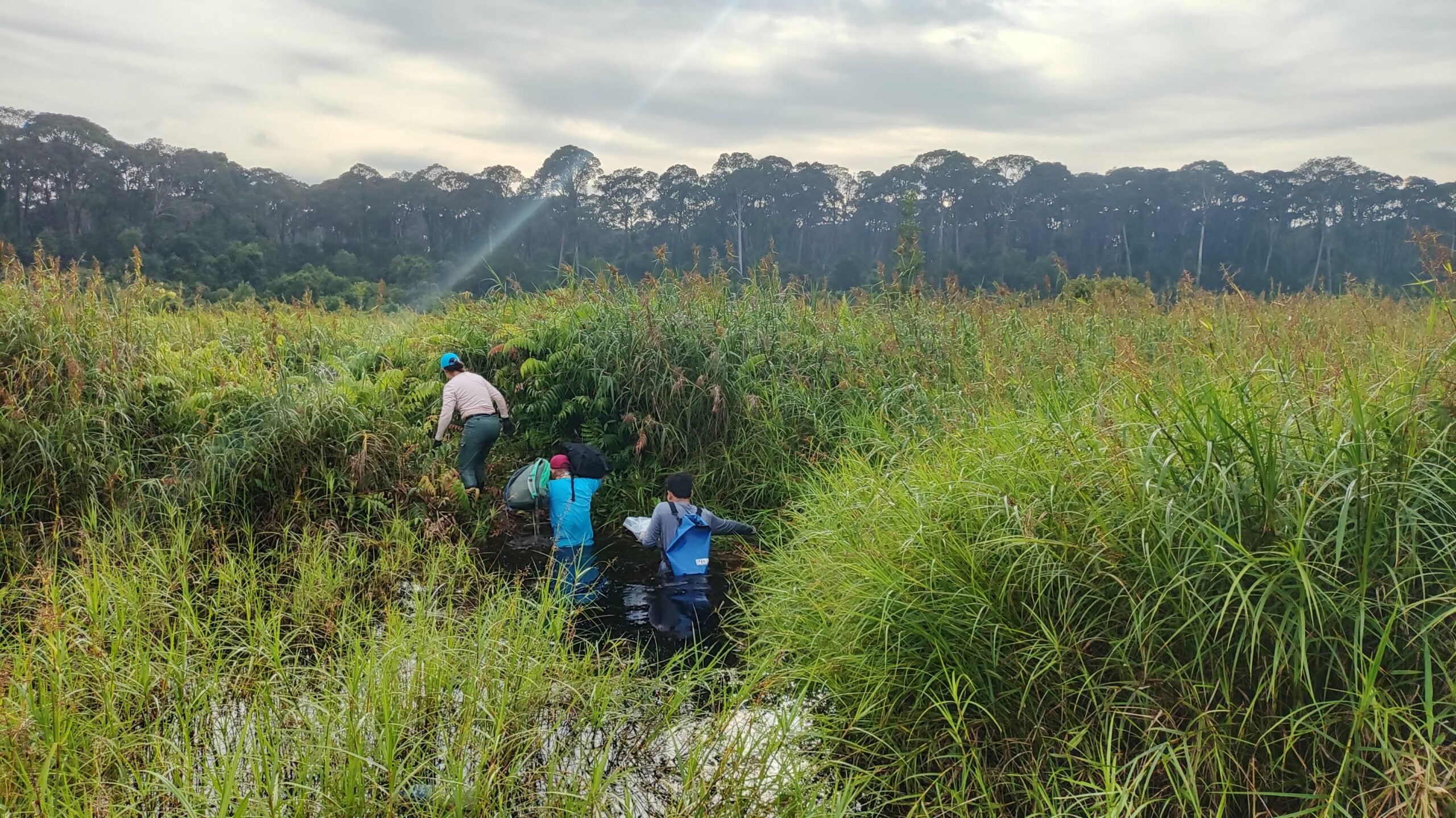
Functional traits offer generalizability to the prediction of ecosystem processes such as production, and community-weighted mean trait values are increasingly used for such predictions. However, the underlying causal direction between traits and ecosystem processes are often indirect and sometimes even tenuous. This study aims to uncover underlying causal mechanisms between traits, habitat adaptation and canopy productivity.
Published September 2021 -
Species awareness days: Do people care or are we preaching to the choir?
Marcus A.H.Chua, AudreyTan, Luis Roman Carrasco
Biological Conservation
Biodiversity awareness days are awareness-raising interventions of increasing popularity, but what makes an awareness day campaign successful has been overlooked. This paper seeks to determine (1) if species or taxa awareness days led to awareness proxied by engagement for information, (2) if some awareness days were more effective than others, and the possible reasons for success, and (3) if awareness days led to positive conservation action.
Published March 2021 -
Southeast Asia as one of world’s primary sources of biotic recolonization following Anthropocene extinctions
Şerban Proches, Syd Ramdhani, Alice C. Hughes, Lian Pin Koh
Frontiers in Ecology and Evolution
The plight of Southeast Asia’s animals, plants and ecosystems in the face of unsustainable exploitation and habitat destruction has been illustrated in several recent studies, despite often falling outside the global discourse on global conservation priorities. This paper collated biogeographic and phylogenetic information to argue that this beleaguered region is one of world’s primary macrorefugia, and possibly its best chance of regaining its natural biodiversity distribution patterns after the current Anthropocene upheaval.
Published March 2021 -
Carbon prospecting in tropical forests for climate change mitigation
Lian Pin Koh, Yiwen Zeng, Tasya Vadya Sarira, Kelly Siman
Nature Communications
Carbon finance projects that protect tropical forests could support both nature conservation and climate change mitigation goals. Global demand for nature-based carbon credits is outpacing their supply, due partly to gaps in knowledge needed to inform and prioritize investment decisions. This paper shows that at current carbon market prices the protection of tropical forests can generate investible carbon amounting to 1.8 (±1.1) GtCO2e yr−1 globally, and financially viable carbon projects could generate return-on-investment amounting to $46.0b y−1 in net present value. However, ~80% (1.24 billion ha) of forest carbon sites would be financially unviable for failing to break even over the project lifetime. From a conservation perspective, unless carbon prices increase in the future, it is imperative to implement other conservation interventions, in addition to carbon finance, to safeguard carbon stocks and biodiversity in vulnerable forests.
Published February 2021 -
Leaf litter decomposition in tropical freshwater swamp forests is slower in swamp than non-swamp conditions
Weng Ngai Lam, Jun Jie Lian, Pin Jia Chan, Ying Ying Ting, Rie Chong, Nur Estya Rahman, Lorraine Wen Ai Tan, Qian Yi Ho, Sorain J. Ramchunder, Kelvin S.-H. Peh, Yixiong Cai, Kwek Yan Chong
Biotropica
Decomposition is a key ecosystem function, and the rate of decomposition in forests affects their carbon storage potentials. Processes and factors determining leaf litter decomposition rates in dry-land and temperate forests are well understood, but these are generally poorly studied in tropical wetland forests, especially freshwater swamp forests (FSF). This study collected leaf litter from swamp and non-swamp tree species in a tropical FSF in Singapore and monitored the decomposition rates of these in swamp and non-swamp plots for a period of eight months.
Published January 2021 -
Artificial light at night advances spring phenology in the United States
Qiming Zheng, Hoong Chen Teo, Lian Pin Koh
Remote Sensing
Plant phenology is closely related to light availability as diurnal and seasonal cycles are essential environmental cues for organizing bio-ecological processes. The natural cycles of light, however, have been dramatically disrupted by artificial light at night (ALAN) due to recent urbanization. The influence on plant phenology of ALAN and its spatial variation remain largely unknown. By analyzing satellite data on ALAN intensity across the United States, this paper showed that ALAN tended to advance the start date of the growing season (SOS), although the overall response of SOS to ALAN was relatively weak compared with other potential factors.
Published January 2021 -
The environmental impacts of palm oil in context
Erik Meijaard, Thomas M. Brooks, Janice Ser Huay Lee, Lian Pin Koh et al.
Nature Plants
Delivering the Sustainable Development Goals (SDGs) requires balancing demands on land between agriculture (SDG 2) and biodiversity (SDG 15). The production of vegetable oils and, in particular, palm oil, illustrates these competing demands and trade-offs. This Review highlights that although substantial gaps remain in our understanding of the relationship between the environmental, socio-cultural and economic impacts of oil palm, and the scope, stringency and effectiveness of initiatives to address these, there has been little research into the impacts and trade-offs of other vegetable oil crops.
Published December 2020
Prof. Koh Lian Pin leads the Applied Ecology & Conservation (AEC) Lab. Their research focuses on developing policy-relevant science and science-based decision support tools to help reconcile humanity’s needs with environmental protection, particularly in the developing tropics.

Asst. Prof. Lim Jun Ying leads the Plant Ecology, Evolution and Biogeography (PEEB) Lab. They study the ecological and evolutionary processes that shape plant biodiversity and ecosystem dynamics, to inform the conservation of tropical ecosystems and biodiversity.
Asst. Prof. Hao Tang leads the Spatial Environmental Analytics and Remote Sensing (SpEARS) Lab. They employ various remote sensing and geospatial techniques to map, analyse, and understand tropical environmental change.

Assoc. Prof. Adrian Loo leads the Lab for Advancing Protection of biodiversity with Innovative Solutions (LAPIS). Their research focuses on employing conservation technology to tackle biodiversity challenges in discovery and monitoring.

Assoc. Prof. Kimberly Fornace leads the Ecosystem, Climate and Health Observatory (ECHO). They utilize data and technology in their research to guide real-world solutions to the critical issue of zoonotic and vector-borne diseases, and to bolster the understanding of the interplay between health, nature and climate.
Prof. Koh Lian Pin leads the Applied Ecology & Conservation (AEC) Lab. Their research focuses on developing policy-relevant science and science-based decision support tools to help reconcile humanity’s needs with environmental protection, particularly in the developing tropics.
Asst. Prof. Hao Tang leads the Spatial Environmental Analytics and Remote Sensing (SpEARS) Lab. They employ various remote sensing and geospatial techniques to map, analyse, and understand tropical environmental change.
Assoc. Prof. Kimberly Fornace leads the Ecosystem, Climate and Health Observatory (ECHO). They utilize data and technology in their research to guide real-world solutions to the critical issue of zoonotic and vector-borne diseases, and to bolster the understanding of the interplay between health, nature and climate.
Asst. Prof. Lim Jun Ying leads the Plant Ecology, Evolution and Biogeography (PEEB) Lab. They study the ecological and evolutionary processes that shape plant biodiversity and ecosystem dynamics, to inform the conservation of tropical ecosystems and biodiversity.
Assoc. Prof. Adrian Loo leads the Lab for Advancing Protection of biodiversity with Innovative Solutions (LAPIS). Their research focuses on employing conservation technology to tackle biodiversity challenges in discovery and monitoring.