

Oral Workplace Communication (OWC)
About OWC
What distinguishes you from all others and AI will be your soft skills and this includes your words and how you use them. Your words are the spark that ignites ideas that will take off and make the difference in your field. Your ability to marshal your ideas, give critical feedback in meetings and to people, to give pertinent and insightful analysis that shows a razor-sharp brain without an acidic sharp tongue, galvanize a team, lead your company to success, comfort the disappointed and re-ignite their mojo, all this and more comes from your ability to communicate.
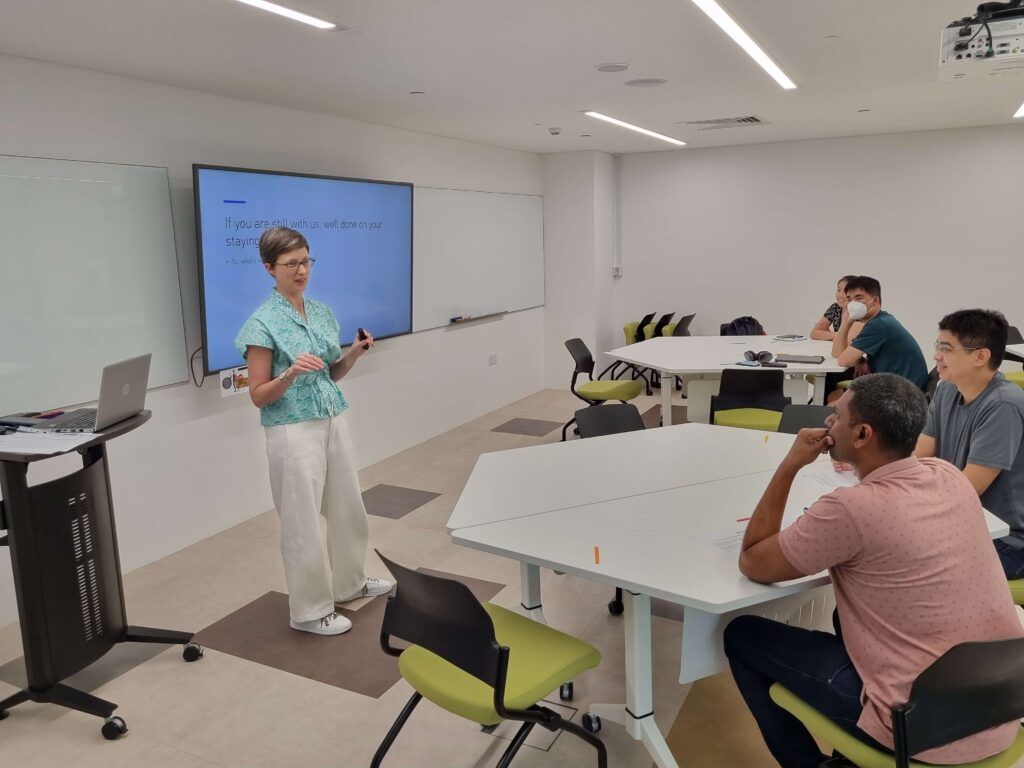
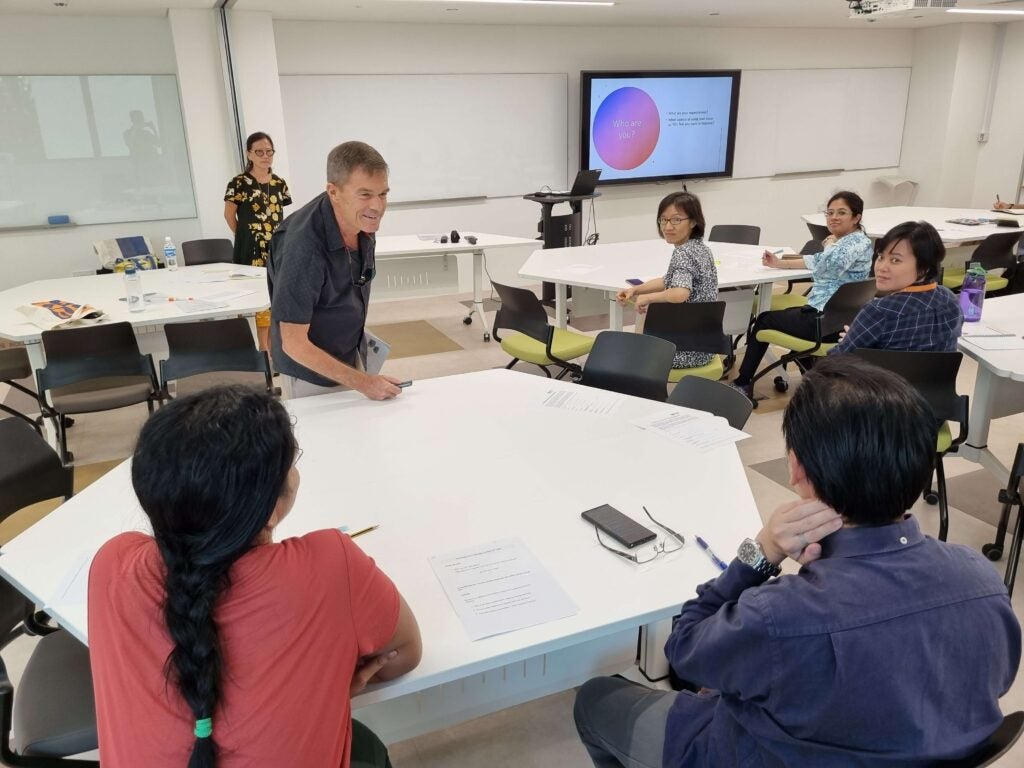
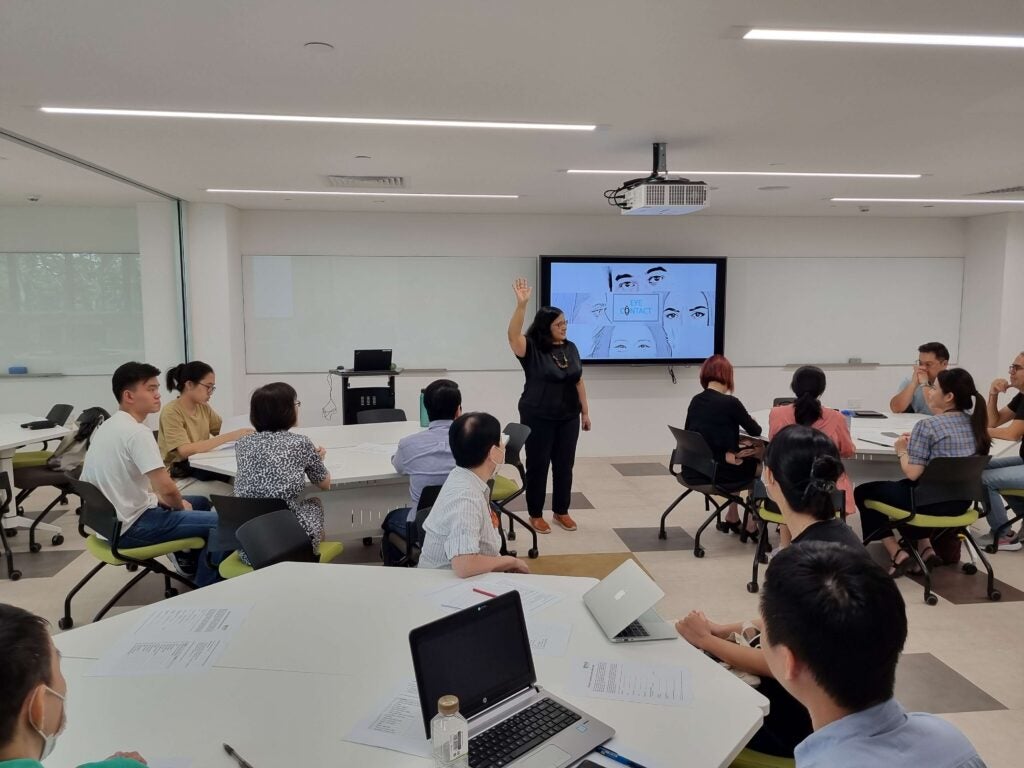
So, if you have taken a course in business communication, or you got an A for project work, it does not mean you are fully equipped for oral communication at university or the workplace. The oral communication committee offers targeted and focused workshops in advanced skills.
These workshops are designed to give you personalized hands-on practice and feedback that watching online tutorials cannot give you.
Our workshops are designed to give just enough theory, so you know there is evidence for why the principles and practices work, and maximum practice and coaching time.
From packing a punch with your words yet giving nonjudgmental but constructive feedback, you will take communication from transactional to relational.
Communication is key to showing your sphere your value-add. What you can say and how you say it is what makes you a bright spark!
Workshops
Series Theme (For AY2025/2026)
Future proofing yourself
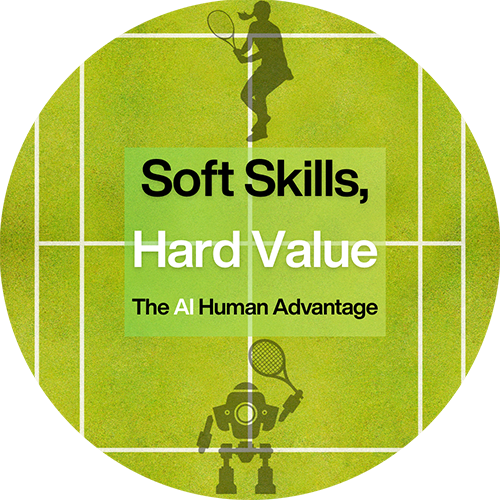
Prime ministers, industry leaders, practitioners, researchers in the future of work, managers, junior executives and interns hoping to turn a training stint into a permanent job - all agree that human soft skills like interpersonal communication, empathy and critical thinking give us the edge over AI, thanks to our ability to turn these soft skills into hard value assets like negotiation, team-building and leadership
Let’s harness our Authentic Intelligence—our real AI—to communicate ideas clearly, solve problems, manage teams, and lead organizations worldwide.
Effective communication stems from learned strategies and consistent practice, empowering you to engage with others confidently and courteously, through people-centric discourse.
Your human advantage lies in such soft skills
Join this workshop series to build targeted soft skills—practice active listening, engage in effective collaboration, give gracious feedback, speak confidently and present authoritatively and authentically.
Each workshop comprises 90 minutes of short explanations, practice exercises with facilitator feedback and self-reflection. Venues are booked for an extra 30 minutes. Participants are welcome to stay to ask further questions.
You may sign up for one or all the workshops. In addition, FASS students are eligible for 20 COMPASS points for every workshop attended. All other participants may request for certificates of completion.
References:
Batty, P. (2021, November 3). Why the arts and humanities are critical to the future of tech. World Economic Forum. https://www.weforum.org/stories/2021/11/arts-and-humanitiescritical-future-of-tech/
Ho, T. (2025, August 20). Singapore’s next phase of growth requires a refreshed blueprint. The Straits Times Online. Singapore’s next phase of growth requires a refreshed blueprint | The Straits Times
Lin, W. (2025, August 20). The era of job dating? It’s all about matching employers and talent. The Straits Times Online. The era of job dating? It’s all about matching employers and talent | The Straits Times
Ng, W.K. (2025, August 24). NDR 2025: Developing human qualities key priority for schools in age of AI, says PM Wong, The Straits Times Online NDR 2025: Developing human qualities key priority for schools in age of AI, says PM Wong | The Straits Times
University of Oxford. (2023, June 21). New research shows how studying the humanities can benefit young people’s future careers and wider society. University of Oxford. https://www.ox.ac.uk/news/2023-06-21-newresearch-shows-how-studying-humanities-can-benefit-young-people-sfuture-careers
11th Feb 2026 (Wed), 2:00pm - 3:30pm
Best Face Forward: Empathetic, Attentive and Responsive communication in the workplace
Do you come across as personable and professional? Are you struggling to participate in group discussions? Have you ever found yourself interrupting – or being interrupted – at group meetings? To thrive in the workplace, you need a keen awareness of how body language, facial expression, spoken signals, and empathetic responses work together to shape how you are perceived (van Edwards, 2017; Brownell, 2010).
In this interactive 90-minute workshop, you’ll practice active listening and turn-taking strategies that bring together verbal and nonverbal communication. Make the most of your EAR: Become a more Empathetic, Attentive, and Responsive communicator!
Learn how to:
- Interpret and employ non-verbal cues to create connections
- Respond effectively with active listening skills
- Enter conversations smoothly and take turns
References:
Maxwell, J. C. (2010). Everyone Communicates, Few Connect. Tennessee, USA: Thomas Nelson Inc.
Celce-Murcia, M. (2008). Rethinking the Role of Communicative Competence in Language Teaching. In: Soler, E.A. and Jordà, M.S. (eds.) Intercultural Language Use and Language Learning. Springer, Dordrecht. https://doi-org.libproxy1.nus.edu.sg/10.1007/978-1-4020-5639-0_3
Edwards, V. v. (2017). Captivate: the science of succeeding with people. Portfolio/Penguin.
Registration is closed. Thank you.
Workshop Facilitators

Jinat Rehana Begum
Instructor, Centre for English Language Communication

Dara Richard
Lecturer, Centre for English Language Communication
Dara Richard has been with the NUS Centre for English Language Communication since 2007. She has taught undergraduates in a range of fields including Business, Engineering, Science and Computing. Before she came to NUS, Dara worked as an educator in the United States, Japan, Uzbekistan and Malaysia. She prioritizes hands-on learning so that students have many opportunities to improve their communication skills.
4th Mar 2026 (Wed), 2:00pm - 3:30pm
Stop the Slop: Giving presentations that connect
That looks like AI! How often have you had this thought while coming across a picture, video, or a piece of text online? We seem to be drowning in AI generated content, which often gets called “AI slop.” While there has always been an appetite for authenticity, this demand is now keener than ever (Alzati 2024). This is just as true in the workplace as it is in the university, especially when it comes to delivering presentations. In this interactive workshop, you will learn strategies to engage your audience with your authentic voice and transform your presentations from monotonous to memorable.
Learn how to:
- Make data come alive
- Inject your personality into your pitches
- Stand out from AI slop
References:
Alzati, C. (2024, October 8). Public Speaking and Creativity in the Age of Artificial Intelligence. Forbes.
Gallo, C. (2022). The Bezos Blueprint. St. Martin’s Press.
Lancaster, S. (2022). Connect: How to Inspire, Influence and Energise Anyone, Anywhere, Anytime. Heligo.
Roose, K. (2021). Futureproof: 9 Rules for Humans in the Age of Automation. Random House.
Registration is closed. Thank you.
Workshop Facilitators

Owen Harry
Lecturer, Centre for English Language Communication
Owen has taught academic communication at various levels since 2017. As a PhD graduate of NUS, he has substantial experience in delivering presentations at major international conferences in his field. His guiding philosophy of academic communication is that complex information can (and should) be conveyed with clarity and always with an eye towards audience engagement.

11th Mar 2026 (Wed), 2:00pm - 3:30pm
The Honeyed Tongue: Saying hard things, softly
In the video game Pathfinder, the “honeyed tongue” is a spell that enables a speaker to bring harmony and tact to conflicts. In real life, we often make requests that inconvenience others, give feedback that is face-threatening, or try to contribute relevantly to conversations by making sense of other speakers’ intentions. In such situations, it is not what you say but how you say it that is crucial. Knowing how to say it depends on particular habits of mind and a set of linguistic strategies – which words are more tactful or how entire critiques may be diplomatic. While AI can generate appropriate-sounding responses, only humans can tell if they are trustworthy (Van Quaquebeke & Gerpott, 2024) through our authentic ability to speak empathetically that surpasses the AI voice (Perez, Jan 19, 2025).
Learn how to:
- Identify potentially difficult workplace conversations
- Apply appropriate strategies for making tactful requests and managing difficult discussions
- Inculcate habits of mind for effective workplace communication.
References:
Peréz, O. S. C. (2025, January 19). Authenticity in the Age of Artificial Intelligence: Finding the Human Voice Amid Algorithms. Medium. https://medium.com/@campoalegre39/authenticity-in-the-age-of-artificial-intelligence-finding-the-human-voice-amid-algorithms-841950fdcc09
Van Quaquebeke, N. & Gerpott, F. (2024). Artificial Intelligence (AI) and Workplace Communication: Promises, Perils, and Recommended Policy. Journal of Leadership & Organizational Studies, 31(4) 375–381. DOI: 10.1177/15480518241289644
Registration is closed. Thank you.
Workshop Facilitators
Lee Gek Ling
Senior Lecturer, Centre for English Language Communication

18th Mar 2026 (Wed), 2:00pm - 3:30pm
Sounds Great: Opening presentations with clarity and confidence
This workshop emphasizes the importance of being clear when presenting ideas in the workplace (Martin & Darnley, 2024) or in academic contexts. Sometimes clarity can be lost due to the difficulties we have saying long, complicated words. When many such words are grouped together in what are called dense noun phrases, clear production is essential to get your message across to the audience. In the workshop, after exercising the voice, there is practice with recognizing the stress patterns of long, multi-syllable words. This vocabulary is then grouped together and used in example presentation openings. Participants will get to practice and then, working as a group, produce their own presentation opening. The facilitators will ensure that presentations are clear and that key points are emphasized through effective stress and timing. Participants will gain confidence with the very words and phrases that underlie their particular academic domains or work environments.
Participants who wish to prepare and practice their own content are encouraged to bring words, phrases and ideas connected to their field.
Learn how to:
- Warm up your voice effectively
- Express yourself with clarity
- Use complex vocabulary and phrases with confidence
References:
Martin, S., & Darnley, O. (2024). The Working Voice: Vocal Health and Effective Communication (1st ed., Vol. 1). Routledge. https://doi.org/10.4324/9781003361114

Workshop Facilitators

Tim Groombridge
Lecturer, Centre for English Language Communication
Tim Groombridge joined NUS/CELC in 2022. Prior to this, he worked as a teacher and teacher trainer in the U.K., Costa Rica, Oman, and the U.A.E. Although his main role at CELC focuses on academic writing, he is also keen to help students find their voice projecting their ideas with clarity and confidence.

The workshops are open to all NUS students/staff. Booking availability on a first-come-first-served basis.
For enquiries related to this event, please contact elcbox70@nus.edu.sg.
Ask OWC about:
- The workshop you are interested in.
- Customizing one of the workshops for your residential college or hall - free
- Customizing one of the workshops for your department or organization – chargeable at preferential rates for NUS staff.
- A workshop you would like us to offer in the near future.
- Preferred timings for workshops – we will look for trends in timing.
Getting to the CELC Seminar Room (02-30)
We are located across from the Central Library and AS8, next to Techno-Edge and NUS IT
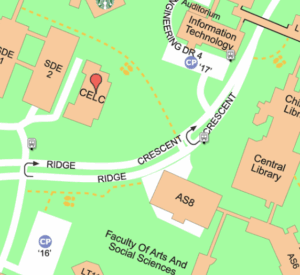
To reach the CELC Seminar Room (02-30) from the main entrance, enter through the glass doors and continue straight ahead. This will lead you directly to the CELC Seminar Room (02-30).
For those arriving via the car park, proceed to Level 2 using either the lift or the stairs. Upon reaching Level 2, follow the corridor signs to the main lobby of the Centre for English Language Communication (CELC). The CELC Seminar Room (02-30) will be located on your left.