
Keynote: The Atlas of Ocean Microplastics (AOMI) database and its application
Biography
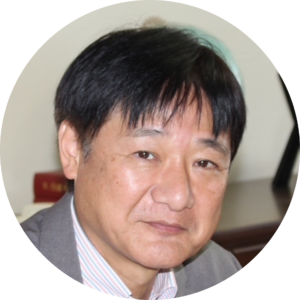
Professor Atsuhiko Isobe
Research Institute for Applied Mechanics, Kyushu University, Japan
Dr. Atsuhiko Isobe, a Professor of the Research Institute for Applied Mechanics, Kyushu University. After graduating Ehime University, he had worked at the National Fisheries University as a Research Associate, Kyushu University as an Associate Professor, Center for Marine Environmental Studies, Ehime University as a Professor, and is currently working in Kyushu University. He is now working as the Principal Investigator of multiple marine plastic research projects (including Atlas of Ocean Microplastics, AOMI database) sponsored by the Japanese government. He was awarded the Environment Minister’s prize in 2018, the Prime Minister’s prize in 2019, the Prize for Science and Technology from the Minister of Education, Culture, Sports, Science and Technology in 2020, and Japan Oceanographic Society prize in 2025 for his marine plastic pollution research.
Abstract
The standardization/harmonization of measurements of microplastic abundance should be prioritized to compare/synthesize the data obtained by different researchers worldwide. Thereby, the effort to standardize microplastic measurements/analyses has been continued since the mid 2010’s; see Michida et al. (2019) and GESAMP (2019) for guidelines supported by research works such as an interlaboratory comparison exercise to compare the numbers of man-made microplastics (Isobe et al.,2019). In 2024, we opened a database of microplastic abundance in the upper oceans via the Internet. This on-going project sponsored by the Ministry of Environment, Japan, was launched last year to create the database (Atlas of Ocean MIcroplastics; AOMI means ‘blue ocean’ in Japanese, https://aomi.env.go.jp/), where abundance data of microplastics collected mostly by surface net sampling across the world’s ocean to date were archived. More than 13,500 sampling data were currently processed to multilevel datasets in line with the data processing in Isobe et al. (2021, 1:16, Microplastics & Nanoplastics). Using the database, the abundance of microplastics in the current and future oceans predicted by numerical model approach will be introduced in the presentation.