

RExCon 2026
It's more than just a research event — it’s a launchpad 🚀

WHY
RExCon 2026
The REx Conference brings together curious minds, bold ideas, and real-world impact. Previously known as UREC, we have rebranded to better reflect our mission: to explore, experiment, and expand the boundaries of undergraduate research through collaboration, innovation, and community.
Whether you're presenting, attending, or just exploring, RExCon is your chance to:
- Share your research with a vibrant, interdisciplinary audience
- Get inspired by student-led innovation and entrepreneurial ideas
- Connect with mentors, alumni, and like-minded peers
- Discover new paths for research, internships, and beyond
RExCon2026 will focus on the theme “Collaboration, Innovation and Society”. The Theme explores how collaboration sparks innovation and drives research that transforms society. From interdisciplinary teamwork and mentorship to partnerships with industry and communities, RExCon2026 celebrates the power of connection in generating impactful ideas. We invite students to think beyond the lab—highlighting how relationships fuel research breakthroughs, how innovation flourishes when ideas converge, and how societal change begins with shared purpose. Whether through co-creation, entrepreneurial ventures, or civic engagement, research is reimagined as a collaborative force for good.
SUB - THEMES
We invite extended abstracts from undergraduate students of any discipline. For illustration purposes, we listed a few non-exhaustive possible related topics* in relevance to the conference theme
Interdisciplinary Bridges
Exploring how cross-disciplinary research sparks new ideas
E.g. Tech x Health, Art x Science, Environment x Policy
Voices from the ground
Community-engaged research, participatory methods, and ethical collaboration with marginalised groups
Creative Approaches to Collaboration
Artistic, design-based, or narrative-driven methods in collaborative research.
*Abstracts may also be on any other topic that is not listed here
Speakers
A/P Yuan Chao
Professor Chao Yuan is a tenured Associate Professor in the Department of Architecture at the National University of Singapore (NUS), where he leads the Urban Climate Design Lab as Principal Investigator. His work bridges climate science, urban design, and sustainability, and has earned him several prestigious honors, including the Presidential Young Professorship at NUS, the NRF Investigatorship from Singapore’s National Research Foundation, and the 2025 Timothy Oke Award from the International Association for Urban Climate, in recognition of his cross-disciplinary leadership in urban climate science and design. Prof. Yuan’s research focuses on advancing climate-sensitive strategies for high-density tropical cities, with core expertise in urban wind environments, air pollution, anthropogenic heat, passive cooling technologies, and urban greenery. He leads interdisciplinary initiatives that integrate science, technology, and design to tackle complex urban sustainability and resilience challenges. His work is highly collaborative, involving international partners such as the Chinese University of Hong Kong, Massachusetts Institute of Technology, ETH Zurich, and the University of Cambridge, with whom he co-develops cutting-edge research on urban climate adaptation and future cities.
FIRESIDE CHAT SPEAKERS
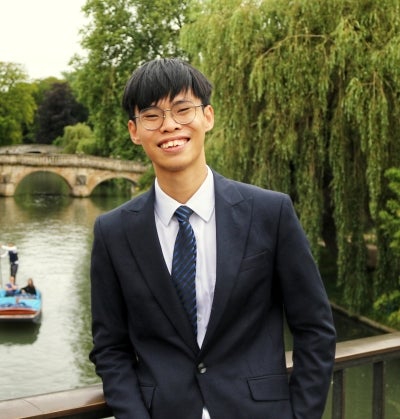
Jonah
An Honours-Year History Student, Jonah enjoys studying the Cold War and Post-Cold War to uncover the scheming, mysterious, and strange.
As a NUSL Undergraduate
Research Fellow, he previously used Singapore periodicals and newspapers to explore how anti-Westernism and anti-Westernisation were constructed, performed, and exploited in 1990s Singapore.
Since then, he has moved on to using government archives to investigate
the security politics and defence relations of Indonesia and Thailand.
He is currently working on an undergraduate thesis on British defence sales to Indonesia. Jonah has published in the Cambridge Journal of Political Affairs, the Defense Horizon Journal,
and the Strategy Bridge.
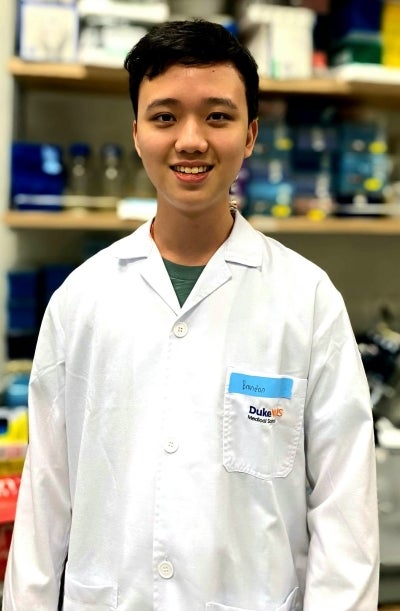
Brandon Cheah
Brandon Cheah is a second-year undergraduate researcher in Pharmaceutical Science at the National University of Singapore (NUS), working on diagnostic approaches in dengue under Asst. Prof. Chee Wah Tan.
His research interests span infectious disease pathogenesis, immunology, and the pedagogical applications of artificial intelligence in medical and healthcare education. He has published in Viruses and Medical Teacher and is a co-author of ongoing works under review on LLM-supported misconception-based learning and analogy-based instruction in healthcare education.
His recent presentations include talks at the NUS Undergraduate Research Library Fellowship Symposium and the FEBS-IUBMB-ENABLE Conference in AI for Biomedicine.
Beyond research, he is active in music as a performer and music director in both classical and jazz piano. He is passionate about music theory and analysis, particularly Schenkerian analysis. He believes in the joy of learning, and that true learning transcends disciplinary boundaries.

Rui Kyi
Rui Kyi is a fourth-year medical student with an interest in the inter-disciplinary understanding of public health and geography in influencing health outcomes. She hopes to contribute to new and practical solutions that improve healthcare systems, especially
in communities that face barriers to access.
Her current research explores the access to maternal healthcare services in rural areas of Southeast Asia. Though healthcare in the region has improved over the years, many women living in rural communities still
struggle to receive proper care during pregnancy and childbirth.
Common challenges include long distances to healthcare facilities, financial difficulties, cultural beliefs, and a lack of trained healthcare professionals. The systematic review aims to better
understand these barriers and also highlight factors that may help improve access, influencing stakeholders in developing more effective and sustainable solutions to improve maternal health in underserved areas.

Isabelle Singarayar
Isabelle's research looks at the themes of race and coloniality. As a previous British colony, Singapore has a high percentage of Christians at 18.9% (Singapore-United States Department of State, 2020). As such, there is a distinct Christian community in Singapore.
Moreover, many scholars suggest that this Christian community enjoys a distinct culture of privilege in the country, often correlated to class privilege, where the ‘Christian community now tends to be over-represented amongst the middle and upper middle classes (Woods and Kong, 2022). Coloniality is importantly baked into the privilege of Christians, particularly through the notions of ‘English-speaking’ Christians as being wealthier (Woods and Kong, 2022). Furthermore, there is perhaps another key fault line that emerges in connection to the Christian community in Singapore—race, especially with an extremely high percentage, 95.1%, of Christians being Chinese (Chong and Yew, 2013). Notably, 12.6% of ethnic Indians in Singapore are also Christian (Singapore-United States Department of State, 2020).
With these fault lines that emerge, so does a racial distinction that splits Chinese and Indian-Christians from Malay-Muslims (90% of the Malay population). Her project thus aims to fill gaps in the current literature on Christian privilege by focusing on race and coloniality.

Bai Yun Peng
Bai Yunpeng is a final-year PhD student at the School of Computing, National University of Singapore, advised by Prof. David Hsu, Prof. Shengdong Zhao, and Prof. Antti Oulasvirta. His research focuses on computationally rational models of human decision-making, particularly using reinforcement learning to simulate human behavior and visual attention control.
His research aims to bridge a fundamental gap in AI and cognitive science: providing a computational foundation for unified models that simulate intelligent behavior through a closed loop of high-level cognition and low-level motor control.
His work spans computational cognitive science, artificial intelligence, and human–computer interaction. He has published in venues including CHI, ETRA, CVPR, and ICCV. Prior to joining NUS, he worked on embedded, rule-based algorithms for wearable sensing devices.
He previously earned his bachelor's degree in mechanical engineering, where he developed software for dynamic simulation and manufactured wheel robots.

Wei Zhi
Wei Zhi's project provides a detailed exploration of the evolution of banking in Singapore from the pivotal year of 1945 to 2025, meticulously tracing the significant
and strategic transformations that laid the nation's foundation as a financial powerhouse.
Beginning in the immediate post-war period, the analysis examines the enduring influence of British colonial banking systems on Singapore's economic recovery and the
crucial early development of indigenous local banks. Following independence in 1965, Singapore decisively embarked on extensive financial reforms, most notably establishing the Monetary Authority of Singapore (MAS) in 1971 as the sole central regulator. This
resilient growth of local banks allowed the sector to successfully weather several major financial crises throughout the late 20th century, simultaneously driving their ambitious expansion into competitive regional and global markets.
In the contemporary era,
the rapid rise of digital banking and fintech innovation has unequivocally propelled the city-state's banking industry to the unprecedented forefront of global finance. This project ultimately provides a deeper and nuanced understanding of Singapore’s banking
history, highlighting its enduring stability and emphasising its increasing relevance in today’s complex and interconnected global economic landscape.
Call For SUBMISSIONS
The Undergraduate Research Coordinating Team (UGRC) invites all undergraduate students NUS to submit abstracts for the REx Conference 2026 (RExCon26)
Presentation Formats
Paper Presentation
10-minute talk followed by a
10-minute question-and-answer
10-minute question-and-answer
Ignite Session
5-minute presentation
(15 seconds over 20 slides)
(15 seconds over 20 slides)
Poster Presentation
2 - minute elevator pitch followed by poster display and sharing
Shortlisted Applicants will be assigned one of the presentation format.
Abstract Template
One common template is used for all the three presentation formats. Please download and use the extended abstract template for your submissions.
Submission
Please submit your extended abstract via Microsoft forms. and do not forget to upload your abstract in pdf fomat.

The Submission Portal will close on 29th September 2025 (Monday) at 11.59 pm (2359).
Please contact the RExCon 2026 Conference Secretariat at pvobox66@nus.edu.sg for conference-related queries.
We look forward to receiving your Abstracts— see you on 21st January 2025!
- Home
- REx Conference 2026 [Apply Now!]
© National University of Singapore. All Rights Reserved.