

-
Borrowing & Requests
Borrowing & Requests
 Recommend Articles, Books & Other Materials for Purchase
Can’t find a resource you need in our libraries? Send us your request and we’ll source for it
 Intralibrary Loan
Request for a book to be sent to another library within NUS Libraries for collection
-
Services & Help
Services & Help
 Guides & Tools
Discover our many resources for research, learning and teaching - from how-to guides, to databases and other powerful tools!
 Research Starter-kit
Learn about research tools such as Proxy Bookmarklet, BrowZine, Citation Managers and FindIt! with Google Scholar
-
Spaces
Spaces
-
Collections
Collections
- What's on






ReadNUS Issue 38

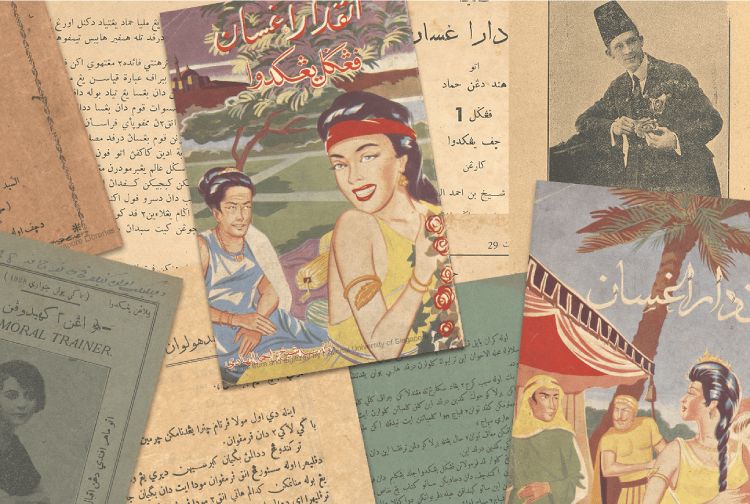
Kicking off this month’s theme on culture, we have four fresh reads on the topic of cultural appreciation vs cultural appropriation. Cultural appreciation occurs when one understands and learns about another culture in order to facilitate cross-cultural communication and to broaden their understanding of the world. However, cultural appropriation occurs when one uses one aspect of a culture that does not belong to one for their personal interest. It often becomes even more controversial when appropriation is carried out by a majority group against minority cultures. Enjoy the newsletter to learn more about the topic.
- Read 4 riveting texts about he difference between Cultural Appreciation vs Appropriation
- In our Literary Journal, Natalie explores the mysterious collaborative fiction community, the SCP Foundation
Cultural Appreciation VS Appropriation
Clicking on the title or book image will link you to the full text.


SCP: Secure, Contain, Protect – Take a peek into the mysterious SCP foundation for a glimpse into what potentially lies beyond our perceived reality.
In this week’s ReadNUS article, Natalie Lem shares about the burgeoning internet collaborative fiction sensation, the creepy and mysterious SCP Foundation.
Curious about what objects and strange entities violate our natural laws? SCP Wiki is an internet forum of collective fiction dedicated to documenting fictional paranormal occurrences. To introduce you to this fascinating collaborative community, Natalie will bring you through its general premise and analyse an SCP article in all its gruesome glory.
To read more, head over to our website now!



Institutionally Paid OA for NUS Authors
NUS Libraries, School of Computing, and the Office of the Deputy President (Research & Technology) have worked together to enter into a 5-year open access agreement with the Association for Computing Machinery (ACM). For all submissions to ACM made between Jan 1, 2021 and Dec 31, 2025, NUS corresponding authors can publish OA at no cost to the author.

Library-Supported Free-to-Publish Model
NUS Libraries is now a supporting institution of the Open Library of Humanities (OLH) from Sep 2020 to Sep 2021. The OLH is an academic publishing platform that supports 22 fully OA academic journals from across the humanities disciplines. Unlike many OA publishers, the OLH does not charge any author fees. Instead, an international library consortium covers its operational costs.
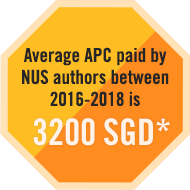
*Based on NUS Libraries’ internal analysis of compiled Web of Science data.


