Retrieving books from our closed stacks will take longer due to ongoing renovation & improvement works. Do cater an additional day or two for your requests to be fulfilled. We apologise for the inconvenience & appreciate your understanding. For assistance or queries, contact loans@nus.edu.sg.


-
Borrowing & Requests
Borrowing & Requests
 Recommend Articles, Books & Other Materials for Purchase
Can’t find a resource you need in our libraries? Send us your request and we’ll source for it
 Intralibrary Loan
Request for a book to be sent to another library within NUS Libraries for collection
-
Services & Help
Services & Help
 Guides & Tools
Discover our many resources for research, learning and teaching - from how-to guides, to databases and other powerful tools!
 Research Starter-kit
Learn about research tools such as Proxy Bookmarklet, BrowZine, Citation Managers and FindIt! with Google Scholar
-
Spaces
Spaces
-
Collections
Collections
- What's on



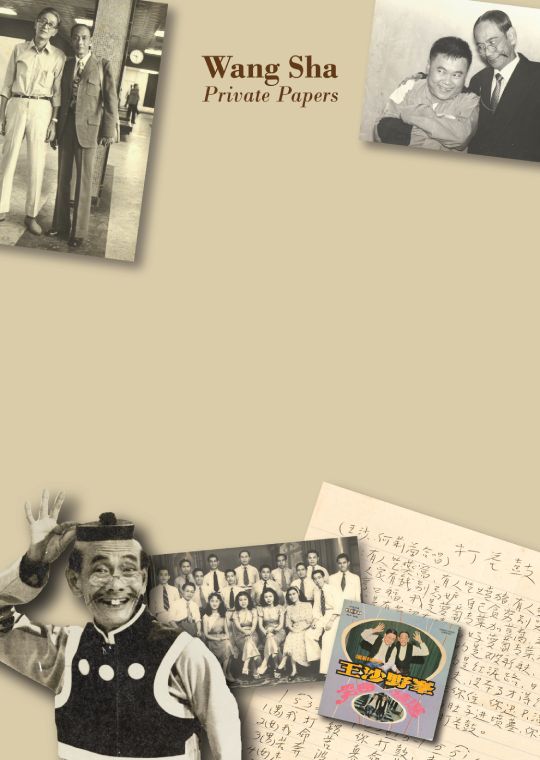
Chinese in Southeast Asia Collection
Southeast Asia is the region of Chinese emigration with the longest diasporic history and the largest diaspora population.
During the Song Dynasty (AD 960 – 1279), China’s commerce started to enter foreign lands, bringing the practice of China’s domestic commerce, handicrafts and mining to places such as the Philippines, Java and West Borneo. This was the first wave of Chinese emigration to Southeast Asia. Thereafter, Chinese emigration to Southeast Asia included businessmen, labourers, the descendants of earlier emigrants, and re-emigrants.
Originally composed largely of short-term fortune-seekers, the Southeast Asian Chinese diaspora gradually came to call Southeast Asia home, forming the largest group of native Chinese overseas.
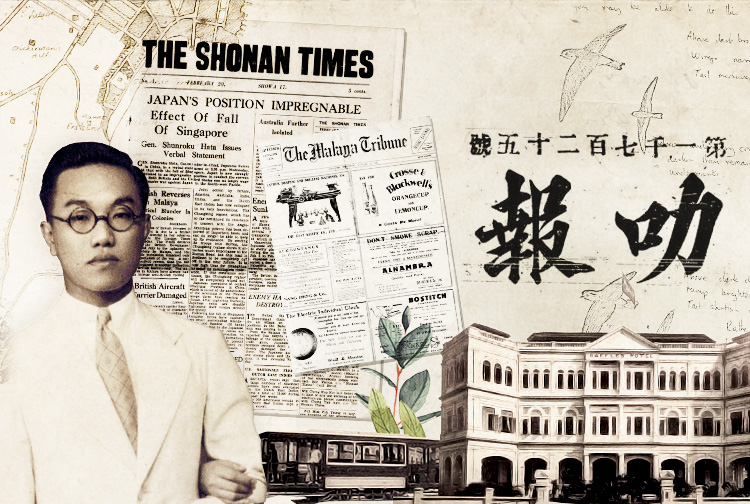
For centuries, Chinese emigrants to Southeast Asia have founded various clan organisations, schools, newspapers and journals, leaving thousands of documents of historical interest.

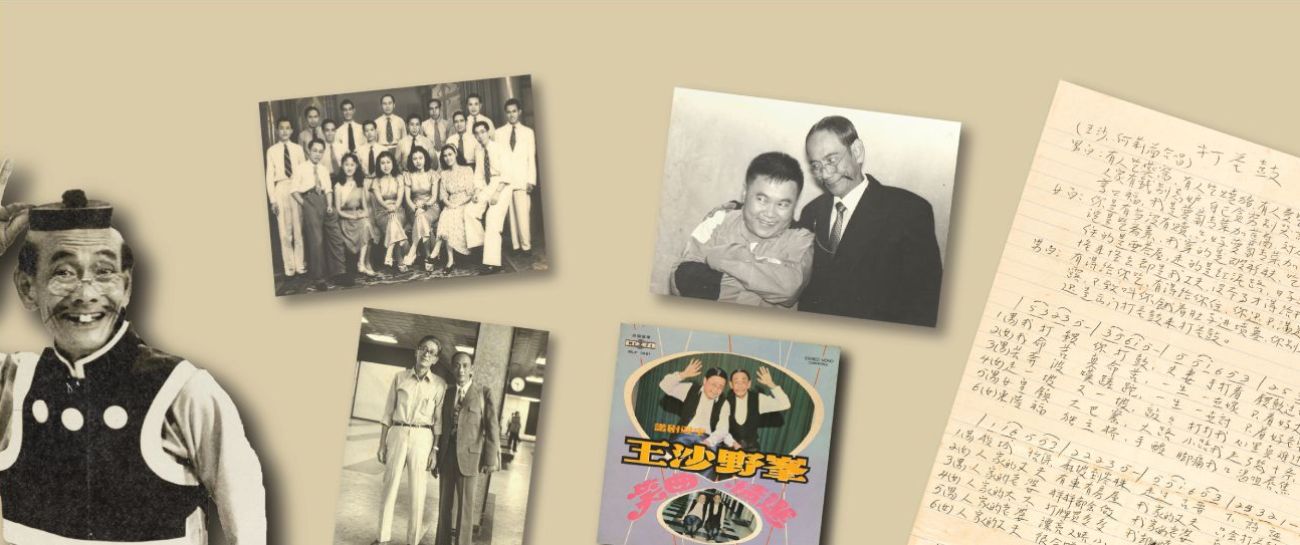
As of today, 456 volumes of Chinese publications on Southeast Asia have been digitised in our Chinese in Southeast Asia collection. It comprises collections of important documents such as weekly magazines, internal newsletters of schools and social organisations, history books, familial genealogies and pictures. These publications are grouped in 10 categories, namely:
- History and Culture
- Societies
- Literature
- Education
- Philosophy and Religion
- Business and Economics
- Politics
- Arts
- Language
- General Works (Others)
These valuable documents are primary sources for research on the history of Chinese immigrants, including their political and economic activities.

Published in 1898, 五百石洞天挥尘(Wu Bai Shi Dong Tian Hui Chen) by Khoo Seok Wan is the oldest publication in the collection

新加坡中华总商会特刊 (Xin Jia Po Zhong Hua Zong Shang Hui Te Kan), published by Singapore Chinese Chamber of Commerce, 1931

新加坡风土记 (Xin Jia Po Feng Tu Ji) by Li Zhongyu, Singapore, 1947 reprinted; original Suzhou, 1897

新嘉坡华校概况 (Directory of Chinese Schools), Singapore, 1952


Institutionally Paid OA for NUS Authors
NUS Libraries, School of Computing, and the Office of the Deputy President (Research & Technology) have worked together to enter into a 5-year open access agreement with the Association for Computing Machinery (ACM). For all submissions to ACM made between Jan 1, 2021 and Dec 31, 2025, NUS corresponding authors can publish OA at no cost to the author.

Library-Supported Free-to-Publish Model
NUS Libraries is now a supporting institution of the Open Library of Humanities (OLH) from Sep 2020 to Sep 2021. The OLH is an academic publishing platform that supports 22 fully OA academic journals from across the humanities disciplines. Unlike many OA publishers, the OLH does not charge any author fees. Instead, an international library consortium covers its operational costs.
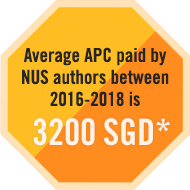
*Based on NUS Libraries’ internal analysis of compiled Web of Science data.


