Conservation Hopes: First Expedition to Doi Tung in Collaboration with Mae Fah Luang Foundation and Lee Kong Chian Natural History Museum
Conservation Hopes is a campaign centred around Southeast Asia scientific research expeditions,with aspirations to shepherd regional stakeholders on board our journey to a hopeful, sustainable future through conservation and the empowerment of conservation.
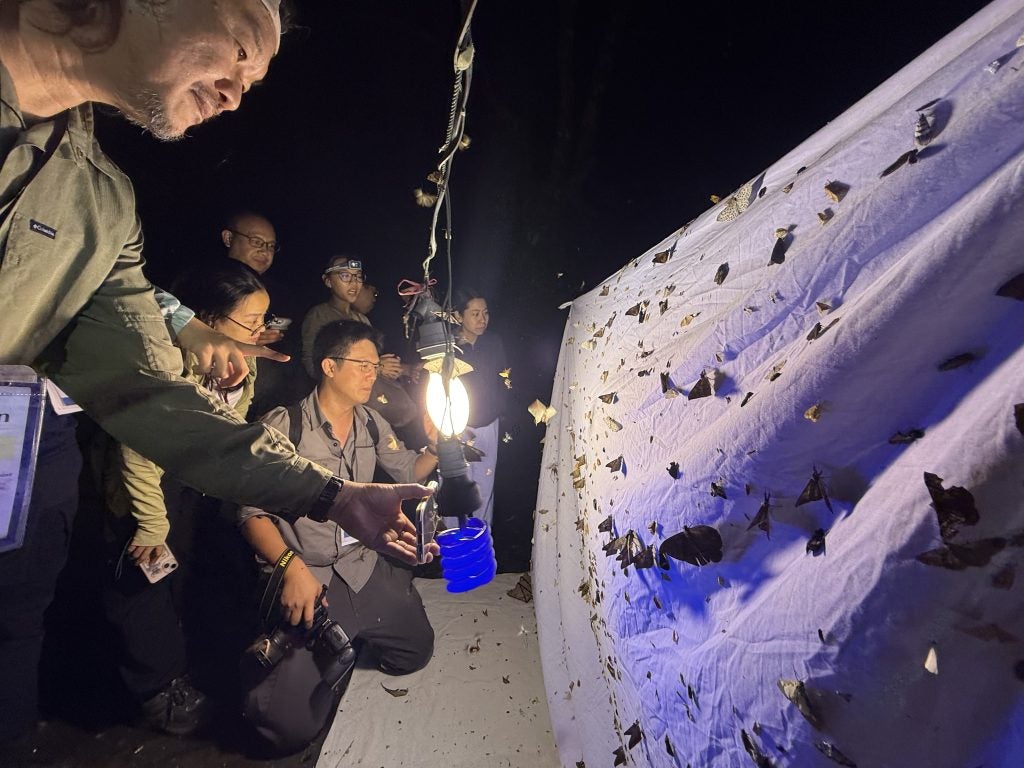
Light traps were employed to survey nocturnal insects like moths. (Photo credit: Toh Ying Ying)
Conservation Hopes, is a multi-year campaign powered by cross-border scientific expeditions. It brings practitioners and researchers together to document biodiversity and exchange knowledge that informs conservation strategies and solutions across Southeast Asia. Together, we’re working to protect one of Earth’s most biodiverse—yet most threatened—regions.
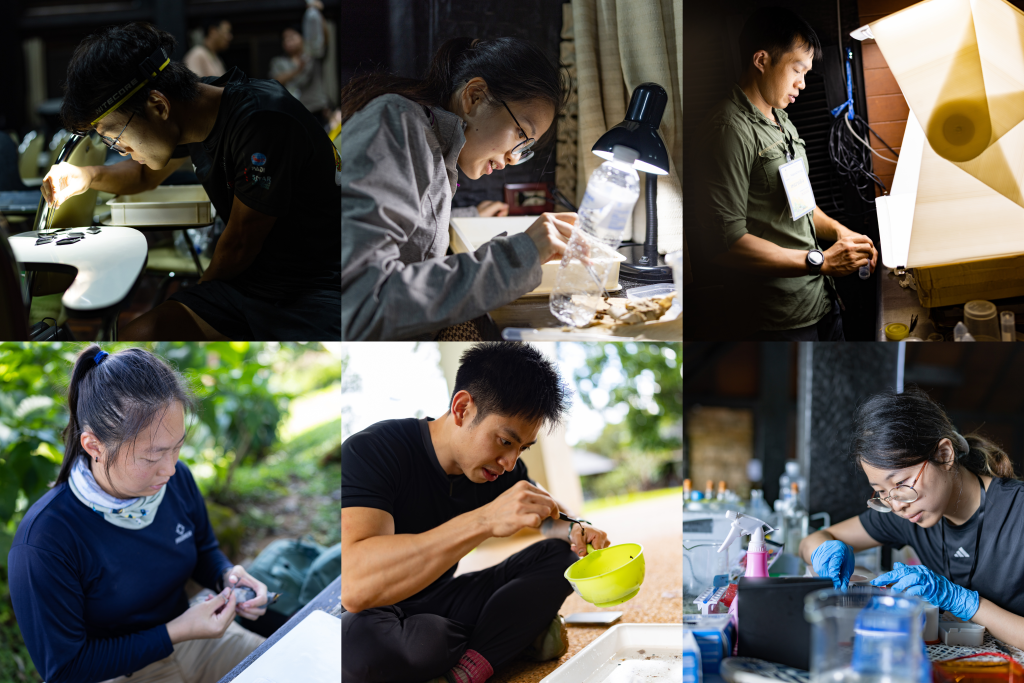
Researchers carried out sample processing at the field site. (Photo credit: Law Ingg Thong)
The Conservation Hopes campaign was officially launched with its first project, the Doi Tung Bioblitz, held on 11 – 18 October 2025,which centredona collaboration between the Mae Fah Luang Foundation and NUS Centre for Nature-based Climate Solutions (CNCS). This partnershipemerged through a series of progressively deepening engagements that began with an introductory meeting at CNCS in August 2024, where both teams identified a strong alignment in nature-based solutions, biodiversity monitoring, and forest restoration. CNCS was invited to visit the Doi Tung Development Project in February 2025 to explore joint research on biodiversity and carbon integrity in restored landscapes, leading to the co-creation of the Doi Tung Bioblitz (DTBB).
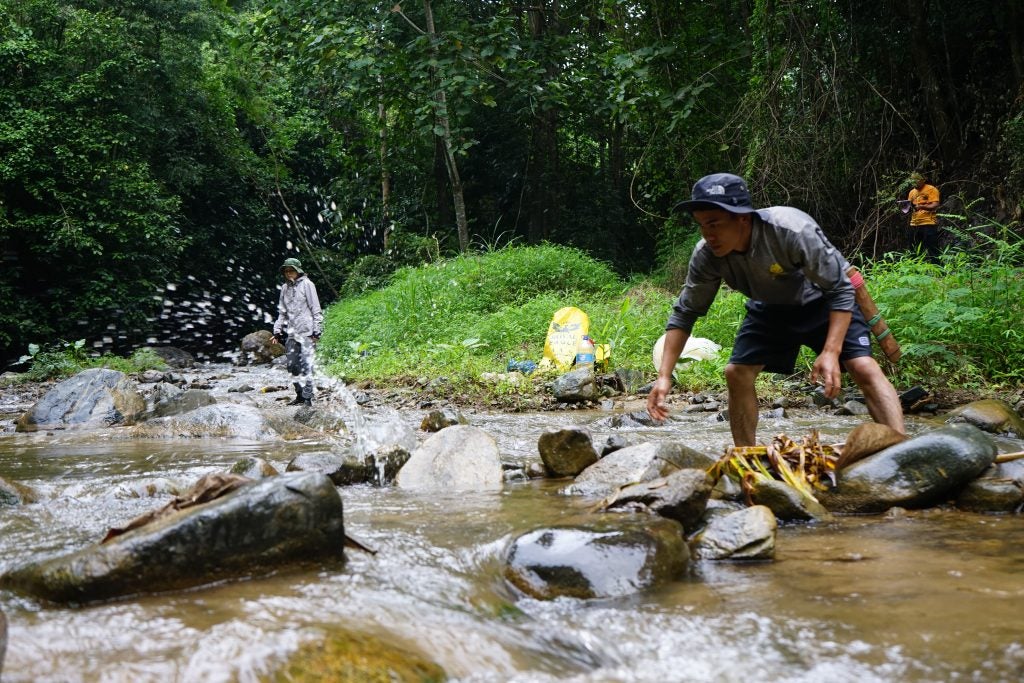
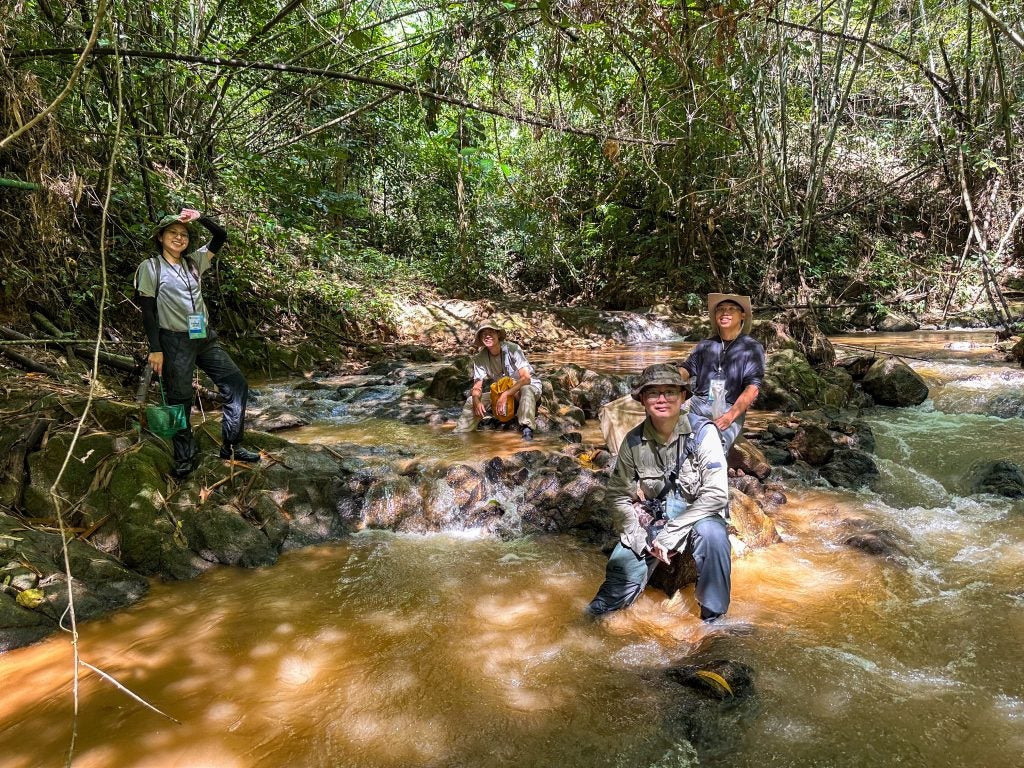
A traditional fishing method was used to examine freshwater biodiversity. (Photo credit: Ann Supatchaya Techachoochert)
The DTBB combined traditional field surveys with cutting-edge methods such asenvironmental DNA (eDNA) and bioacoustics to rapidly document biodiversity across reforested and agroforestry landscapes within the Doi Tung Development Project (DTDP)(opens in new tab)and adjacentwatersheds.The research team included taxonomic experts from the Lee Kong Chian Natural History Museum, NUS postgraduate students, and members of the Herpetological Society of Singapore, working hand in hand with the local Thai field team. This expedition was a major milestone for CNCS, reinforcing an evolving partnership through continued collaboration. Our work at the DTBB was only possible with the generous support from Ms. Watanan Petersik. It enabled us to bring modern conservation technologies and early career researchers from various disciplines to participate in this expedition, to exchange knowledge and build capacity in the region for a sustainable shared future.
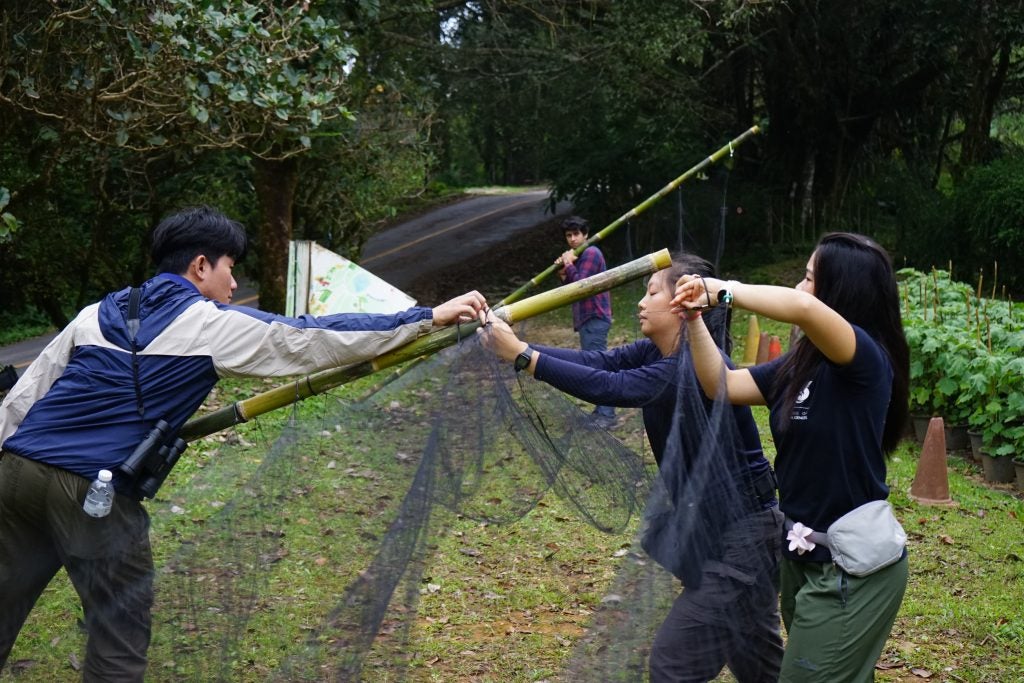
Mist nets were set up to catch and study live birds. (Photo credit: Ann Supatchaya Techachoochert)
Ultimately, the findings from this Bioblitz established a vital ecological baseline, strengthening the case for its protection.The successful transformation of Doi Tung from a history of opium cultivation into a thriving hub for biodiversity has been an inspiration and serves as a pilot for new potential projects in the region. By combining advanced scientific monitoring with cross-borderpartnership, this initiative has done more than just document rare and potentially new species; it has fostered a shared commitment to nature-based solutions. As we look toward expanded seasonal surveys and deeper taxonomic research, we remain dedicated to turning this data into long-term action—ensuring that the restoration of these ecosystems continues to support both a resilient environment and the livelihoods of the communities that call it home.
Photo credit: Ann Supatchaya Techachoochert
At a time when conservation needs belief as much as resources, your support helps restore both—turning hope into lasting impact for nature across Asia. Reach us at cncs@nus.edu.sg if you are keen to collaborate.
For more information on the DTBB, read a feature article by National Geographic Thailand here(opens in new tab).