

From Images to Immersion: Jumpstarting Imagination at NUS Libraries
REINVENTING RECESS WEEK
For most NUS students, Recess Week is more than just a break from lectures – it is a chance to pause, explore, and try something new. From hands-on art workshops and technical sessions to wellness activities and interactive experiences, the week offers the perfect opportunity for students to step outside the classroom and dive into new experiences that spark curiosity and inspiration.
Part of this buzz came from an unexpected hotspot: NUS Libraries. Far from being just a quiet study space, NUS Libraries has grown into one of the most dynamic hubs for experiential learning on campus. Its Jumpstart Minis series, in particular, opens the door to the fascinating worlds of augmented reality, virtual reality, and 360° experiences.
As Ms Raudhah Thongkam, Principal Librarian (Immersive Learning) at NUS Libraries, explains, the programme was created in response to growing student interest in exploring new technologies beyond the classroom:
“We created our Jumpstart Mini sessions because we saw a need and interest among students who wanted to explore emerging technologies in a hands-on environment, going beyond textbooks to ‘jumpstart’ new skills that would give them an edge in their own studies and research. As librarians, one of our key roles is to help our community discover new ideas and ways of doing things, so teaching about emerging technologies is right up our alley. It really reflects how libraries have transformed to support digital literacy, innovation and lifelong learning in NUS.”
It might sound a little intimidating at first. How do you dive into something you have never tried before? But that is precisely the point of Jumpstart Minis: to create a fun, accessible space for the curious to step out of their comfort zones and discover how technology can bring imagination to life.
During Recess Week, one session from the series gave participants the chance to step behind the lens – literally – and create their own virtual tours using 360° cameras. In just a few hours on a Wednesday afternoon, students captured immersive visuals, stitched them into interactive spaces, and left with a sense of accomplishment and a new skill or two. The best part was that no prior experience was required. All that was needed was enthusiasm, curiosity, and an open mind.
DID YOU KNOW?
Beyond the 360° cameras, the TEL Imaginarium houses Virtual Reality (VR) headsets and a range of other innovative tech equipment that NUS students can borrow to experiment with immersive media.
Those interested in exploring even more can visit Tech Central, NUS Libraries’ tech-enriched playground. Designed to support learning and research through immersive and interactive technology, Tech Central allows the NUS community to experiment with tools such as Augmented Reality (AR), Virtual Reality (VR), and Mixed Reality (MR). It even features a 360 visualisation cylinder - the 360imx, which creates immersive learning experiences for groups!
Find out more about NUS Libraries at https://nus.edu.sg/nuslibraries.
INSIDE THE WORKSHOP
Virtual tours are already a familiar feature across NUS websites, showcasing a significant portion of the campus. From student housing to restricted library spaces, these tours allow visitors to explore NUS without physically being there. Yet, despite how common these virtual tours are, the process behind creating them is often interesting but not widely known. This workshop, however, brought that process to light in a fun and engaging way.
From Images to Interaction: Building Virtual Tours with 360° Images began with a short presentation where the instructors explained the steps involved in using the camera. Soon after, participants were divided into smaller groups, and each group was given a 360° camera that they could use to take pictures. Instead of simply observing, the workshop followed a more hands-on approach. Participants were given the freedom to move around the library and use the camera to create their own tour.
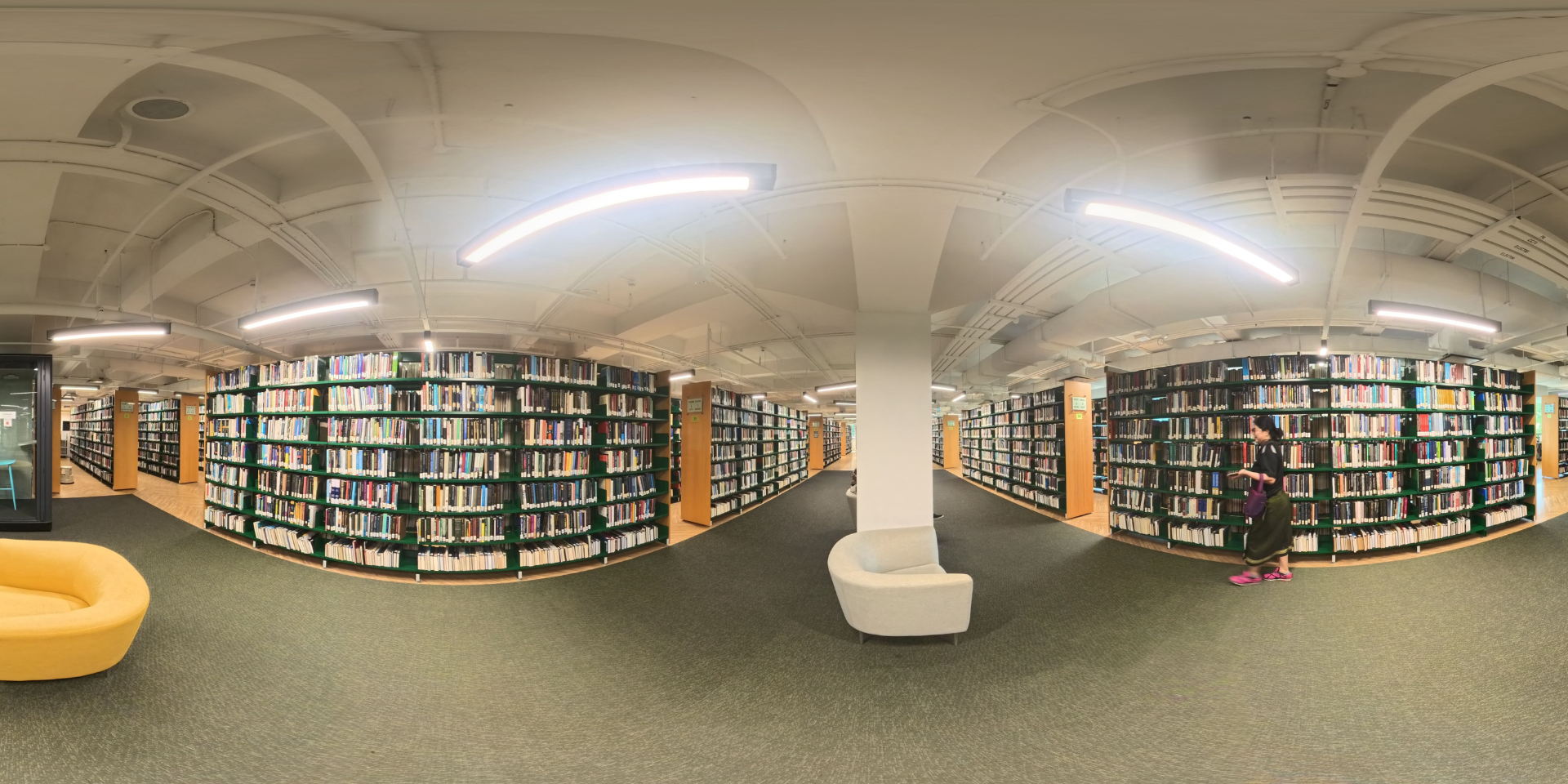
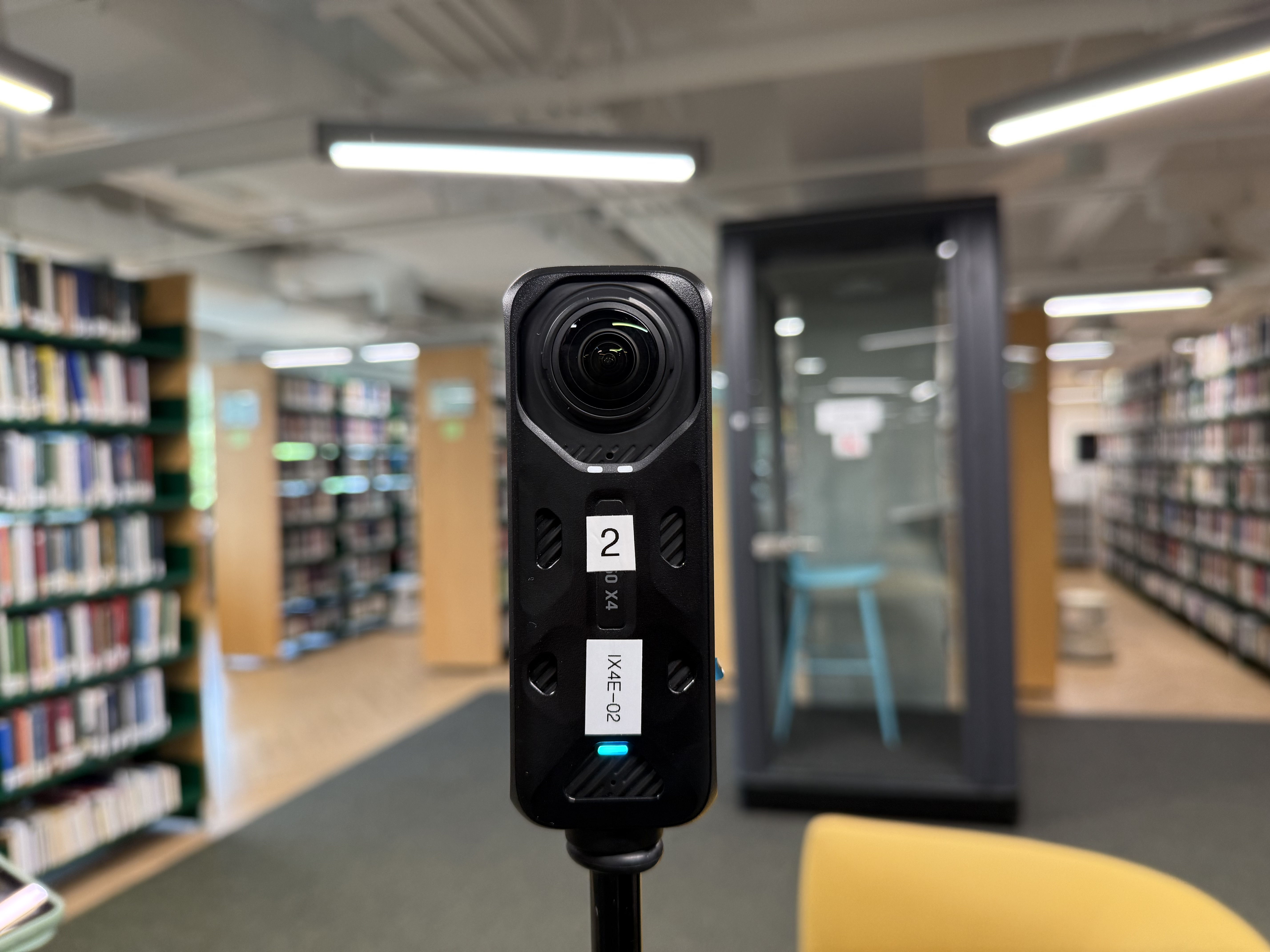
For most participants, handling and exploring the 360° camera was an entirely new experience, which brought a sense of excitement and curiosity to the room. From understanding how the camera works, to discovering how it captures everything around it, the process was one that was not only insightful but fascinating. What surprised many people the most was how the camera could even be capable of hiding itself within the final image, creating the illusion that the photo was taken from nowhere.
The 360° camera itself felt incredibly light and sophisticated, and learning how to carefully position and set it up was equally intriguing. The best part, however, was that to avoid being caught in the pictures, participants had to duck out of sight or act like natural passers-by, which made the activity both amusing and unexpectedly effective as an icebreaker, helping groups bond along the way.
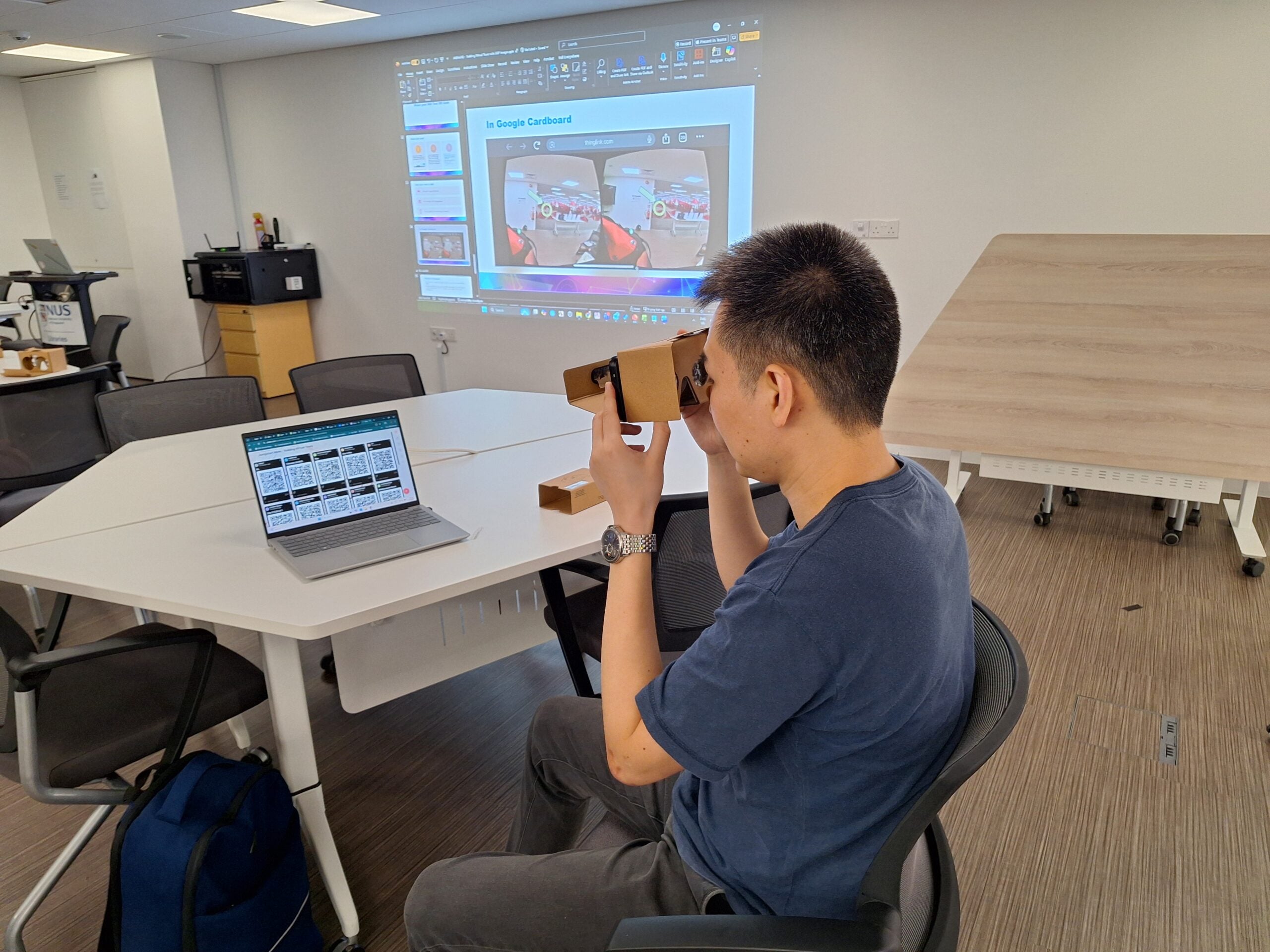
Once the images were captured, participants were then introduced to platforms that convert the photos into interactive virtual tours. The instructors guided them through each step as participants learnt how to edit, link, and structure the tour. Although the technology itself was new and exciting to everyone, the biggest highlight of the workshop was when participants finally got a chance to step into their completed tours using a Google Cardboard virtual reality headset.
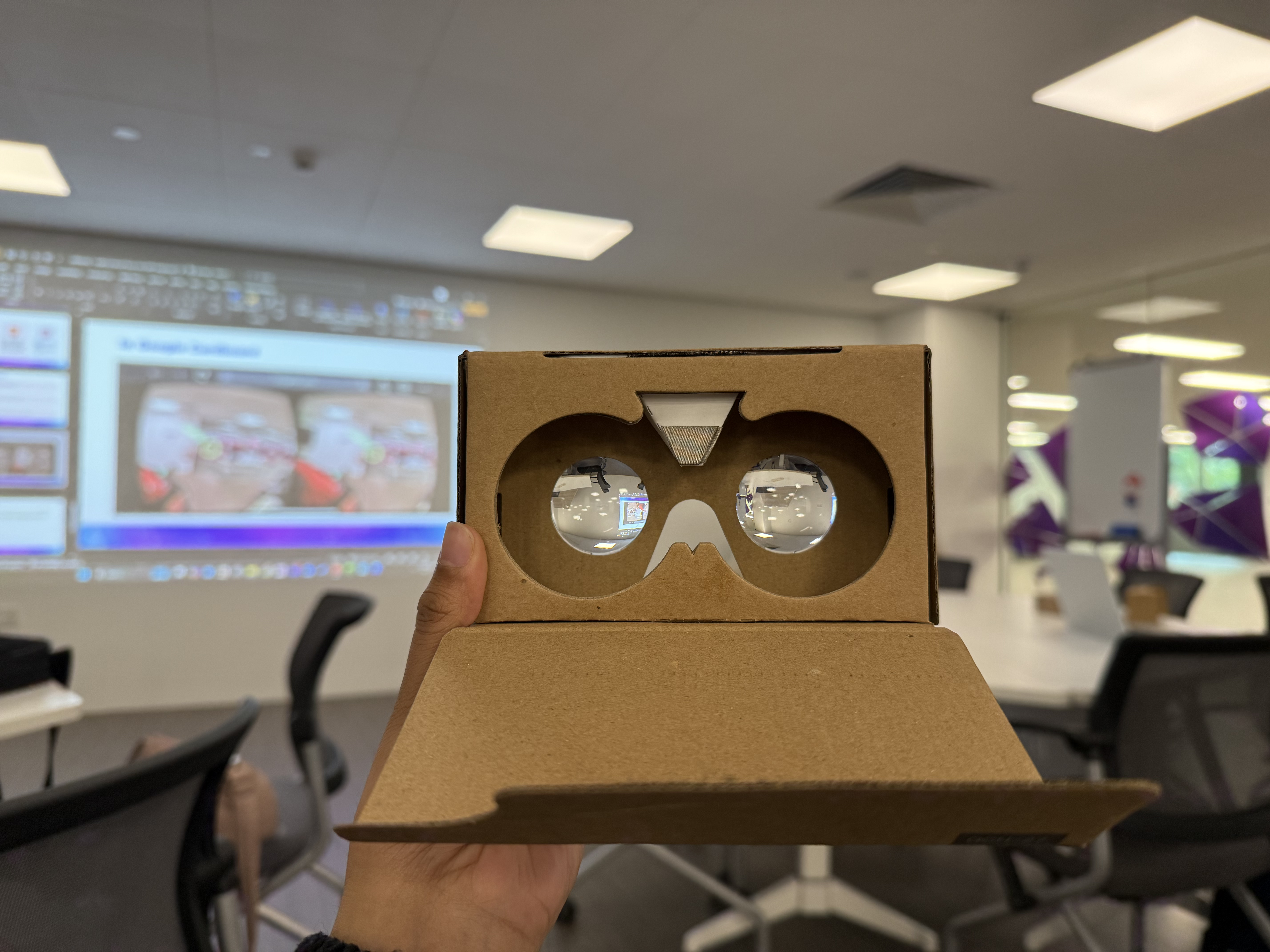
The 360° images they had just captured suddenly came to life with the help of this headset, transforming the still pictures into interactive virtual spaces that allowed participants to explore the library tours they had created earlier in a completely new and immersive way. As each participant received a headset to try, the room quickly filled with childlike excitement and laughter as people spun around, looked in every direction, and excitedly explored the world they had just built – all through a simple cardboard headset.
WHY STEP OUTSIDE YOUR COMFORT ZONE?
When asked why he chose to attend this workshop, one Year 4 undergraduate explained that he simply wanted to make the most of his remaining time at NUS, by picking up new skills and trying experiences he might not get the chance to later-on. The session stood out to him because it felt both interesting and practical, giving him the opportunity to expand his photography skills and experiment with an approach he had never tried before. Beyond just attending a workshop, it was also about discovering something new and making the most of the opportunities that university life offers.
Similar exploratory workshops are held across NUS throughout the academic year as part of the NUSOne Dabble & Discover initiative on Wednesday afternoons. They offer students the chance to learn new skills, meet new people, and try something different. Whether technology, sports, wellness, these sessions provide a space to experiment, connect with others, and discover unexpected passions along the way.
So if you are looking for a way to make your NUS life more exciting and rewarding, consider signing up for one of these workshops. A simple afternoon session might just turn into one of the most unexpected and memorable experiences of your semester.