
On 23 December 2024, I had the privilege of hosting a robotics workshop at Jalan Besar for a group of children who otherwise might not have had the chance to explore this field. For me, this workshop was more than just an event; it was an opportunity to share my passion for engineering, inspire curiosity in STEM (Science, Technology, Engineering, and Mathematics), and most importantly, to show young minds that their potential is not limited by circumstance.
This initiative stemmed from my involvement in GEN2070 ComLink Befrienders. Although I was initially allocated this course, it turned out to be an unexpectedly fulfilling and eye-opening journey. Through regular befriending sessions, I had the chance to connect closely with families and better understand the challenges and aspirations faced by the children I supported.
The inspiration for the initiative came from my volunteering experience as a GEN2070 befriender. During one of my visits, a child from a family I was supporting expressed a dream of joining a secondary school with a robotics programme. Yet, the enthusiasm was quickly dampened by concerns over high entry requirements and the cost of such opportunities. That moment stuck with me. It reminded me that many children simply need the right opportunities to explore their interests and realise their potential, opportunities that allow them to learn, create, explore, and dream without limitation. I decided then that since I had the skills and the platform, I should step up and create an alternative.
A Workshop for Everyone
I wanted the workshop to be as accessible as possible, ensuring that every child who was interested could participate. To remove any potential barriers, the session was offered at no cost, even including lunch! My goal was to make the experience open to all, so that every child could feel encouraged to explore and enjoy the world of robotics. I worked closely with my Family Coach (FC) and fellow befrienders to ensure that the logistics were sound and that the children would feel supported and welcomed.
The biggest challenge was designing the workshop content. I needed it to be simple enough for primary school children to follow, but engaging enough to spark real interest. After some brainstorming, I decided that the centrepiece activity would be for the children to build a basic robot capable of navigating a simple obstacle course. The hands-on nature of this activity meant that learning wasn’t just theoretical, but tangible, immediate, and fun.

Children learning the ropes
Planning with Purpose
While planning, I made the conscious choice to let the children exercise creativity and autonomy. Rather than dictating designs, I gave them freedom to decide how their robots would look and move. I deliberately limited the available materials, not to constrain them, but to encourage resourcefulness. It was heartening to watch them experiment with different configurations, proudly explaining the reasoning behind their choices.
To support the building activity, I also included a short introduction to electronics. At a primary school level, I knew the explanations needed to be kept simple and direct. I focused on the basics, explaining what batteries do, how switches work, and how electricity flows through wires to power a motor. Rather than diving into theory, I demonstrated these concepts through the actual components the children were handling. The aim was not to overload them with details, but to give them a clear, foundational understanding they could immediately apply to their robots.
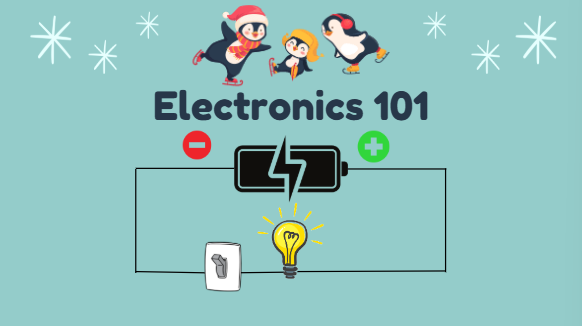
Slide from workshop slide deck
Stretching the Budget
Another aspect I took pride in was the use of recycled materials. From cardboard drink crates to old packaging, these items became vital components in the children’s robot-building process. Not only did this decision help us stay within the budget, but it also introduced the children to the concepts of sustainability and responsible use of resources. They learned that innovation doesn’t always require expensive kits, sometimes, creativity and ingenuity matter more.
Of course, no plan ever goes perfectly. The batteries provided for the robots drained much faster than expected, largely because the children were excitedly testing their creations non-stop. Rather than letting this become a setback, I quickly improvised. During lunch, I dashed to Sim Lim Tower to buy additional batteries so the fun could continue without interruption. Looking back, this moment has become one of my fondest memories of the day — it was chaotic, but it was also a testament to how invested the children were in the experience.
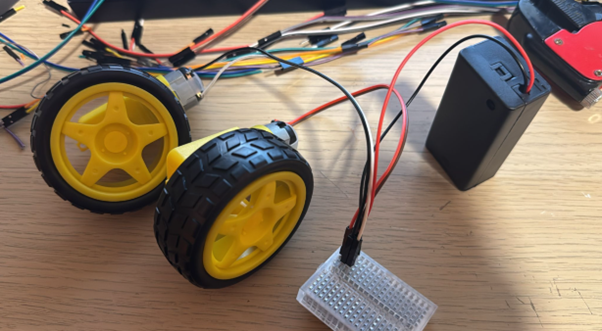
Testing of motors and electronics before workshop
The Day Itself
The atmosphere on the day of the workshop was electric. The children arrived with curiosity, some shy, some brimming with excitement. As the session progressed, I saw their confidence grow. They laughed when their robots crashed, celebrated when they succeeded, and helped each other troubleshoot. By the end, the room was filled with the hum of motors, the clutter of cardboard, and the sound of children proudly showing off their creations.
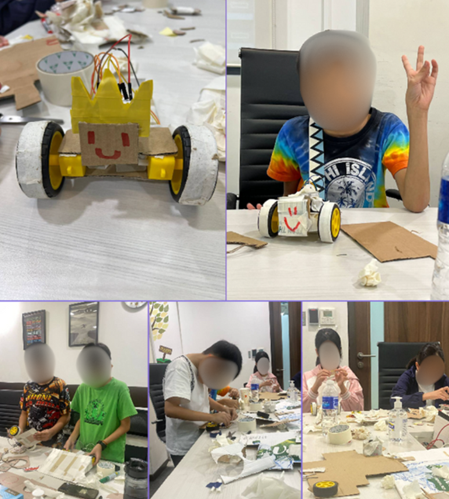
Absorbed participants during the Robotics Workshop
What struck me most was how quickly the children took ownership of their learning. Instead of simply following instructions, they asked questions, made suggestions, and collaborated in ways I hadn’t anticipated. For me, that was the clearest sign that the workshop had succeeded. It wasn’t just about building robots; it was about building confidence, teamwork, and a belief in their own potential.
Lessons Learned
Hosting this workshop taught me as much as it taught the children. I learned the importance of flexibility, from adjusting content on the fly to running last-minute errands for batteries. I learned how powerful hands-on learning can be in sparking curiosity. Most of all, I was reminded that opportunities should not be a privilege reserved for the few, but a right for every child with a dream.
As an engineering student, I often think about technology in terms of systems, design, and efficiency. This workshop reminded me of its human side – how knowledge, when shared generously, can empower and uplift. It reaffirmed my belief that education is most impactful when it inspires confidence and opens doors, especially for those who may feel locked out by circumstance.
Looking Forward
Beyond the event itself, the workshop also deepened my relationship with the children I befriend, especially one who had expressed a strong interest in robotics. Since then, I’ve continued to nurture that curiosity during our befriending sessions, using simple activities to teach concepts like math and science in an engaging, hands-on way. Sometimes, we work on small DIY kits, like windmills or simple circuits, which make learning feel less of a chore and more like a fun exploration. Seeing his enthusiasm grow has been one of the most rewarding outcomes of this journey.
Ultimately, our goal was simple: to ensure that no child feels that their dreams are out of reach because of their circumstances. If even one child from the workshop walks away believing that they, too, can be an engineer, a scientist, or a problem-solver, regardless of their starting point, then the effort was worthwhile.
21 Lower Kent Ridge Road
Singapore 119077
+65 6516 6666