
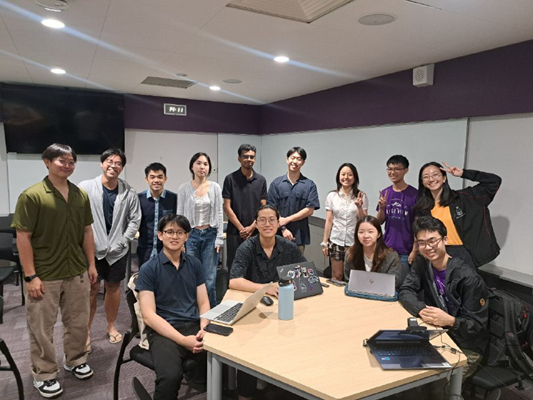
Thumbnail Image: RVN2000 AY24/25 Semester 2 students
Hi! I’m Lisa Lim, a Political Science Undergraduate and resident of Ridge View Residential College (RVRC). Under RVRC’s academic curriculum, I had the privilege of taking RVN2000 Engaging Communities in Sustainability in AY2024/2025 Semester 2, under Dr Eunice. RVN2000 is an interdisciplinary General Education course that explores the economic, environmental, and social dimensions of sustainability, and how everyday resource consumption connects to wider sustainability issues. The course also illustrates how communities can harness their collective power to address these challenges, and the complexities behind this form of change.
Teaching modes for RVN2000 moved beyond classroom lectures and discussions to include immersive field trips that allowed us to directly engage with local initiative. This unique learning opportunity helped us to see how abstract sustainability challenges manifest in the Singaporean community contexts. Field trips included attending a Repair Kopitiam workshop, rescuing and distributing “ugly” food at a community centre with Fridge Restock Community SG, and attending a textile sustainability workshop with Fashion Parade.
Hands-on Experience Repair Kopitiam and Fridge Restock Community
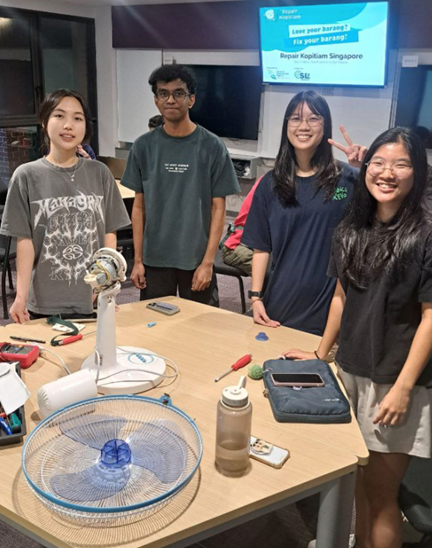
RVN2000 students repairing a broken fan during a Repair Kopitiam workshop
(Photo Credit: Dr Eunice Ng).
At Repair Kopitiam, volunteers taught us to fix broken electrical items instead of discarding them, as shown in Fig 1. The volunteers requested for each group to bring a broken electric item. My groupmate brought a broken razor , and with patient guidance from the volunteer, we managed to restore the razor to working condition within an hour. Though learning technical mechanical skill was fun, I was most impressed by the ethos behind the initiative. Repair Kopitiam empowers individuals with independent skills to extend the lifespan of everyday items via knowledge transfers amongst community members. This fosters a culture of shared responsibility and internal resilience.
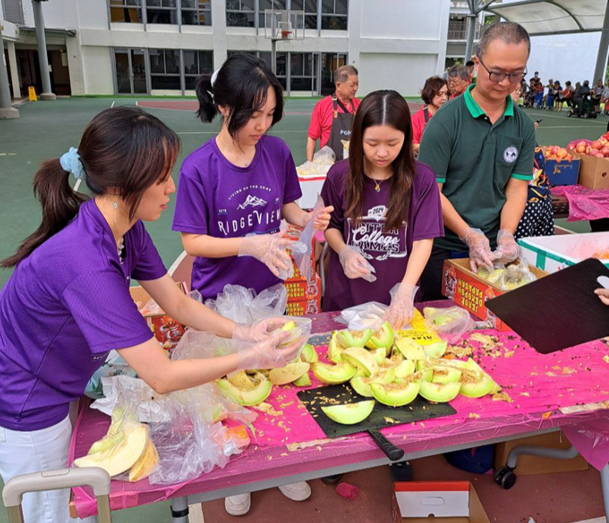
RVN2000 Students packaging melons with their course teacher, Mr Lim, to distribute to residents
(Photo Credit: Dr Eunice Ng).
During the Fridge Restock Community session, students from the morning class worked alongside volunteers to rescue unsold food that would otherwise have been thrown away from Pasir Panjang Wholesale Centre. They loaded crates onto trucks for delivery to community centers across Singapore. In the afternoon, my classmates and I cut and sorted the rescued food at Ayer Rajah Community Centre as shown in Fig 2, managed the queue, and distributed the food to residents. While engaging with the volunteers and community members, I realised how such initiatives act as social glue, transforming resource distribution into community building. They also embody the three pillars of sustainability, environmental (reducing food waste), economic and social (supporting resource-scarce households and promoting equity).
Project Work based on challenges faced by Fashion Parade
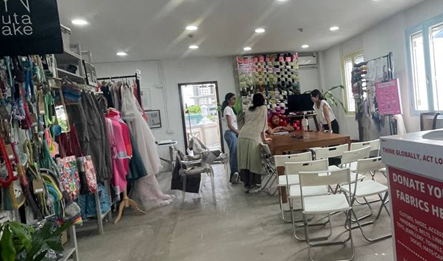
A modular space at the end of the Circular Fashion Hub.
Depicted in the image are four members of the Fashion Parade huddled around a table,
where they had just conducted a sustainability educational workshop.
The fourth floor of Allenby House, houses ‘Circular Fashion Hub’, a physical space where a mishmash of various sustainability-focused fashion brands co-exist, selling goods or hosting workshops This was where we attended Fashion Parade’s workshop on becoming conscious textile consumers, as shown in fig 3. Fashion Parade is a ground-up initiative that engages community members on textile sustainability issues. Founded in 2021, Fashion Parade’s activities range from sewing classes and educational courses to fashion shows and community art using textile waste. Singapore’s textile waste management remains largely downstream, emphasising recycling through disposal in textile bins, while efforts to curb excessive fashion consumption remain limited. Fashion Parade disrupts this model by reframing textile ‘waste’ as a medium for creativity and community engagement.
Fashion Parade operates in borrowed or underutilised spaces, like the Circular Fashion Hub, and hosts events at other sites like schools and community spaces. They also rely on ad-hoc collaborations and digital outreach to maintain public presence. This flexibility allows them freedom to expand their initiatives creatively. However, the lack of permanent premises and steady financial stream also poses a challenge of sustaining momentum as it demands immense effort from its small volunteer team to sustain the community.
Our final team project recommended a way forward for Fashion Parade to enhance their impact within the community and to address the dilemma of resource constraints. We proposed for Fashion Parade to partner with student hostels where excessive textile waste is generated when students check out of hostels after the period of their stay . By organizing hostel-based clothes swap events, Fashion Parade could reduce the workload of cleaning staff tasked with managing textile waste, promote more sustainable attitudes among students, such as individual accountability, promoting responsible consumption, and highlighting the often-overlooked impact on cleaning staff who manage the consequences of mindless disposal.
Conclusion
Through this project, RVN2000 encouraged me to see sustainability not only as personal responsibility or top-down policy, but also as a community-driven practice. I believe that any juniors looking to take this course would have a unique out-of-classroom opportunity to learn firsthand how collective action, rooted in everyday interactions, can generate momentum for change, even amid structural challenges.
21 Lower Kent Ridge Road
Singapore 119077
+65 6516 6666