
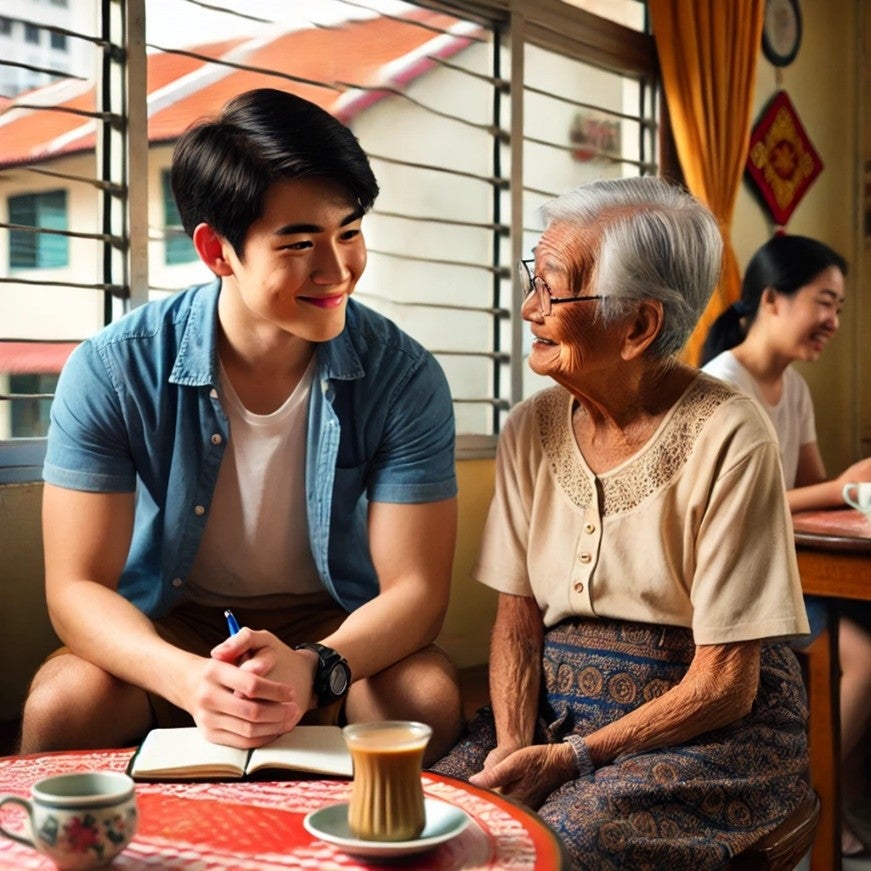
LEE Han Kwang, Coffee with senior. AI generated (ChatGPT)
I expect most readers would have gone through the Singaporean education system where the tenet “If you work hard, you will be rewarded” is drummed into our minds relentlessly. It would therefore be understandable that we have similar expectations of courses hosted by our own esteemed university, right? Yet, this was my first mistake when approaching GEN2060Y. I thought merely turning up and completing the required engagement hours would be sufficient. Attending scheduled sessions, talking to seniors, and ensuring they had someone to converse with seemed like a straightforward way to check off the boxes and guarantee a decent grade.
It was only after facing rejection from a senior befriendee that I realised the importance of moving beyond academic obligations. The senior rejected activities planned and visits, along with allegations that I was visiting for the ‘sole purpose’ of fulfilling my university assignment, without care for the senior themselves. This was a rude awakening for me, as not only was I denied the opportunity to work hard, but it felt like my character and sincerity towards befriending were also being questioned. Thankfully, timely counsel from my tutor soothed initial inflamed emotions without lasting damage to my relationship with the senior, especially after empathising with and considering the senior’s perspectives. These were all valid concerns. After all, nobody would wish to spend time with uncaring young adults obsessing over academic credits. This brought on the revelation that the senior had probably lashed out in anger owing to her experience with past befrienders, likely pushing me away as a defence mechanism against the inevitable loneliness that comes with the departure of someone you have formed a connection to.
This sparked an intense drive to prove myself, and my intentions to the senior. Hence, I pursued an approach where I prioritised organic conversation instead of planned activities, to convey our genuine interest in befriending these seniors. Additionally, I kept a detailed logbook with entries for each senior and noted down every interaction with them. I used this logbook to refresh my memory of topics discussed and information gleaned about the senior, thus demonstrating my genuine effort to befriend them, finally resulting in meaningful interactions with them. A compliment from the daughter-in-law of my senior attributing my senior’s improved ability to memorise details of passing cars to my interactions with her, really demonstrated how our attention to detailed and sustained conversations have improved her memory noticeably, which was nothing short of amazing!
Furthermore, demonstrating sincerity in my interactions went beyond simple conversation. Noticing the difficulties my senior had with her healthcare needs, I took it upon myself to offer my support. For instance, my senior has frequent hospital visits, and I noticed that managing her medical appointments often overwhelmed her. Instead of merely offering vague support, I took the initiative to advise, navigating appointment conflicts and ensuring all parties understood actions undertaken. I also made sure to connect her with the appropriate medical personnel, whether it was for a follow-up check-up or to address a specific health concern. Through these efforts, I showed that I genuinely cared about her well-being and was willing to go the extra mile to make her life easier. Over time, she expressed how much this support alleviated her stress and helped her feel more in control of her health, reinforcing the importance of being truly present for the people we are meant to befriend beyond paying lip service.
In my experience, hard work in the context of an academic assignment does not always lead to success in something as delicate as service work. As students, it is easy to treat this mandated C&E pillar as another set of tasks to complete for a grade, but that approach ignores the human element. Befriending is not simply about showing up and meeting the minimum requirements. To truly succeed in befriending, one must approach it with the genuine intent of making friends and not solely for academic credit. When one views the course this way, the results – genuine connections – will naturally follow. If our actions are not authentic, it is almost certain that the seniors will sense it. They can tell when we are simply fulfilling an obligation versus when we are genuinely interested in them as individuals. True connection comes from sincerity and intent, not from playing a role or ticking off boxes. When you bring honesty, respect, and care into these interactions, the relationship becomes far more impactful for both parties. Even now, having completed my academic assignment, I continue to visit my assigned seniors – not out of obligation, but because I enjoy the company of friends!
21 Lower Kent Ridge Road
Singapore 119077
+65 6516 6666