
Hello! I’m Insyirah, a Year 3 Environmental Studies major in the Faculty of Science, with minors in Geographic Information Systems and Southeast Asian Studies. While SE3216: Migration, Diaspora and Refugees in Southeast Asia fulfils the Communities and Engagement pillar under the College of Humanities and Sciences (CHS) programme and can be double-counted towards my Southeast Asian Studies minor, what truly motivated me to take it was its focus on mobility and displacement in the region. As a region connected by seas and shaped by centuries of movement, migration is a shared reality in Southeast Asia – yet it remains a topic that is not often discussed extensively. For someone like me, with relatives in different parts of Malaysia, and having spent much of my childhood there despite being Singaporean, I was particularly curious about what drove migration, the different forms it could take, and the ways it shaped people’s lives. This course offered an opportunity to engage with these narratives more deeply and critically.
Growing up in Singapore, Home by Dick Lee was more than just a song. It was the soundtrack of every August, an annual signal that National Day was coming. I sang along without thinking; it was one of those iconic National Day Parade songs everyone seemed to know by heart. The lyrics offered reassurance and certainty that home is fixed, familiar, and waiting. “This is where I won’t be alone,” the song promised, and for a long time, I believed it. I believed that home was something stable, unquestioned, and easily claimed.
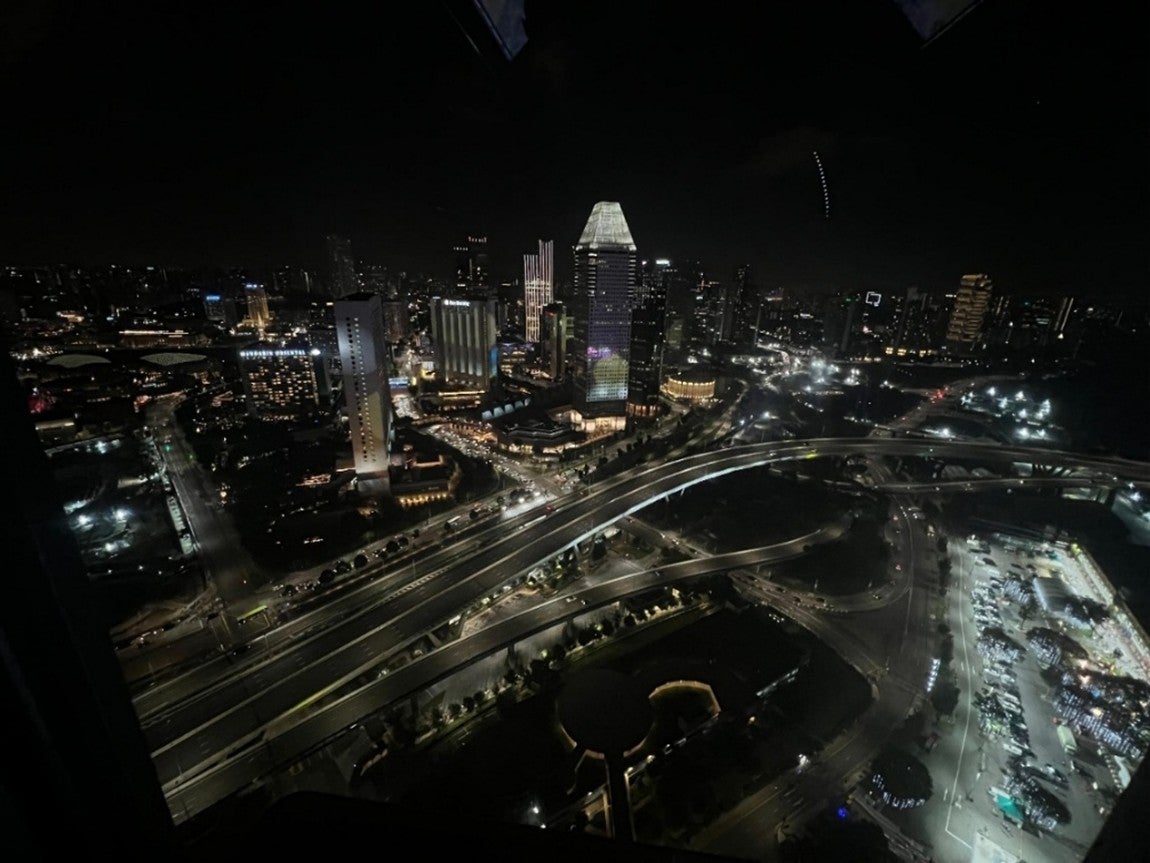
Photo: A familiar landscape of Singapore. Photograph by Nur Insyirah
It was only while taking SE3216 that the song began to sound different. The course seeks to understand the complex trajectories, meanings, and outcomes of human mobility in Southeast Asia through both theoretical frameworks and empirical case studies. Throughout the course, we explored Southeast Asia as a space of migration and mobility, then and now, examining how diasporas emerged through trade, conflict, and colonial and post-colonial transformations. Case studies such as the different historical migration flows of ‘Haw Chinese’, who moved as traders and later as anti-communists Kuomintang into neighbouring mainland Southeast Asia, highlight how trade, conflict, and political change have shaped diasporic and hybrid identities, as well as the formation of racial, ethnic, political, and cultural minorities.
The course also foregrounded contemporary issues, including citizenship and belonging, the gendered dimensions of labour migration, irregular and undocumented migration, human trafficking, and refugee crises across Southeast Asia. Later seminars examined intergenerational mobilities, such as aspiring students and retirees, highlighting how mobility is structured not only by necessity and crisis but also by aspiration, privilege, and life stage. Together, these topics complicated any singular narrative of migration, revealing instead a region marked by uneven mobility and unequal access to rights, protection, and recognition.
Beyond lectures, SE3216 emphasised active engagement. Each week, a group of students led class discussions, summarising assigned readings and connecting theoretical concepts to real-world cases. Following each presentation, the discussion leaders were required to write an individual reflective response on the week’s topic. For my group, this reflection centred on the refugee crisis, with my paper focusing on the Rohingya. The Rohingya are a predominantly Muslim ethnic minority from Rakhine State in western Myanmar. Despite having lived in the region for generations, they are not recognised as one of Myanmar’s official ethnic groups and were effectively rendered stateless by the 1982 Citizenship Law. As a result, they have faced systemic discrimination and repeated outbreaks of violence, most notably in 2012 and 2017, which led to mass displacement, with hundreds of thousands fleeing to neighbouring countries, particularly Bangladesh. Today, the Rohingya crisis is widely regarded as one of the most severe and protracted refugee situations in Southeast Asia, marked by ongoing humanitarian, political, and ethical challenges.
Through engaging with this topic, I started to realise that the idea of “home” is not experienced equally by everyone. The belief that home “stays within me wherever I may choose to go” presumes security and recognition, privileges that many migrants and refugees do not have. For the Rohingya, movement often involves managing what must be left behind, negotiating safety, and navigating complex social and political landscapes.
One of the assigned readings, From Refugees to Legitimate Minority? Rohingya Performing National Belongings in Thailand by Jaehn, M. (2022), explored how many Rohingya have sought refuge in Thailand, only to encounter another state governed by a narrow vision of “Thai-ness,” where citizenship and belonging are tied to nation, religion, and monarchy. Denied formal refugee status and stripped of legal recognition, the Rohingya perform belonging as a survival strategy: blending in, adapting their outward appearance, mimicking cultural norms, and suppressing visible markers of Rohingya identity to avoid deportation or detention, while preserving aspects of their ethnicity and culture in private and community spaces. This duality illustrates how “home” can be a contested, dynamic, and politically mediated concept, shaped by borders, policies, histories, and power.
In my reflective paper, I examined how the Rohingya crisis challenges not only ASEAN’s moral authority but also our own roles as observers and scholars. Rather than treating suffering as an object of study, the paper questioned what it means to analyse invisibility or translate endurance into academic or artistic form. While ASEAN’s “paper diplomacy” gestures toward responsibility without enforcement, I argued that scholarly work risks replicating this distance if it remains detached from accountability.
Another key assignment involved constructing a family migration history, where students interviewed a family member with a migrant experience, whether cross-border or within Singapore, to explore migration as an intimate, lived process rather than a purely structural phenomenon. I interviewed my maternal grandmother, who moved to Singapore from Malacca first for work and later for marriage. Through questions about the journey itself, what she carried, who she travelled with, and the emotions associated with movement, as well as the analysis of photographs and hand-drawn objects connected to her migration, the assignment foregrounded memory, affect, and materiality. This exercise revealed that migration is often experienced through a complex mix of nostalgia, loss, and aspiration, complicating dominant narratives of mobility.
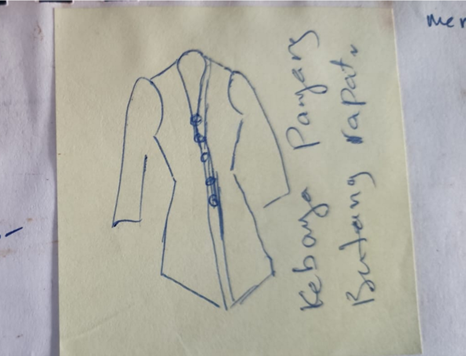
Photo: A drawing of a traditional clothing hand-sewn by my grandmother, carefully packed and carried with her on her migration to Singapore.
Finally, the research proposal or media analysis assignment invited students to develop an original research idea or critically examine representations of migration in various media forms. This open-ended format allowed for creative and interdisciplinary approaches, while requiring sustained engagement with academic debates on (im)mobility and migration in Southeast Asia. Together, these assessments reflected the course’s broader aim: to move beyond abstract discussions of migration and instead cultivate critical, empathetic, and context-sensitive ways of understanding mobility in the region.
Ultimately, SE3216 taught me that migration is not merely about crossing borders, but about navigating uncertainty, negotiating belonging, and carrying fragments of home across time and space. Where Home once offered uncomplicated reassurance, it now invites a more careful reflection on who is able to claim home with certainty, and who must continually work to build and sustain it.
I would wholeheartedly recommend this course to students, especially those looking to explore topics beyond their primary field of study. While it may feel different from more conventional Communities and Engagement courses, particularly as the form of “engagement” is less immediate or visible compared to the GEN-coded courses, I found that its impact was no less significant.
SE3216 encourages a different kind of engagement: one that reshapes how you think, listen, and interact with people across the region. The course asks students to approach its material with openness, not only to unfamiliar concepts but also to the emotional weight that comes with discussions of migration, displacement, and belonging. It does not offer easy conclusions. Instead, it invites sustained reflection on ideas of citizenship, identity, and home – questions that are deeply relevant to Southeast Asia and, arguably, to the kind of work many of us may eventually do. Long after the seminars end, the questions raised in this course continue to linger, much like a familiar song that, once reinterpreted, can never quite be heard in the same way again.
21 Lower Kent Ridge Road
Singapore 119077
+65 6516 6666