
Hi! I am Jace Wong Xuan Hui, a FASS student studying Psychology, sharing my perspectives of the CLC3307 Learning for Social Change course. This course introduces community-based approaches and explores various types of literacies and how they empower communities. The various literacies we explored included, but not limited to, emotional literacy, financial literacy and death literacy. For example, we learnt that emotional literacy meant the ability to recognise, understand, and manage one’s own emotions, as well as to recognize and understand the emotions of others. This emotional literacy was also incorporated into our group project, where we developed youths’ current emotional literacy through our programme grounded in community development research.
I chose this course because I wanted to understand how meaningful change happens in the community; impact is created using the tools and approaches that community development practitioners apply. What drew me most to this course was its focus on translating theory into real-life practice to create actionable change for various communities in Singapore. This course shifted my mindset from believing that communities need external authorities to “step in and help,” to understanding that communities already possess valuable strengths and resources within themselves. Often, they don’t need to be “saved”; they simply need support in recognising and mobilising their own assets.
Beyond the seminars, we were tasked to explore how different literacies shape people’s everyday lives by inquiring into an individual’s beliefs and behaviours. To deepen our learning, we had to uncover a specific literacy that was practiced by an individual and how it shapes their daily decisions. For instance, I chose to interview a close family member to better understand how her lifestyle habits were influenced by her current knowledge of health literacy and by the communities around her. In addition, I examined her eating habits, fitness routines, and social circles through the lens of health literacy.
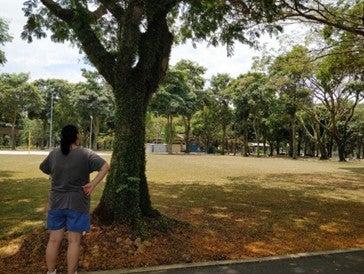
Picture of the individual going for her routine walk in the neighbourhood park
Through this process, I discovered that her struggles were not simply a matter of motivation or willpower, they were deeply connected to the psychosocial and structural barriers within her community. I initially had a narrow view of what health literacy meant for her, but I soon realised that the obstacles she faced were far more complex than I expected. The challenge for this individual was not that she could not commit to her fitness routines, or that she was unmotivated. It was her social circle and close familial ties which make her feel psychologically obligated to compromise on her dietary goals. For example, workplace social norms and family traditions normalise high-calorie indulgences, breeding an environment where deviating from these expectations may feel like a social transgression rather than a personal choice. Thus, these social expectations have made it challenging for the individual to achieve her health goals.
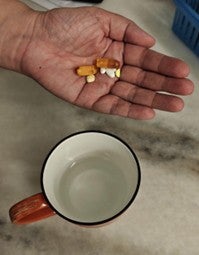
A snapshot of the individual’s medication
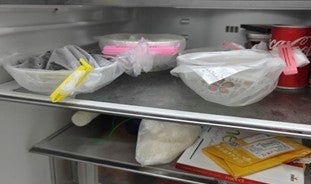
A glimpse of what the individual consumes
The above snapshots give a glimpse into the individual’s daily eating habits and health literacy practices, such as by taking her medications or by keeping leftovers from family dinners. These insights about my family member allowed me to appreciate how health-related behaviours are embedded in broader social contexts, and how meaningful change must involve both personal commitment and community support. I also learned that while many community development models seem straightforward in theory, reality is often far more complex in practice. Implementing change means navigating diverse perspectives, emotional dynamics, and cultural sensitivities.
Ending it off, taking CLC3307 has been a deeply reflective and transformative experience. It has challenged me to rethink what it truly means to be an active community leader, and to view development not as something done for communities, but with them. This course has helped me unlock new perspectives on how sustainable change begins, by listening, collaborating, and empowering others to recognise their own strengths. I deeply hope that more NUS students can take on this bold journey to question their pre-existing notions about community work, and to be the change they want to see in their community. A word of advice to juniors considering this course, is to always keep an open mind and constantly reflect on the “why”. This is especially when it comes to supporting a community – focus on strengthening what the community currently has rather than what can be added in.
21 Lower Kent Ridge Road
Singapore 119077
+65 6516 6666