
Intra-CREATE GelPonics: Growing the Future of Urban Farming through Collaboration
The Intra-CREATE GelPonics initiative has been a journey of scientific breakthroughs and intercultural teamwork led by Prof. Li Jun from NUS (NERI and NUS Biomedical Engineering) and Prof. He Yiliang from Shanghai Jiao Tong University (SJTU), addressing one of Singapore’s critical issues: food security. The project is built on several years of collaboration between NUS and Shanghai Jiao Tong University (SJTU), which have worked together since 2012 under the NRF Campus for Research Excellence and Technological Enterprise -Energy and Environmental Sustainability Solutions for Megacities (CREATE-E2S2) programme. As Prof. He Yiliang shared, this long-standing partnership “laid a solid foundation for Intra-CREATE. Our joint laboratory for emerging contaminants, supported by both governments and university leadership, has enabled shared use of facilities and continuous exchanges among professors and PhD students.” This vibrant network helped set the stage for the creation of GelPonics.
Prof. Li highlighted that Singapore’s distinctive urban challenges—limited arable land and a high reliance on food imports—necessitate innovative solutions. “We identified a unique opportunity to convert food and biomass waste into valuable resources for sustainable vegetable farming,” he explained. Motivated by Singapore’s Zero Waste Masterplan and the national objective to fulfill 30% of nutritional needs locally by 2030, Prof. Li’s team developed hydrogels from upcycled waste materials, such as spent coffee grounds and okara. These hydrogels, known for their exceptional water retention and nutrient-loading capabilities, were designed to mimic soil and enhance plant growth in a closed-loop system. “This approach enables us to cultivate vegetables with almost zero consumption of non-renewable resources,” he added.
An important aspect of the system is its sustainable nutrient delivery. Prof. He explained that his team contributed their expertise in wastewater resource recovery. “It is difficult to satisfy plant growth requirements by relying solely on nutrients left over in raw biomass,” he said. “We proposed to recover nutrients from wastewater and introduce them into the GelPonics system.” In order to enhance nutrient efficiency, the team also tested with 3D-printed hydrogel scaffolds that can gradually deliver nutrients to plant roots. Through density functional theory, along with microbiomics, and metabolomics analyses, they confirmed that the technology not only promotes vegetable growth but also maintains the safety of the produce for human consumption.
The GelPonics system, as Prof. Li outlined, encompasses three core elements: the development of waste-derived hydrogels, the conversion of food waste into nutrient-rich digestates known as NewTrients, and the integration of these components into a scalable farming system. The outcome is a modular, cost-effective, and low-maintenance solution that is suitable for both large-scale urban farms and small home-based units. “Compared to traditional hydroponics, GelPonics demands less infrastructure and technical expertise, making it ideal for widespread adoption,” he noted.
The initiative also benefited from biotechnological expertise. Assoc. Prof. Zhou Kang from Singapore Institute of Technology (SIT) utilised his background in microbial engineering to create microbes capable of generating plant hormones from renewable feedstocks. “These hormones are incorporated into the gels as growth promoters,” he said, adding that his team enhanced hormone production more than fivefold. To accomplish this, his team created a cost-effective method using Nanopore sequencing to monitor microbial transcriptomes and pinpoint which genes could be optimized. “This is an important step toward scaling up for field trials,” he explained. His involvement also created training opportunities for students, such as a PhD project concentrated on microbial culture optimisation.
Partnerships between institutions extended beyond scientific endeavors to encompass cultural aspects as well. Prof. He reflected that Singapore’s receptiveness allowed for the rapid adaptation of global solutions. “Interdisciplinary and intercultural training of students promotes innovation that transcends boundaries,” he observed. Assoc. Prof. Zhou added that working closely with colleagues and visiting urban farms helped him “understand the needs of local stakeholders and shape the research to make a real impact on farming operations.”
Prof. Li also highlighted the educational and societal potential of GelPonics. “We envision it being utilized in schools to teach students about sustainability and food production through hands-on learning,” he remarked. The system's simplicity and adaptability make it a powerful tool for community engagement and environmental education.
The influence of GelPonics is clear. Compact, reusable, and flexible, the system can contribute to Singapore’s “30 by 30” food security vision while also serving China’s urban agriculture. Prof. He noted that “the production of the project’s products and applying them to family farming would be simple and easy to implement, helping each family access a fresh and stable supply of vegetables.” As we look to the future, he emphasised that the partnership is far from over. A fresh initiative between SJTU and NUS launched in 2024 seeks to address climate change through synthetic biology by transforming CO₂ into bio-based materials.
For Prof. He, the most significant lesson was the prominence of local needs. “During COVID-19, Singapore struggled to supply vegetables domestically. That realisation sparked this project,” he said. “It has been a unique opportunity to see our academic achievements applied in practice.”
GelPonics is thus more than just a technological innovation—it demonstrates that long-term collaborations, shared expertise, and a dedication to sustainability can cultivate solutions for tomorrow’s cities.
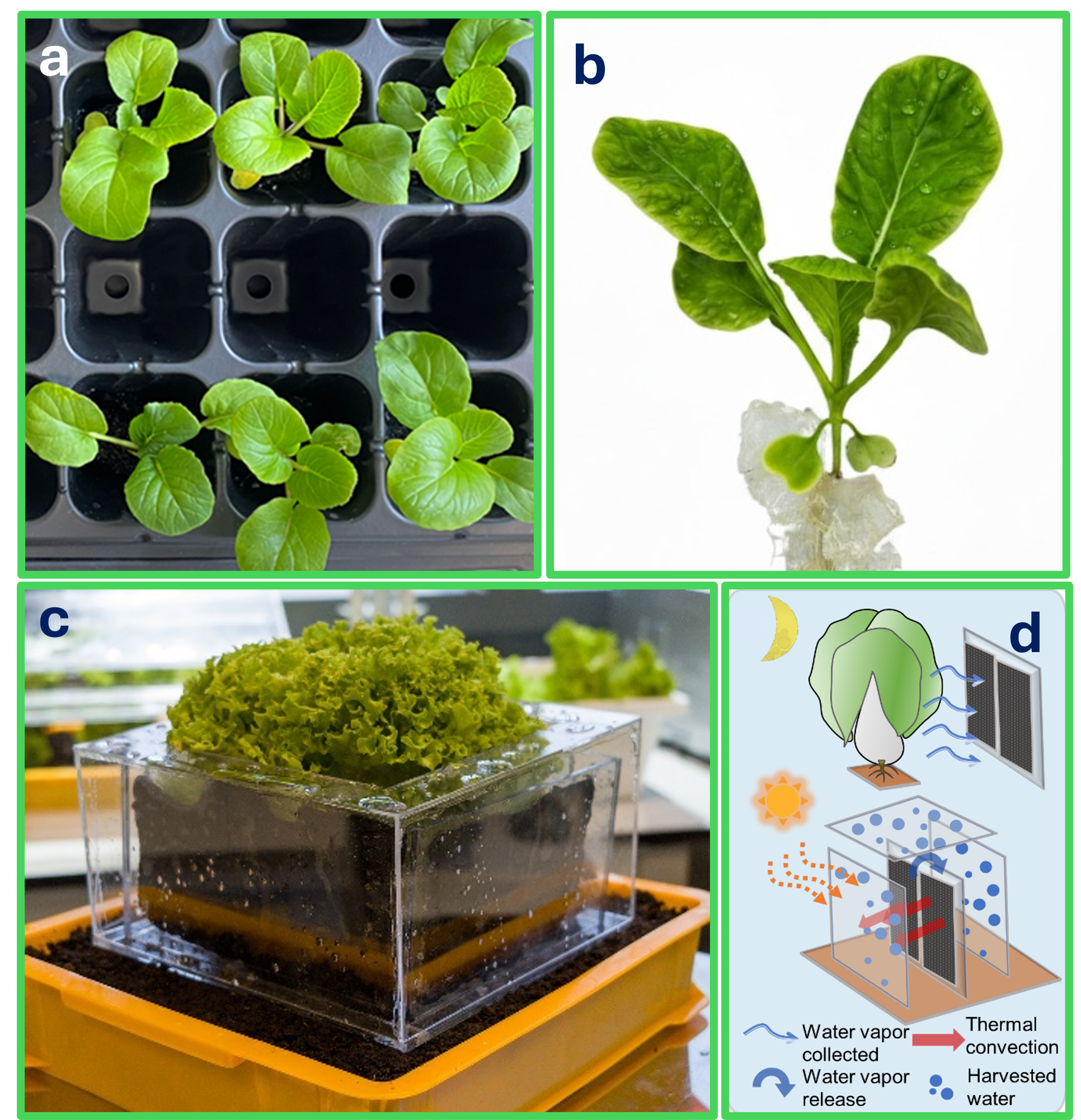
Figure: a & b) Images showcasing the future of sustainable farming: GelPonics based superabsorbent hydrogels created entirely from upcycled biomass and food waste. By mimicking the function of soil, these highly effective gels boast outstanding water retention and nutrient delivery. This revolutionary method allows for the cultivation of vegetables while achieving almost zero consumption of non-renewable resources.
c & d) The hydrogel-based Transpiration and Evaporation Assisted Device (TEAD) facilitates water reuse in urban farming irrigation by mimicking natural cycles. The gel captures ambient moisture at night under humid conditions. During the day, the device uses solar energy to heat the gel, triggering the release of the absorbed water back into the irrigation system. This process significantly reduces the need for external water input.
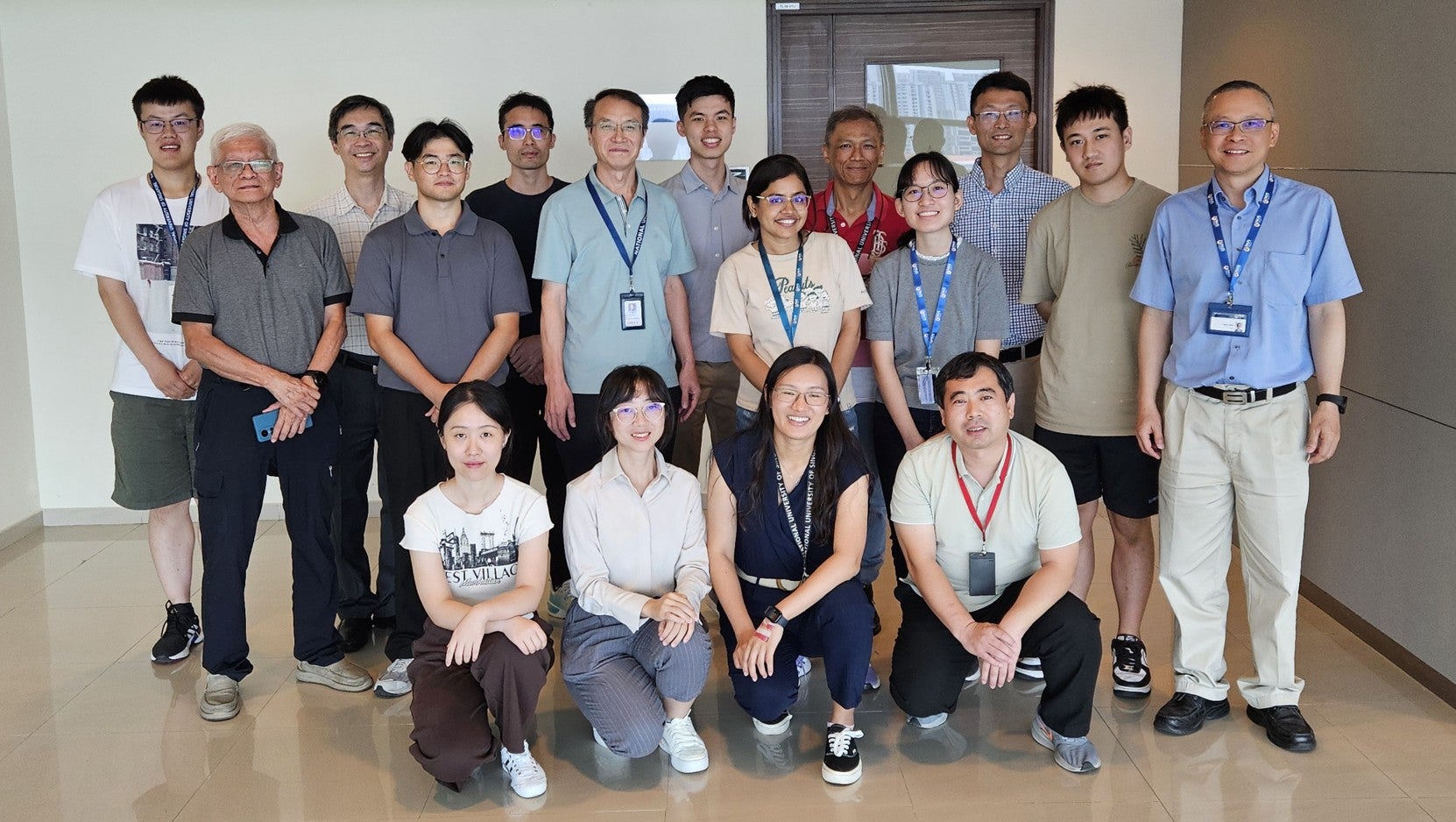
Prof. He Yiliang (6th from left); Prof. Tong Yen Wah (3rd from left) and Prof. Ong Choon Nam (2nd from left)