
Nanosensors Breakthrough for Food and Health: An Interview with Asst. Prof. Tedrick Lew
By Elise Li Tianyi, NERI Communications Executive
In the quest for sustainable agriculture and enhanced food safety, nanotechnology is emerging as a revolutionary force. Leading this innovation is Dr. Tedrick Lew’s groundbreaking research in plant nanotechnology, bringing us closer to a future where nanosensors integrated into plants can identify environmental pollutants and stressors in real time. This advancement not only holds the potential for improved food safety but also allows for the monitoring and reduction of environmental damage. In an exclusive interview, Dr. Lew discusses his insights on how nanosensors are creating a path toward a more sustainable and healthier future.
Dr. Lew’s team is leading the way in the integration of nanoparticle sensors into plants, transforming these plants into living, self-sustaining sensors that can identify harmful environmental toxins such as arsenic. These sensors function by enabling plants to absorb and report the presence of contaminants from the soil, with the sensor brightness varying according to pollutant levels.
As Dr. Lew explains, “Plants are everywhere, and our approach can turn any living plant into an environmental sensor. Unlike conventional methods that require frequent soil sampling and specialised instruments like mass spectrometry, our approach provides a green, continuous, and widely accessible way to detect pollutants.”
This innovation provides a method for real-time monitoring of pollutants and holds enormous potential for food safety and environmental protection. Utilising these plant-based sensors allows for timely action in contaminated regions, thereby preventing harmful substances from infiltrating the food supply.
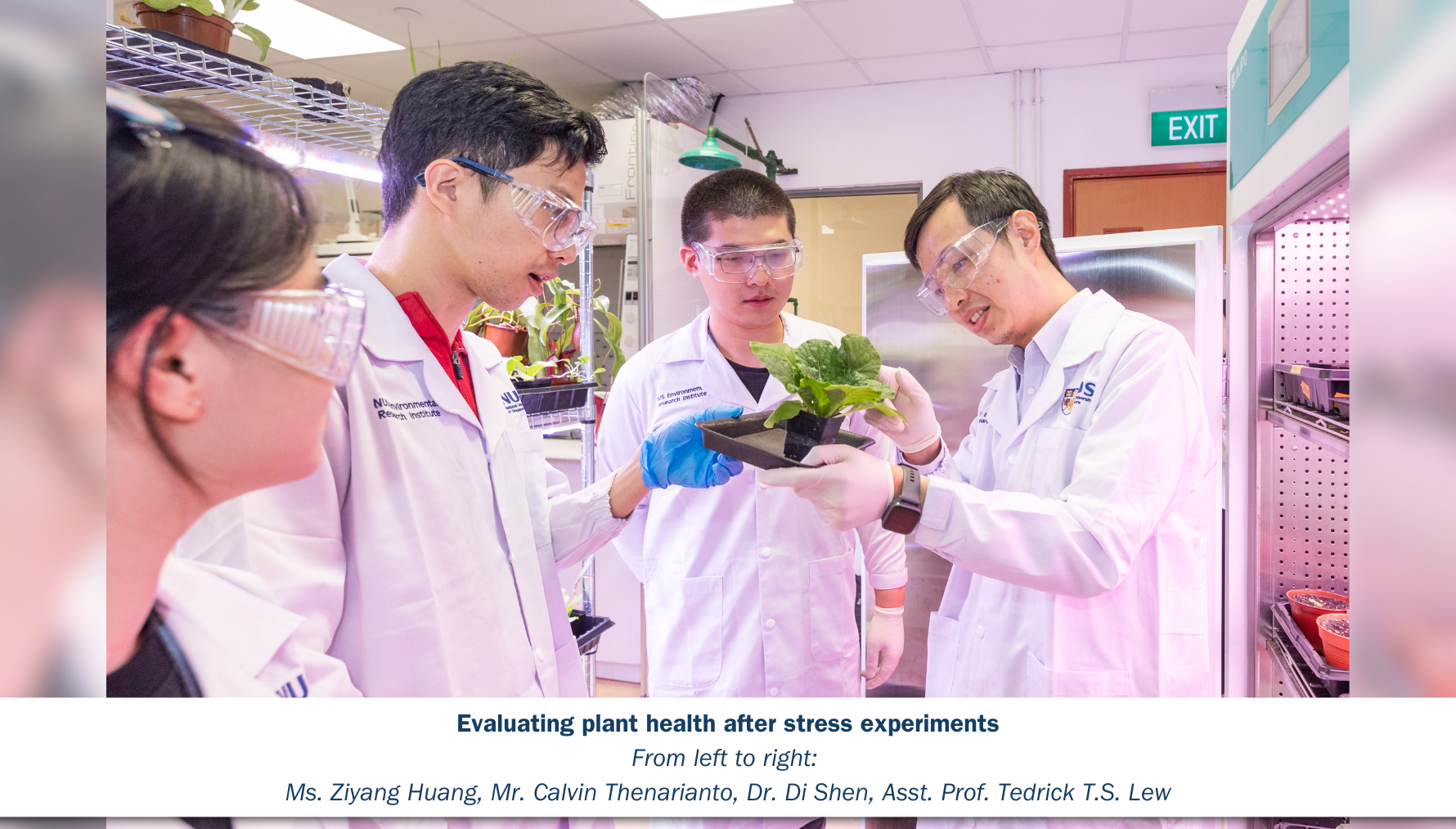
The impact of nanotechnology goes beyond just environmental monitoring; it is also significantly contributing to enhancing crop resilience and promoting sustainable agricultural practices. In his 2020 paper titled, “Species-Independent Analytical Tools for Next-Generation Agriculture”, Dr. Lew discusses how nanomaterials can be used to improve plant health and resilience to environmental stresses like drought, disease, and nutrient imbalances. By incorporating nanosensors into plants, his team can track stress-related molecules within plants—early indicators of stress—which enables prompt action to be taken before the stress results in permanent damage.
He points out, “Nanomaterials are very versatile and can be designed to provide different benefits to improve plant resilience. For example, we use nanoparticles as sensors to detect stress in plants. This approach advances precision agriculture by offering real-time insights into plant health, allowing for early intervention to reduce crop damage.”
Dr. Lew’s envisions a future for nanotechnology in agriculture and food production that prioritizes sustainability. His lab is dedicated to creating nanoparticles that can target specific plant parts, ensuring that nutrients and protective compounds are delivered precisely when and where they are required. This strategy enhances the effectiveness of agrochemical application while also minimising the ecological footprint of farming.
Dr. Lew explains, “My group is focused on designing nanoparticles that target different parts of the plant. This can significantly improve agrochemical efficiency and help reduce the excessive use of fertilisers and pesticides.” Given the increasing need for food and the urgency to minimise agricultural waste and pollution, such targeted solutions are crucial for future-proofing food production systems.
Although the potential of nanotechnology is extensive, Dr. Lew recognises the difficulties in creating safe and effective nanomaterial-based solutions for agriculture. A primary challenge is comprehending how nanoparticles interact with plant cells and ensuring that these interactions are safe and effective. His research concentrates on exploring these interactions, particularly how nanoparticle properties affect their uptake, movement, and breakdown within plant cells. These findings will guide the design of safer, more biocompatible nanomaterials, promoting their responsible application in agriculture and environmental sustainability.
"Nanotechnology is still a new innovation in agriculture, so naturally, there are many unknowns. One of the biggest scientific challenges is understanding how different nanoparticles interact with plant cells, which significantly affects their safety and effectiveness.”, he claims.

Dr. Lew also highlights that “Nanomaterials are emerging technologies with great potential, but their real-world success will depend on strong collaboration between researchers, industry, and policymakers. By working together, we can accelerate the responsible adoption of nanotechnology for environmental sustainability and smarter farming practices.”
As he envisions the future, Dr. Lew clearly advises upcoming researchers: “Stay curious, think beyond conventional boundaries, and always ask how technology can work in harmony with nature. Nanotechnology has the power to transform agriculture and environmental sustainability, but its success depends on responsible innovation. We should be bold with our ideas and collaborate with other stakeholders, so that we can keep creating solutions that truly make a difference for a more sustainable world.”
Dr. Lew’s innovative research in plant nanotechnology goes beyond advancing science; it is also focused on revolutionizing agriculture and environmental conservation for a more sustainable future. His ongoing studies continue to unlock the vast potential of nanosensors and nanotechnology, ensuring that innovation works effectively with nature for a healthier planet.
More information is available in the publications below:
- Rational nanoparticle design for efficient biomolecule delivery in plant genetic engineering, Nanoscale, Issue 46, 2024;
- Species-independent analytical tools for next-generation agriculture, Nature Plants, 6, pages1408–1417, 2020
More details of Dr Lew’s research are available on The Lew Lab