
 Events
Past Exhibitions
|
|
'Come cannibalise us, why don’t you?’ | Erika Tan Till 4 May 2014
|
|
Emerging from an ongoing discussion between NUS Museum curators and artist Erika Tan since 2009 about the heterogeneous potentials of the museum object, the colloquially titled ‘Come cannibalise us, why don’t you?’ is an artist-installation that re-visits and adapts artefacts and writings from the exhibition Camping and Tramping Through The Colonial Archive: The Museum in Malaya (2011-2013) alongside newer artworks developed by the artist that include film, sculpture and works on paper. The guiding principle being a form of aesthetic cannibalism, speculative in its method and oscillating between formats, the site-specific installation reveals the contingent rules and contextual considerations of the colonial museum in Malaya as it came to be framed in the 19th century and the particular interpretative technologies and translationary mediums that continue to murmur a discourse in the contemporary postcolonial present. [Image: Erika Tan, Jail Museum Mirror, Digital Print, 2013, Artist Collection] | |
| |
|
|
In Search of Raffles’ Light
24 October 2013 – 27 April 2014 |
Attempting to remember histories attached to sites related to Singapore’s seas, In Search of Raffles’ Light is an interdisciplinary project guided by the Raffles Lighthouse (estd. 1854) as an evolving metaphor to chart how and where history intersects with the present. Responding to a series of correspondence which outlines the beginnings of a maritime museum in Singapore following independence from the British, this exhibition presents new works developed by Singapore artist Charles Lim, and mobilises everyday objects, museum artefacts, archival texts and maps, photographs, paintings and prints that range from the national to the personal, the archaeological to the biological, and the historical to the present. Understood in this light, the exhibition may be seen as a polyvocal attempt at illuminating the complexities between contemporary practice, museums, and their cultural artefacts. [Image: Raffles Lighthouse, 1959, Lim Chuan Fong] | |
| |
|
|
Taiping Tianguo 《太平天国》 7 September – 3 November 2013 |
Taiping Tianguo explores actual and concrete, as well as tenuous or even possibly non-existing connections between four artists in New York in the heady years of the 1980s and the early 1990s. While Ai Weiwei, Frog King Kwok, Tehching Hsieh, and Martin Wong are “Chinese,” they hail from different places, contexts, and lineages and are situated in wildly divergent art historical narratives and discursive matrices. The artists’ New York years have been discussed with certain degrees of mythologization, and this exhibition ventures to propose an alternative narrative to those that disregard the artists’ personal connections in favor of a city, nation-specific, or formalist history. It suggests a possibility of thinking about a casual community and network of acquaintances that brought these artists together, thus contributing to a critical reading of these early years of Chinese contemporary art prior to the era of globalized contemporary art. | |
| |
|
|
Archiving Apin 31 August – 29 September 2013 |
Assembling a selection of sketches, prints, and paintings, coupled by documents and materials lodged in the house of the late Mochtar Apin (1923-1994) in Bandung, Indonesia, the exhibition revisits the thoughts and practice of Apin as artist and teacher. Known as a major figure of Indonesian modern art, in particular his association to post-War developments in Bandung, Apin's journey through the colonial, revolutionary, and post-independence history of Indonesia prompt ways in locating the question of artistic agency in relation to the broader discourses of nation, identity and modernity. | |
| |
|
|
106 Joo Chiat Place: 9 October 2012 to 1 September 2013
|
|
The Ng Eng Teng House, located at 106 Joo Chiat Place was also known as ‘Studio 106’. It was not only the home of Singapore sculptor Ng Eng Teng, but was also used as his workplace until his passing in 2001. It was then turned into a residency space for artists and later acquired by a developer. Architecturally known as a panggung house, it is one of the remaining few of its kind in Singapore. This exhibition, as a laboratory that invites multiple readings and speculations, features an accumulation of objects as found and collected from the house, placed alongside archival documentation such as newspaper articles and images relating to and of the artist Ng Eng Teng. | |
| |
|
|
Dressing the Baba: 5 December 2012 to 31 July 2013
|
|
This exhibition features a selection of late 19th to early 20th century portraits of individuals and couples from ethnic Chinese backgrounds who were domiciled in Singapore, Malaysia and Indonesia. As recent donations, the display surveys portraiture, its functions, and ideas it may convey. Significant to such enquiry is the projection of identities informed by gender, ethnicity and economic status, and the conventions of portrait making that facilitate such projections. Presented at NUS Baba House, previously the residence of a Peranakan Chinese family, the exhibition complements ways of encountering the cultural histories of the Straits Chinese, explored through portraits and their proposed contexts. | |
| |
 |
The Sufi and the Bearded Man: Till 28 July 2013
|
This exhibition re-members the keramat of a 19th century Sufi traveler from the Middle East who lives on in contemporary Singapore through her miracles and her shrine which was recently removed. Re-membering the keramat has involved a two-year long project of collaborating with Ali, an intermediary of the Sufi and custodian of the masoleum referred to by fellow devotees as "the bearded man". These conversations culminated in the keramat and its life-worlds entering a museum, a transition animated by the display of photographic evidence, material remains or artifacts, anecdotal histories and related documents. Considering alternative ways to recount and understand heritage, The Sufi and the Bearded Man, calls attention to devotional culture, lesser-heard narratives and esotericism in Singapore. [Image credit: Nurul Huda, Singapore 2010] | |
| |
 |
Camping and Tramping Through the Colonial Archive: Till 21 July 2013
|
The term Camping and Tramping is inspired by a lesser known 19th century document compiled by a British officer describing the field work and travails of his time with the colonial office in Malaya. Documents such as these, along with colonial institutions, sought to fill a void in terms of Orientalist knowledge available for a colonist or itinerant audience interested in the region. Aggregating such texts which make up the colonial archive, this exhibition traces the rise of the Museum in British Malaya not just as an indicator of power over what was gazed upon as the exotic but by acknowledging that the very advent of the Museum resulted in a staging ground for a project of accumulation and the ordering of knowledge. Mobilizing artefacts from the Raffles Museum and Library (established 1874) and the University Art Museum, Malaya (established 1955), the exhibition offers the question of the Museum in Malaya as evolving propositions expressed through shifting concepts of colonial knowledge, its responses to emerging contingencies of colonial politics and eventual decolonisation, and changing regard for its publics and their aspirations. Collecting, documenting, ordering, preserving and displaying - functions declared and sustained - are tasks made complex by such contexts. Birth, transformation and end of institutions render collections and documents as dynamic sets of archives that are mobile and regenerative, opened to newer meanings and claims. The exhibition is divided into the following sections: • The Museum as Idea As reminders of how individuals in the region have laid claim to the colonial archive, the gallery also sites the practices of two post-colonial figures, Mohammad Din Mohammad and Dr. Ivan Polunin. Mohammad Din was a Singapore artist, traditional healer and collector who held that his works contained talismanic potentials. Arriving in Malaya from England in 1948, Dr. Polunin taught Social Medicine at the then University of Malaya. In an adventurous career that began with the filmic documentation of tropical diseases, Dr. Polunin's ethnographies grew to encompass hundreds of hours of film footage on Malaya's eclectic sociocultural practices and its rich biodiversity. Writings and artefacts have been mobilized from the Raffles Museum of Biodiversity Research (NUS), NUS Museum, Asian Civilizations Museum, National Museum of Singapore, National Library Board Singapore, Singapore Press Holdings, Singapore National Archives, and the Ivan Polunin and Mohammad Din Mohammad collections. [Image credit: Raffles Museum of Biodiversity Research Collection. Photo by Nurul Huda] | |
| |
|
|
Textures, Tones & Timbres: 1 February 2013 to 28 April 2013
|
|
This exhibition presents the recent works of sculptor Chong Fahcheong. While the artist’s public artworks are characterized by the figurative and shared social memory, this collection of recent works explores his continuing fascination for materials and their potentials. Chong's formal approach intertwines personal experiences, both concrete and intuitive, and sense of place; the compositions are informed by journeying, layered with notions of home and impermanency. It is a "process of rambling", finding ways of making sense, constantly negotiating the natural environment and urban sprawl, interacting with materials and encountering a variety of sensations and experiences. Accomplished mainly in stone and wood, and on occasions made from bronze, the works are simultaneously familiar and abstract, providing glimpses of everyday objects and communicating Chong’s reflections on life. [Image: Chong Fahcheong, Dune Seat, 2011, Marble, 175 x 132 x 45cm] | |
| |
|
|
Your Voice Is Mine 19 January 2013 to 21 April 2013
|
|
As a form of cultural production that communicates gestures and values, Your Voice Is Mine is propositioned as an agent for raising dialogue, exploring narratives and channeling alternate positions. Lodged between artist, curator and locale of the Museum, it may also be experienced as an attempt at examining these processes within the premise of ‘transcultural collaboration’ – a concept that is experiencing renewed impetus in contemporary art circles since the 1990s. Here, communication rests at the heart of things, where the very act of transmission may be considered something that contributes to the positioning and controlling of the audience in a given space, at times ephemerally highlighting the difficulty and collusion of translation, at other times understood as a literal attempt at realizing context(s) external to the Museum. Your Voice is Mine features works by artists Makiko Koie, Fuyuki Yamakawa, Shun Sasa, Takayuki Yamamoto, SHIMURAbros (Yuka and Kentaro) and Motohiro Tomii, created through their encounter and research on Singapore’s social and cultural histories. It is presented at the Lee Kong Chian Gallery of the NUS Museum, a space that features the Chinese Art Collection from the Lee Kong Chian Museum, supplemented by ceramics from the South and Southeast Asian Collection and the archaeological collection of Dr. John Miksic. It is the final installation of the OMNILOGUE series of exhibitions that began in 2010 and is part of The Japan Foundation’s initiative to foster curatorial exchanges between Japanese artists and curators with collaborators from the Asia Pacific region. Your Voice is Mine is preceded by Alternating Currents (PICA, Perth, 2011) and Journey To The West (Lalit Kala Akademi, New Delhi, 2012). [Image: Makiko Koie, From the series G, Kr-1, 2008, C print mounted on Plexiglas, 73 x 100cm, Artist Collection] | |
| |
|
|
Curating Lab: Phase 3 18 January 2013 to 3 February 2013
|
|
Curating Lab: Phase 03 consists of three exhibitions presented by the participants of the Curating Lab 2012 programme. Beginning with a curatorial-intensive designed as a workshop, followed by internship assignments and a regional field trip, participants were guided by facilitators and mentors in the preceding phases, working towards the presentation of this final exhibition project. Curating Lab: Phase 03 draws attention to histories and the artifactual, their relationships and disjunctions, and the curatorial mediations that condition their production and consumption; to prompt provisional readings and trajectories of inquiries. | |
| |
|
|
Semblance / Presence: 29 June 2012 to 13 January 2013
|
|
Combining Jose Rizal's "Quiapo Fair" (first published 1891) and artworks produced by artists Renato Habulan and Alfredo Esquillo Jr., the exhibition traces the life-worlds of Plaza Miranda, which fronts the Minor Basilica of the Black Nazarene (Quiapo Church), one of the main churches of the City of Manila. Considering how Plaza Miranda acts as a site for numerous interests, ranging from political and cultural discourse to established traditions of fortune telling, the exhibition connects both artists and their materials to not just as something being observed, but also to the conditions of their observations, where the very act of observation becomes an end that at once implicates but also detaches. By some oblique process, presence also becomes semblance, leading to question, if any act of observation can ever remain unmediated. | |
| |
|
|
Rupal Shah | Tautology of Memory 23 April 2012 to 6 January 2013
|
|
Tautology of Memory is a single channel video shot by artist Rupal Shah at the archaeological site of Ajanta in Western India.* The display is mediated through the multiplicity of voices that define an archaeological site, including the echoes of the tour-guide focusing on the murals and frescoes, constantly alluding to and reifying popular perceptions; the artist partializes this reification by employing her child's exploration of the caves.
| |
| |
|
|
Capturing the Straits 9 February 2012 to 31 October 2012 Visitors are required to sign up in advance for heritage tours which fall on Mondays 2pm - 3pm, Tuesdays 6.30pm - 7.30pm, Thursdays 10am - 11am & Saturdays 11am - 12pm. For enquiries, please visit here, call [65] 6227 5731 or email babahouse@nus.edu.sg.
|
|
This exhibition brings together paintings of the Straits Settlements by Charles Dyce who was a resident of Singapore in the 1840s, and postcard views of Malacca dating to the early half of the 20th century. As visual sources, they collectively provide a window into the production and reception of landscapes in colonial Malaya, underpinned by new encounters, negotiations with pictorial conventions, and evolving regard of Malaya as a transformative space.
| |
| |
|
|
PRINTS prep-room 8 February 2012 to 30 June 2012
|
|
A space exploring the woodblock print medium as the subject and material for production, dissemination and consumption; Reproduction of prints by Choo Keng Kwang, Foo Chee San, Koeh Sia Yong, Lim Mu Hue, See Cheen Tee, Shui Tit Sing and Tan Tee Chee are made available for teaching and learning.
| |
| |
|
|
Shared Heritage: "As We See It" 11 May 2012 to 13 June 2012
|
|
"Shared Heritage: As We See It" is an exhibition on ideas, stories, and images relating to cultural heritage. Borne out of a workshop that comprised students from both Asia and Europe, the theme of cultural heritage is explored and presented through visuals, interspersed with textual elements drawn from their discussions on the theme. | |
| |
|
|
Family Intimacies Till 8 April 2012
|
|
Family Intimacies by photographers Anderson & Low is a visual documentation of Edwin Low's global family. While the project serves as a tribute to the Low family, it brings into light the different themes of memory, place, and identity.
| |
| |
 |
Sculpting Life: The Ng Eng Teng Collection Till 4 Mar 2012
|
|
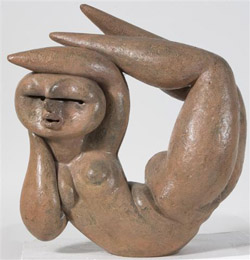
Ng Eng Teng (1934 – 2001) was a painter and potter by training but is most recognised for his sculptural pieces featuring humanist themes. A beneficiary of the artist's generous donations, NUS Museum has over 1,000 of Ng's works including sketches, paintings, maquettes, sculptures, figurines and pottery. An archival display-cum-exhibition, the presentation is divided into three sections – The Formative Years, Body/Form/Perspectives, Materials/Processes/Public Works – exploring a range of biographical, stylistic and thematic interests. The presentation surveys the breadth and depth of Ng's oeuvre and encourages further research and dialogue on the artist, his productions and facets of the era in which he lived and worked. [Image: Ng Eng Teng, Acrobat, 1988, Ciment fondu, paint] Click here for the exhibition brochure in PDF format. | |
| |
 |
Writing Power: Zulkifli Yusoff Till 19 Feb 2012
|
|
Regarded as a pioneer of installation art in Malaysia, Zulkifli Yusoff's Writing Power looks at how historical texts affect cultural memory and understandings of nationhood. Exploring how history can be made relevant to contemporary times, Zulkifili's artistic renditions draw upon the fascinating and complex relationship between the visual and the written - leading his audiences to ponder, if it matters not-knowing what art means, who made it, when, what's it called, or how to approach it? [Image: Zulkifili Yusoff, Pelayaran Munsyi Abdullah (detail), 2003, Mixed Media. Aliya and Farouk Khan Collection] | |
| |
|
|
Calendars 2020-2096 Till 12 Feb 2012
|
|
Calendars (2020-2096) comprises of 1,001 images of deserted public interiors in Singapore photographed over a span of 7 years (2004-2010). It signals specific concerns of Heman Chong's practice, one that can be located in the intersection between time, space and situation. The 'archive' of images, set within the premise of how one marks time, generates an imaginary meandering within the interiors of Singapore, a city that is constantly being remade, often appropriating signs and styles from a wide spectrum of influences. Based on a series of revisitations to the public spaces that Chong has a prior relationship to - shopping centers, museums, MRT stations, schools - the artist carefully frames the spaces without attempting to add any new meaning to the space. No permission was requested for any of the photographs captured, nor any prior arrangement was made to have it devoid of people. Thus, the photographs veer less towards the staged, but rather can be seen as ready-mades. Yet this appropriation very quickly transmutes into another creature: one of fiction and narrative. The project can be viewed in its entirety as a novel about interior spaces, as well as, a historical (also a kind of imaginary fiction) document of interior spaces. | |
| |
|
Working the Tropical Garden Till 6 Nov 2011
|
|
Asian Symphony, Ng Eng Teng's largest known public mural measuring 1.8 x 9 m, was commissioned for the Garden Hotel in 1971. Conceived in an era when Singapore was beginning to emphasise environmental planning as the key to sustainable development, the mural is an idealised expression of man's synergistic relationship with nature. It was recently donated to the NUS Museum and is now installed at National University Health System building at Kent Ridge. Click here for the exhibition brochure in PDF format.
| |


